










Please note that SCOTUS Outside Opinions constitute the views of outside contributors and do not necessarily reflect the opinions of SCOTUSblog or its staff.
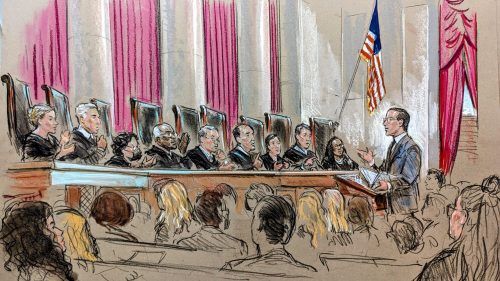
In one of the last decisions in argued cases this term, West Virginia v. B.P.J., the Supreme Court held that state bans forbidding transgender girls from participating in girls’ sports violated neither Title IX of the Education Amendment Acts of 1972 – which bans sex discrimination in schools that receive federal funding – nor the equal protection clause of the 14th Amendment. Interestingly, the Title IX holding was 9-0 on this politically contentious issue. The essential problem with the case was over what exactly the plaintiffs were challenging – the definition of “female” or sex segregation itself. And that confusion led the justices to the wrong answer.
1. The confusion
In 2020 and 2021 respectively, the Idaho and West Virginia legislatures passed statutes banning transgender girls from female sports, with two distinct components: The first formalized sex segregation in sports (the sex-segregation component), and the second defined who counted as female for the purposes of the law based on one’s reproductive organs and genetics (the definitional component).
The plaintiffs challenged the laws under Title IX, which – with its accompanying regulations – prohibits sex discrimination in education but allows for “separate teams for members of each sex,” and the equal protection clause. The Supreme Court upheld the laws. The conservative six-justice majority ruled that the laws survived both the statutory and constitutional challenges. The three liberals agreed on the Title IX holding but argued that the constitutional claims should have gone back to the trial court to determine whether transgender girls actually have an athletic advantage over cisgender girls as a group.
Based on the laws’ two components, two arguments were possible. The first approach, which is what the plaintiffs emphasized, was that while sex segregation was valid in general (given males’ and females’ different characteristics), it was invalid as applied to them; that is, they should be understood to be an exception to such sex segregation – even though the law counted them as men, because they did not have any athletic advantage.
A second argument could have been to the definition of “sex” itself. The plaintiffs implicitly made this argument at times. For example, the Idaho case’s complaint opened by explaining that the state’s law bars “girls who are transgender” from participating in women’s sports. And the lower courts squarely focused on that argument – the U.S. Court of Appeals for the 9th Circuit noted that the Idaho law provided for sex segregation but emphasized that the offending provision “restricted” the criteria determining whether a student could play on a girls’ team to “‘reproductive anatomy, genetic makeup, or normal endogenously produced testosterone levels.’” As the circuit court noted, as “most gender-affirming medical care for transgender females, especially minors, will not or cannot alter the characteristics described in the only three verification methods prescribed by the Act,” it “effectively ban
But in the Supreme Court papers, and in both the majority and even the partial dissent’s understanding(s) of the arguments, the exception-to-segregation component dominated.
Consider the majority’s discussion of Title IX. All nine justices believed that the plaintiffs conceded that the term referred to “biological sex.” As the majority saw it, the challengers were arguing “that Title IX permits schools to … prohibit most biological males from playing on women’s and girls’ teams,” but required an “exception to that general rule for biological males who identify as female and have taken puberty blockers or hormones.” While Justice Sonia Sotomayor, writing for the liberal wing of the court, used the term “sex assigned at birth” and claimed a “narrower basis” for her holding, she ultimately did “not understand” there to be disagreement between her and the majority.
Turning to the equal protection argument, the majority identified the statutes’ two components and argued that they served important state interests. When it turned to the challengers’ arguments, however, it once more highlighted the exception-to-segregation component. Specifically, BPJ had agreed that “safety and competitive fairness, while sufficient reasons to exclude most biological males, do not justify excluding a relatively small [and presumably, exceptional] subclass of biological males.”
The court reiterated that “everyone” agreed that men in general should be treated differently due to physical differences. It then concluded that BPJ’s exception-based argument was fatally flawed because it was (1) arbitrary (“Not every biological male athlete is bigger, stronger, faster, or otherwise more athletically able than every biological female athlete” so why should only those who identify as girls get special treatment? “Would those males also be entitled to play on a women's or girls’ team? If not, why not?”) and (2) unworkable (“an enormous practical and administrability problem would arise if courts suddenly had to make such individualized exemptions” based on whether someone is transgender, taking their medication, or is just less athletic than most women).
The partial dissent rebutted the majority by arguing (1) that “exempting” an individual from an exclusion is often (possibly always) constitutionally required, and (2) that the majority only concluded otherwise by “lower[ing]” the burden the state needed to show in barring such individuals. In other words, the dissent, too, focused on the exemption-based sex segregation argument.
2. A path not taken
To better understand the issue, it bears returning to 1972 and the passage of Title IX, in which federal law recognized sex-segregation in sports between males and females that (at the time) dated back nearly a century across numerous states. Idaho and West Virginia, the two states whose laws were challenged, had long maintained such separation. That said, no state (at least to my knowledge) defined what “sex” meant for the purpose of these laws.
Nevertheless, as the issue of transgender athletes arose, so did solutions. In both states, athletic associations had policies that provided that, if the participation of a transgender girl was challenged, the association would assess the situation to ensure competitive equity, including, for example, ensuring that puberty suppressing medication had been taken over a specified period.
This did not stop Idaho, followed by West Virginia, from passing their laws defining sex. These transgender-excluding sex definitions were deeply suspect for at least three reasons.
First, this sudden unnecessary and unexplained displacement of athletic policies was problematic, and the laws’ passage was particularly suspect given that they were part of an avalanche (the number is now in the upper hundreds, with 39 such proposals in 2026 coming out of West Virginia alone) of anti-transgender bills across the nation.
Second, many criteria exist that are believed to determine someone’s sex – but only those criteria associated with transgender girls were targeted. For example, girls with insulin conditions have higher circulating testosterone (which, most agree, is a key determinant of athletic ability). Some girls have XY chromosomes which result in a lack of ovaries (Swyer syndrome) or even a lack of uteruses (Complete Androgen Insensitivity Syndrome). Under most state definitions, everyone with ambiguous sex-determinants would count as female – except transgender girls. Indeed, Idaho excluded only girls whose testosterone levels were endogenously determined. Thus, someone with a higher testosterone level than any transgender girl would be able to participate in a sport, as long as that testosterone level was endogenously produced (a possibility with CAIS).
Third, take the arguments of the states themselves. The plaintiffs argued that the key differential in athletic ability – which would have addressed the legislative concerns –inhered in circulating testosterone level post-puberty. But the states suggested otherwise. The claims were vague and their experts (in my, perhaps, elite opinion) somewhat suspect. But even on their own terms, the states’ explanations did not track the laws they had passed.
For example, Idaho argued that even without puberty, most people assigned male at birth have a “denser, stronger bones, tendons, and ligaments’ and ‘larger hearts, greater lung volume per body mass, a higher red blood cell count, and higher hemoglobin.’” The problem was that none of these criteria tracked the reasons that Iowa claimed these sex differentials made a difference. West Virginia’s law defines sex based on “reproductive biology and genetics at birth.” But no one claims that genitalia and chromosomes are characteristics that define athletic performance. And, again, Idaho’s law, which served to add the endogenous testosterone standard level mentioned above does little better – there is no study to my knowledge that suggests that the location of the hormone (endogeneity versus exogeneity) results in a mite of a difference. Thus, the states’ definition of sex served primarily to delineate cisgender people from transgender people, and was untethered from the proffered rationales for having girls’ only teams.
3. Monday morning quarterbacking
With that in mind, I believe the challengers’ case would have been much stronger had they focused on the definitional – as opposed to sex-segregation – component of their initial arguments. (Although it is unlikely the majority holding would have changed, I believe it would have at least transformed the partial dissent to a full one.) Again, on the Title IX point, the majority, the dissent, and the parties all agreed that the law and regulation all referred to biological sex. The question should have then become what determines whether someone is a biological female under federal law? Would anyone call BPJ, who did not go through male puberty, developed breasts, and lacks male levels of circulating testosterone, a “male” in the ordinary sense of the word? Indeed, when the ban first passed, BPJ’s principal said that her participating on the boys’ team "would be ‘confusing’ for the cross-country coaches because B.P.J. looks and presents as female, like any other girl.”
BPJ’s focus on the sex-segregation argument rather than a definitional one led to a further problem. When you suggest that you are an exception to the people defined as “men” (even if it is because you claim you are actually a woman) you invite “men” as the comparator to yourself. This renders you liable to being placed in the comparison category of “biological males.” The conservative majority needed little prodding to accept that invitation (though, no one looking at the challengers would think that was true, at least in the ordinary sense of the words).
Ultimately, it would have made the most sense, as BPJ asked, to send the case back to the trial court and let it decide – as trial courts do, after weighing expert testimony – which of the numerous characteristics that we associate with different sexes were actually relevant to competitive equity and safety, the proffered goals of the state, and which were not.
I speculate elsewhere as to why the sex-segregation argument – as opposed to the definitional one – became the focus here. Among other things, in light of shadow docket diktat, the U.S. Court of Appeals for the 9th Circuit amended the nationwide preliminary injunction to apply only to the plaintiffs before it. Because the remedy applied only to the specific plaintiffs, counsel may have believed that their arguments could only be made with respect to the specific plaintiffs. Further, transgender scholars and advocates Paisley Currah and Ezra Young criticized similar arguments deployed in previous cases, where advocates conceded that transgender plaintiffs were biologically male, but that the normal standards that apply to men should not apply to them because they are transgender.
It is also possible that the focus was strategic – by drawing fire to the exception argument, the definitional-based argument has lived (and limped) on for another day. With this Supreme Court, maybe that is the best that could be expected.
Continue reading...
[ H/T SCOTUSblog ]