







Save the date for The SCOTUSblog Summit: 2026 Term Preview on Sept. 16, 2026. More details to come.

Morning Reads
Small businesses sue Trump administration to stop latest wave of tariffs on 60 trade partners
Steve Kopack, NBC News
On Friday, a group of small businesses challenged the Trump administration’s “latest wave of tariffs on 60 U.S. trade partners, less than one day after they were enacted,” according to NBC News. “The suit was filed by the Liberty Justice Center, the same organization that challenged Trump’s tariffs enacted under the International Emergency Economic Powers Act last year and won a major ruling against the government at the Supreme Court.” “Filed in the Court of International Trade in New York, the suit seeks to stop the government from enforcing or collecting duties imposed under Section 301 of the Trade Act of 1974. ... The complaint alleges that the U.S. Trade Representative ‘acted arbitrarily and capriciously by imposing near-uniform tariffs across 60 materially different economies without a reasoned, record-based explanation for how the tariffs would address the practices [the trade representative] identified.’”
Vernon Hills toy manufacturer sues Trump administration again over new round of tariffs
Robert Channick, Chicago Tribune (paywalled)
In a separate tariffs challenge, “Learning Resources, the Vernon Hills [Illinois] toymaker that successfully brought down the Trump administration’s 2025 tariffs in a seminal Supreme Court decision,” also filed a lawsuit in the Court of International Trade against the Trump administration, according to the Chicago Tribune. “The lawsuit filed Friday alleges that the Trump administration has tried ‘to re-create materially the same global tariff regime’ under three different statutes, but concludes that the ‘third time’s not the charm’ for the federal government.” Elana Ruffman, chief marketing officer at Learning Resources, told the Tribune that “Learning Resources has received about $10 million of the $12 million” in tariff refunds it expected after the Supreme Court’s ruling.
Why Alito is the most frequent Supreme Court justice to recuse
Zach Schonfeld, The Hill (paywalled)
During the 2025-26 term, “Supreme Court justices recused a combined 64 times … when deciding what new cases to hear,” according to The Hill. Among those, 23 “came from Justice Samuel Alito, a leading voice in the court’s conservative majority who is stepping aside at a rate threefold compared to any of his colleagues.” The Hill noted that “Alito’s direct stock holdings are the main culprit. Most of the other justices keep their assets largely tied up in index funds and other diversified investment vehicles. But Alito owns shares directly in 27 companies.”
DHS accuses 'rogue' Clinton judge of open defiance of Supreme Court
Elaine Mallon, Fox News
James Percival, the general counsel for the Department of Homeland Security, took to social media on Friday to accuse a “rogue district judge” of “open defiance of the Supreme Court.” The post addressed U.S. District Judge Patti Saris’ Thursday decision to temporarily block the Trump administration’s “effort to end Temporary Protected Status (TPS) for South Sudan despite a recent Supreme Court decision that significantly narrowed lower courts’ authority to intervene,” according to Fox News. Saris “granted an administrative stay in African Communities Together v. Mullin, preserving TPS protections for South Sudanese nationals while she considers whether plaintiffs may amend their lawsuit and seek renewed relief on constitutional grounds.” “Saris stressed that the order is a procedural measure to preserve the status quo while the court considers the plaintiffs’ latest filings and is not a ruling on the merits.” “The temporary order keeps South Sudan’s TPS protections in place for now, but the 1st Circuit and potentially the Supreme Court could soon weigh in.”
Appeals Court Upholds Blocks on Trump Order Restricting Mail Voting
Adam Sella, The New York Times (paywalled)
On Saturday, the U.S. Court of Appeals for the 1st Circuit “upheld a lower-court ruling blocking key parts of an executive order from President Trump to restrict voting by mail,” which “called on the Department of Homeland Security to compile state-by-state lists of citizens to help determine voter eligibility, and called on the Postal Service to verify voters based on the lists provided by the states,” according to The New York Times. The 1st Circuit “wrote that Mr. Trump’s order ‘directs unprecedented levels of involvement by federal officials in how states administer elections,’” and risks “sow[ing] confusion” and preventing eligible voters from casting ballots. “Lawyers representing the government said in recent court filings that they may challenge the [appeals] court’s ruling at the Supreme Court.”
On Site
From the SCOTUSblog Team
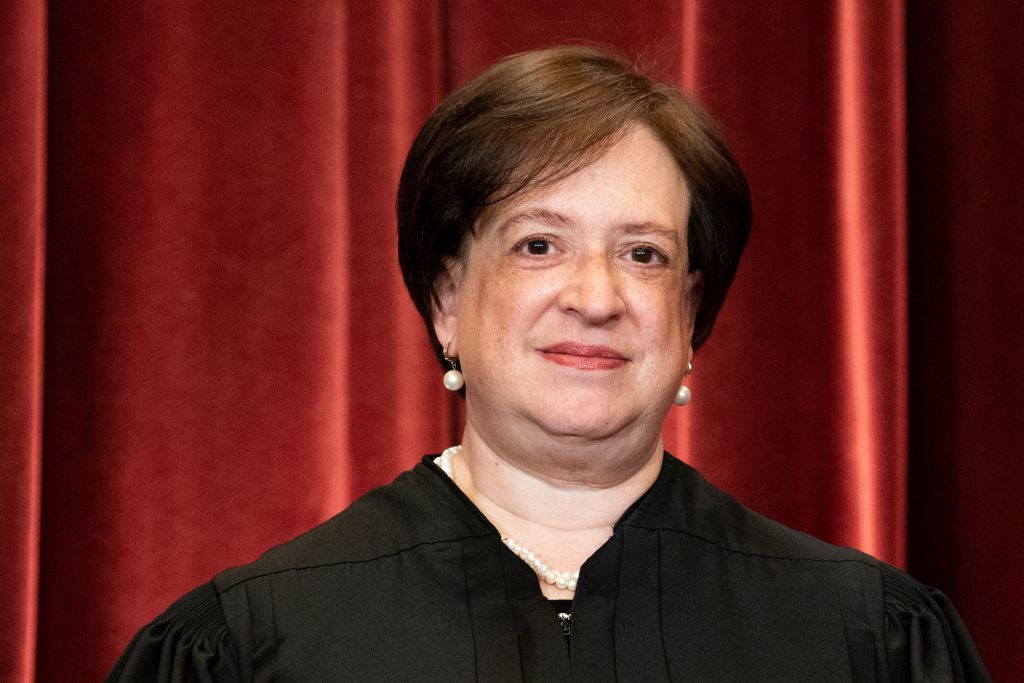
Is Elena Kagan the stare decisis justice?
In a 2015 case on the royalties from the patent for a Spider-Man toy, Justice Elena Kagan wrote an opinion for the majority that likely is best remembered for its discussion of stare decisis, the principle that courts should generally not overturn their earlier rulings unless there is a very good reason to do so. Since then, she has been perhaps the staunchest defender of precedent on the court.
From the SCOTUSblog Team
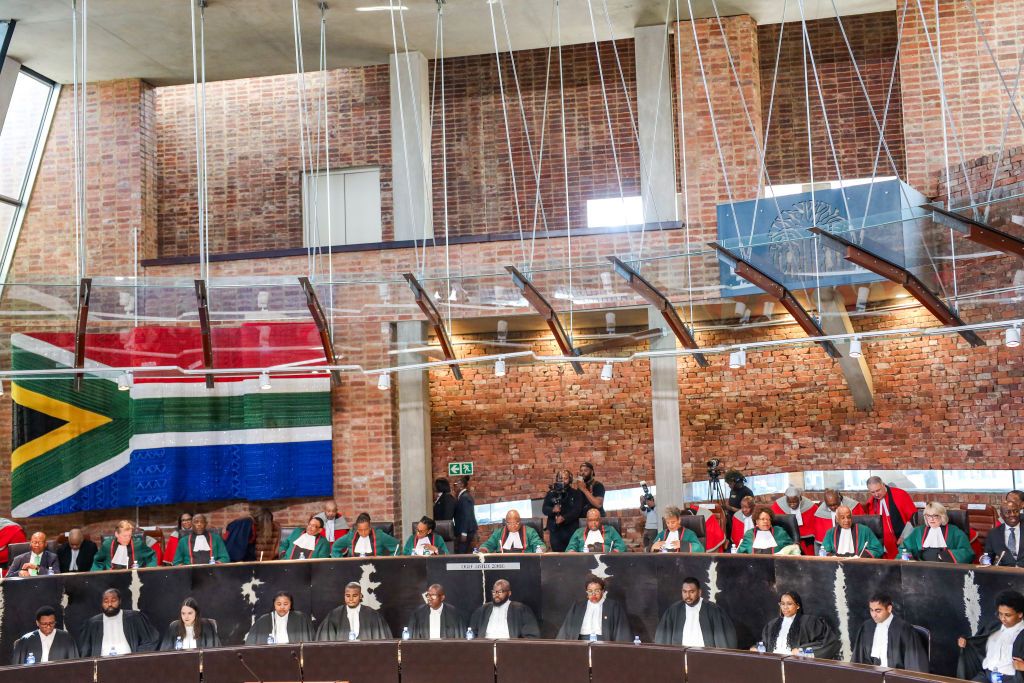
The Constitutional Court of South Africa
For SCOTUSblog’s series on different supreme courts around the world, Zach spoke with Penelope Andrews, a professor of law at New York Law School, about the Constitutional Court of South Africa.
Podcasts
Amarica’s Constitution
The Surprising Score
The SCOTUS term is behind us, and Akhil Amar and Andy Lipka are taking a look back – not just at this term, but at the entirety of the Roberts court. The cases may be familiar, but their look back may surprise you.
A Closer Look
The Supreme Court’s “terminology nightmare”
The interim docket. The emergency docket. The shadow docket. The stay docket. The equity docket. The other docket. The docket that cannot be named. All of these labels and more have been used to describe the segment of the Supreme Court’s work that centers on requests for emergency relief, requests that are typically addressed with only limited briefing, no oral argument, and unsigned, often unexplained decisions.
The debate over what to call this docket stems from a broader – and more contentious – debate over what actually happens on it, particularly in cases involving the executive branch. Since President Donald Trump began his second term in January 2025, the court has addressed more than two dozen emergency applications from his administration regarding policy moves put on hold by lower courts – and sided with the president much of the time. These orders, while technically temporary, had long-term, and sometimes permanent, consequences. They cleared the way for large-scale layoffs in the federal government, funding cuts, and deportations, among other changes, and did so without always offering explanation as to why Trump had prevailed.
Given the debate they’ve generated, it was no surprise that these interim/emergency/shadow docket decisions came up multiple times when Justices Elena Kagan and Amy Coney Barrett testified about the Supreme Court’s fiscal year 2027 budget request before House and Senate subcommittees on July 14. Although subcommittee members had been instructed to keep their questions focused on the court’s budget proposal, several asked for information about emergency/interim orders, including about why the court seems to be releasing so many such decisions these days.
For the most part, Barrett’s responses to these questions focused on the unique nature of requests for such relief. Unlike the oral argument docket, which the justices curate by assessing and then voting on petitions for review, this other docket is not discretionary, Barrett explained. The court must make a decision on every application it receives, and therefore, the size of the docket depends on the actions of potential applicants, not the actions of the court.
Kagan shared a slightly different view, observing that the court likely creates more work for itself when it grants high-profile requests for relief. “When people know that relief is available, there are a lot of smart lawyers out there in the world who are going to say why don’t we take our shot at that,” she told the Senate subcommittee.
Kagan also repeatedly engaged with the idea that there are “downsides” to this docket. It can be difficult to respond to applications after only limited briefing and in the absence of oral argument, she said, and the justices also don’t always agree on the process that should be followed. However, Kagan added that she no longer thinks it is appropriate – “at least not now” – to refer to the docket as the shadow docket, which is the label most often used by critics of how the court approaches emergency applications and of its unexplained responses to them. “I think if you had asked me this question a year ago, I might have said that there were some cases – and, in fact, I did say, I had said in some public events ... where we did so little explanation of what lay behind our order that lower courts had a great deal of difficulty trying to figure out what that order was,” Kagan told the House subcommittee. “I don’t think that that’s so much a problem anymore.”
But Kagan’s comments made clear that the debate over what to call this docket likely won’t be resolved anytime soon. She said the justices themselves don’t agree on its name: “There are definitely issues with respect to the emergency – we call it the emergency docket. Some of us call it the interim docket. It’s a terminology nightmare.”
SCOTUS Quote
Continue reading...
[ H/T SCOTUSblog ]