







WHAT’S HAPPENING TODAY: Good afternoon and happy Tuesday, Daily on Energy readers! Did you know you can watch brown bears feasting on salmon, puffins sunbathing, tigers deep in slumber, and schools of fish swimming along colorful reefs all for free and live as it happens? Explore.org has dozens of live environmental and nature streams available every day. You can check out the different cams here.

 Congress is one step closer to codifying the White House’s ratepayer protection pledge, which is meant to prevent high energy costs associated with the development of data centers from being passed onto the public.

 Plus, also on the Hill, Daily on Energy provides some thoughts from key Democratic negotiators in the Senate who are working to strike a deal on permitting reform before they break for August recess.
Welcome to Daily on Energy, written by Washington Examiner energy and environment writers Callie Patteson (@CalliePatteson) and Maydeen Merino (@MaydeenMerino). Email cpatteson@washingtonexaminer dot com or mmerino@washingtonexaminer dot com for tips, suggestions, calendar items, and anything else. If a friend sent this to you and you’d like to sign up, click here. If signing up doesn’t work, shoot us an email, and we’ll add you to our list.
RATEPAYER PROTECTION ACT ADVANCES OUT OF COMMITTEE:
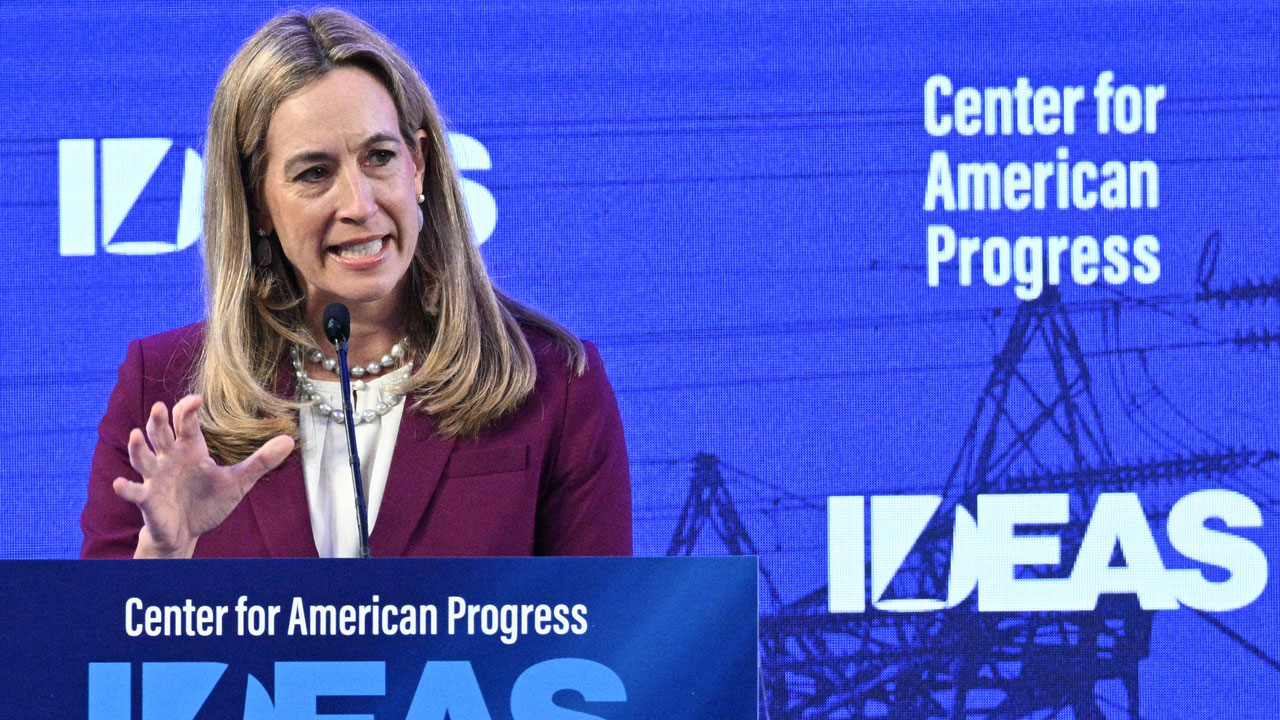
House lawmakers advanced the Ratepayer Protection Act out of committee, requiring large-load users such as data centers to cover energy costs and grid upgrades.
As part of a two-day markup hearing, the House Energy and Commerce Committee unanimously voted the bill out of committee today. The bill is aimed at ensuring households do not bear the added electricity costs from data centers.
The bill, which was proposed by Republican Rep. Gabe Evans of Colorado and Democrat Rep. Kathy Castor of Florida, would require state regulators to create standards for new data centers and hyperscalers that consume over 100 megawatts of electricity to cover the costs of new generation, transmission, and infrastructure upgrades.
Although the bill has bipartisan support, some Democrats have said that the bill is just the first steps toward addressing the issues related to data centers. During the hearing, Democrat Rep. Diana DeGette of Colorado said that the bill fails to address water consumption by the data centers, citing that western states face droughts.
Republican Sen. Jon Husted of Ohio yesterday introduced a companion bill in the Senate.
The legislation mirrors the White House ratepayer protection pledge, through which several big tech companies vowed to cover the energy costs associated with data centers.
Read more by Maydeen here.
More on data centers: A new poll released by Politico and Public First today revealed that more than half of Democratic voters in the U.S. say they are opposed to data centers being developed in the communities – though support is dropping across the political spectrum.
Quick numbers: From January to July, the share of Republican voters surveyed that oppose data centers being built within 3 miles of their home increased from 26% to 33%. Democratic opposition also jumped from 33% to 53% in the same timeframe.
About 41% of all those surveyed are opposed to local data centers, while just 24% support local development. In January, 28% were opposed, while 37% were in support.
Read more from the Examiner’s Molly Parks here.
DEMOCRAT NEGOTIATORS TALK PERMITTING:
We’re about 105 days out from the midterm elections and a bipartisan deal on permitting reform is feeling further out of reach. To find out more about where negotiations are in the Senate, Callie spoke with the top two Democrats in the upper chamber that are leading discussions in the Environment and Public Works and Energy and Natural Resources Committees.
Leadership in the Senate is pushing to reach a deal before the August recess, which will mark about one year since the House first introduced its own legislation to streamline the federal permitting process (Remember Rep. Bruce Westerman’s SPEED Act, passed in December?).
The Senate can’t afford that same timeline, as pressure from the midterms threatens Democratic support – they are not likely to advance a Republican-led package if they take back one of the chambers. So it’s up to Sens. Sheldon Whitehouse of Rhode Island and Martin Heinrich of New Mexico to ensure the final deal includes as many of their priorities as possible.
“It’s complicated,” Heinrich told Callie when asked why no text has been released by the Senate. “I mean, there’s just a lot of moving parts, and we’re trying to thread the needle between different policy priorities, and so it takes time.”
While no overarching agreement has been made yet, he said, conversations “continue to be constructive.”
Whitehouse told Callie that it’s key for the final deal to be balanced. If any sections lean too far in one direction, he warned, it could send a “historic message” on where the balance of the bill ends up.
He said that, until that balance is struck between Republicans and Democrats, it is important to keep all details in negotiation.
He did say that a large part of the permitting package will address streamlining federal approvals for transmission – something Democrats have long advocated in order to accelerate the connection of renewable energy projects to the grid.
“That’s the part that we still need to work on,” he said.
Whitehouse also praised his Republican counterpart, EPW Chairwoman Shelley Moore Capito, saying she “continues to be a good partner.”
“We continue to make progress through the issues, and I continue to bug my staff to see what they can get done by the August recess,” he said.
All the rest
WORLD STILL HAS ‘SUBSTANTIAL’ EMERGENCY OIL RESERVES: Folks worried about the record release of emergency stockpiles of crude oil can breathe a sigh of relief, as the International Energy Agency says there are still “substantial” levels of reserves across the globe.
In a statement released this morning, the IEA executive director Fatih Birol said members of the IEA have released around 290 million barrels of oil since early March, with more still continuing to flow to the market.
“IEA countries still hold a substantial volume of emergency stocks in reserve, including over 1 billion barrels of government-controlled stocks,” he said.
While it offers some comfort, Birol added that there is no room for complacency regarding oil security, as tensions continue to escalate in the Middle East. He pointed out that, while deliveries of crude oil have ticked up, refinery activity and general product supplies have not increased at the same rate. This is adding pressure on prices for refined oil products such as diesel and gasoline.
WHERE PRICES STAND: International and domestic oil benchmarks extended their gains today on fresh attacks between the U.S. and Iran that are once again choking traffic through the Strait of Hormuz.
Kpler shipping data reviewed by Reuters shows that only four commodity vessels crossed the strait yesterday, down from seven on Sunday. Of these four, two tankers exited the strait while the other two entered. One of the ships that exited was empty.
“Lower exports through the Strait of Hormuz and concerns of potential supply disruption from oil coming through the Red Sea are moderately supporting oil prices,” UBS analyst Giovanni Staunovo told CNBC.
Just before 3 p.m. EDT, oil was up by around 2%. Brent crude increased 1.86% and was selling at $90.88 a barrel, while West Texas Intermediate jumped 2.10% and was priced at $84.21 a barrel.
COAL COUNCIL ASKS FOR ADDITIONAL WEST COAST TERMINALS: The National Coal Council is asking the Trump administration to support additional export terminals on the West Coast to access Asian markets.
As part of an export report sent to the Department of Energy, the council said that the West Coast lacks export terminals to support the industry in competition with global suppliers. The president last month provided funding for the build-out of an export terminal in Oakland, California, but the council said that there need to be more options.
The coal sector has long pushed for export terminals to open in the West Coast to provide easier access to Asian markets. The council met with Trump administration officials today as part of the council’s second meeting this year.
More on mining: The Department of Energy and Department of Labor signed a memorandum of understanding today to create a framework to promote the deployment of artificial intelligence, automation, advanced sensors, and other technologies for the mining sector.
FOREST SERVICE OVERHAUL THREATENS WILDFIRE RESEARCH: Internal documents obtained by Politico reveal that the ongoing reorganization of the U.S. Forest Service could result in the closure of more than a dozen offices focused on climate and wildfire research.
The list of office responsibilities obtained by the outlet reveals that 57 offices are being evaluated for closure within the agency. Twenty of these work on climate adaptation and wildfire prevention research.
The Agriculture Department has reportedly said that its overhaul of the Forest Service, which is a part of a broader reorg of the USDA, will not undercut any ongoing research at the agency, but will result in the closure of underused office space, centralize agency work, and save funds that can be allocated for firefighting.
However, veterans of the Forest Service told the outlet they fear the reorganization will move work away from national forests, push out more staff, and end research that takes place at living laboratories.
Other pushback: Earlier this month, a coalition of federal employee unions, municipalities and nonprofits filed a lawsuit against the administration over the broader USDA reorg, saying it will radically downsize the agency.
RUNDOWN
Grist Why the Iran war hasn’t caused a global oil crisis — yet
E&E News Trump threatens National Academies with debarment. Here’s what it is.
Forbes Energy After Peace In Ukraine
Washington Post Here’s how your peanut butter jar — and nearly everything else — can be recycled
Continue reading...
[ H/T Washington Examiner ]