

As we approach November, legislators are running out of time to enact meaningful reforms before midterms, and many of their common-sense proposals are being received by fiery partisan opposition.
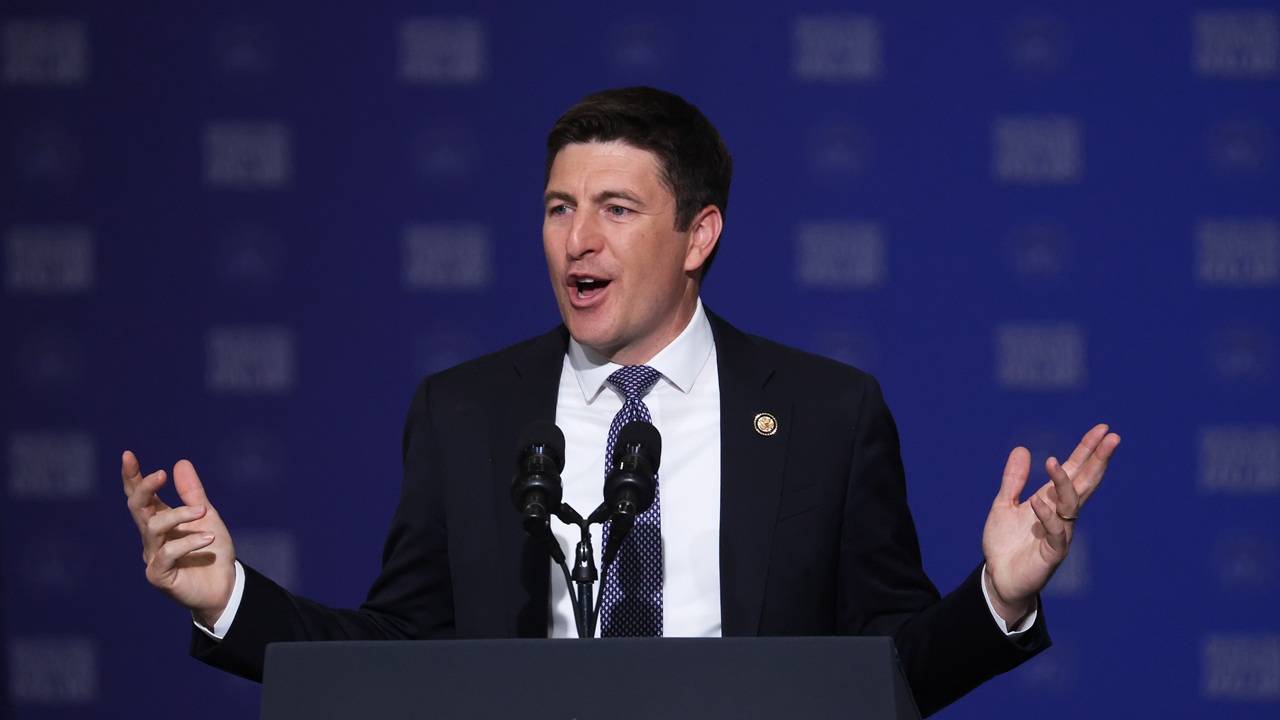
One such proposal, The Voter ID Act (H.R. 9368), sponsored by Rep. Bryan Steil, R-Wis., passed the Committee on House Administration June 24. It was attached to the Stop Insider Trading Act (H.R. 7008) as an amendment and will be heard in the House Rules Committee. This is a crucial step toward authorizing consideration of the Voter ID Act for final passage on the House floor.
Yet the debate-turned-screaming-match in the House Administration Committee that preceded the committee vote might raise concerns for the reasonable American.
The bill requires voters to show photo ID when casting a ballot in a federal election, creates a grant program to provide valid IDs for voters who cannot afford them, and allows voters who forget their ID on election Day to cast provisional ballots—all measures that have proven effective in the states.
These provisions seem commonsensical, especially given that federal law already prohibits noncitizens from voting in federal elections, and verifying the identity of voter registration applicants is fundamental to adhering to the principle of “one person, one vote.”
Yet, during the committee meeting, Rep. Norma Torres, D-Calif., emphatically claimed that these measures for verifying voter identity and citizenship enable voter suppression. She called for the removal of her Republican colleagues, yelling, “they want to block your vote because they are scared of losing their job! And you know what, my opinion is that they actually should lose their job!”
Her fellow Democrats claimed that their real disgruntlement lay with the bill’s supposedly narrow scope of acceptable IDs.
The Voter ID Act offers five options for valid photo ID: driver’s license, State-issued identification card with a photo and expiration date, U.S. passport, military ID, and tribal ID.
Admittedly, compared to current voter identification requirements in many states, especially the District of Columbia and the 14 states without any such requirement, this is a narrow list. Colorado voters can present a student ID to verify their identity. Voters in New York are accustomed to verifying their identity with signature verification at the polling place, no photo ID necessary. Californians are generally notrequired to show any ID at the polls.
Yet, as Steil pointed out during committee, “you have to show valid ID to get on a plane, open a bank account, to buy beer.”
Americans are accustomed to providing photo ID for other important transactions, and the Voter ID Act makes provisions for voters who struggle to obtain a qualifying ID before Election Day. Requiring a valid ID at the polls ensures that our ballots are as well-protected as our booze—seems like common sense. Even the Olive Garden never-ending Pasta Pass requires photo ID!
Despite the ubiquity of photo ID requirements in American life, Committee Democrats argued that this protection is unnecessary. Our elections are already secure, they claim and, in the words of Rep. Terri Sewell, D-Ala., “we’re trying to solve a problem that doesn’t exist … voter fraud does not exist enough in the numbers that require us to be so restricted.”
Yet, as the Heritage Foundation’s Voter Fraud Database shows in just a sampling of convictions across the country, voter fraud is real. It often passes undetected except in cases where prosecutors prioritize election crimes and employ new tools to detect it.
For instance, last September, Louisiana used the SAVE database and identified 390 noncitizens on their voter rolls; 79 of them had illegally voted in at least one election. The state recently brought charges against one of the illegal voters and anticipates more such cases.
Given that 22 states are not using SAVE or attempting to establish an agreement with U.S. Citizenship and Immigration Services to do so, one can only guess at how many noncitizens are on other states’ voter rolls.
California is also seeing more reports of voter fraud. The Department of Justice recently charged a California woman with paying individuals to register and vote. The FBI is now investigating allegations that ballot harvesters paid homeless people to vote in a recent Los Angeles election. To make matters worse for the Golden State, the Department of Homeland Security recently identified 190,832 potential non-citizens on California’s voting rolls.
These and similar instances of voter fraud reveal the unfortunate gaps in our current means of verifying voter citizenship and identity. Instances of election fraud illustrate that the federal prohibition of voting fraud lacks teeth in many jurisdictions. Yet, if a law is worth having, it’s worth enforcing.
As we head into midterms, legislators should take the common-sense route and establish federal means of enforcing current election statute by passing the Voter ID Act if it arrives on the House floor. Americans deserve to know that only legitimate voters are casting ballots come November.
Continue reading...
[ H/T The Daily Signal ]