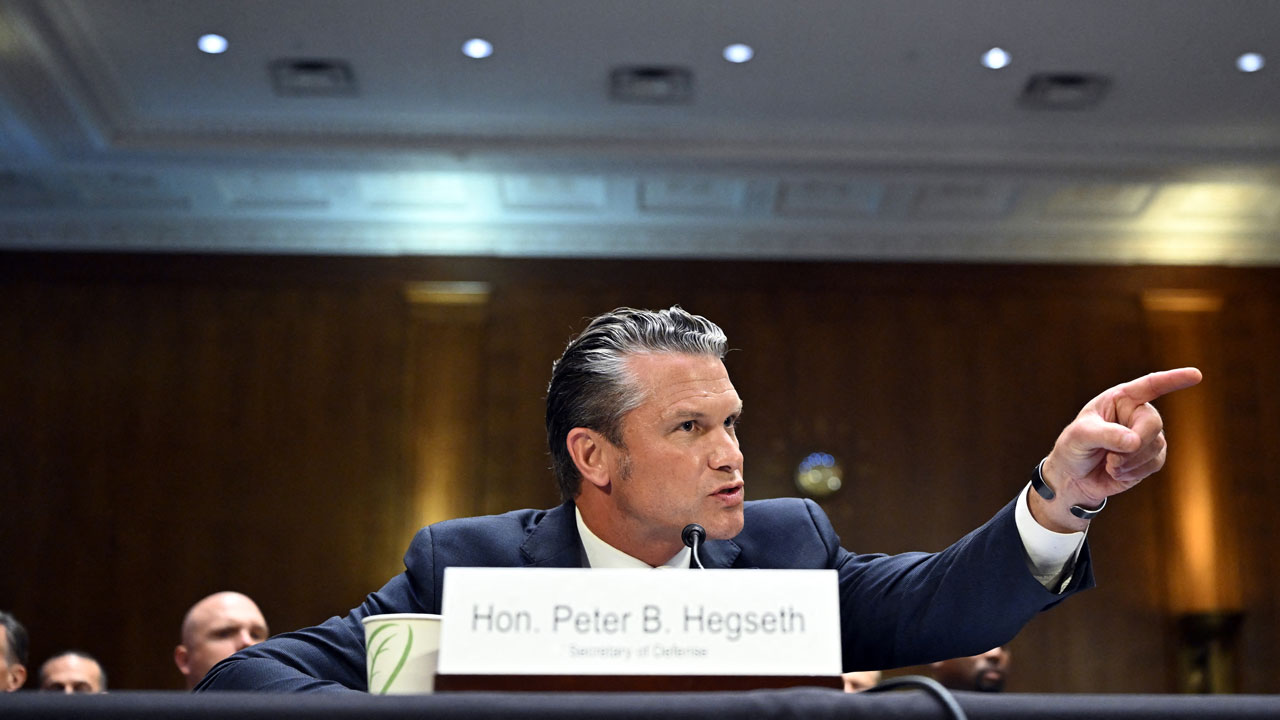







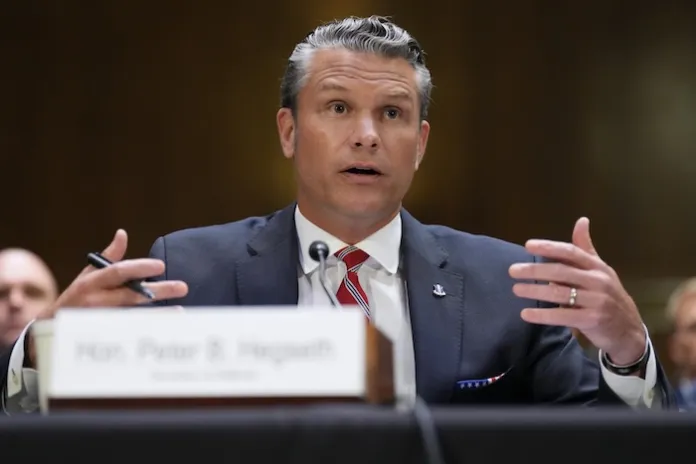
Secretary of War Pete Hegseth told the Senate Appropriations Committee on Tuesday that the department’s new estimated cost for the Iran war is up to $37.5 billion.
That $37.5 billion estimate from Hegseth, which he said includes some additional military pay and operations and maintenance costs anticipated through the fiscal year, is up from the department’s last estimate of $29 billion in May.
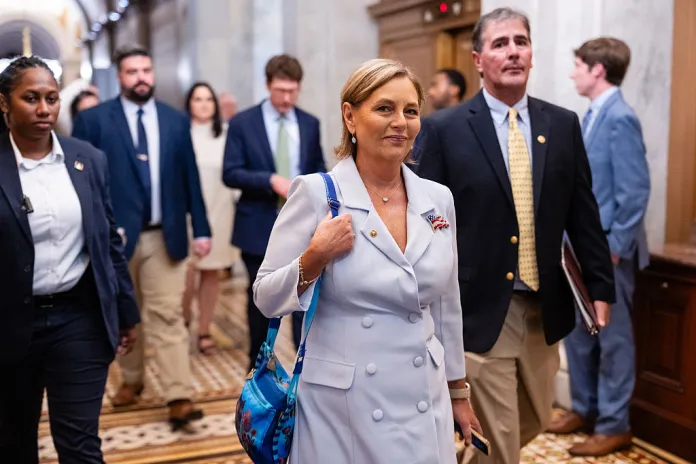
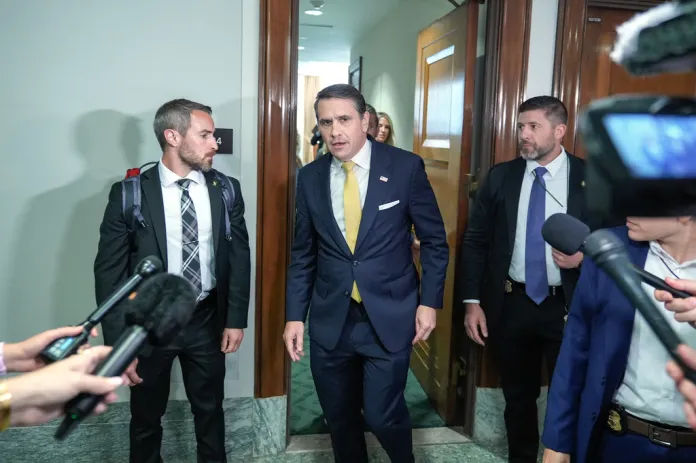
Hegseth was among a group of officials who testified in front of the Senate Appropriations Committee on Tuesday afternoon to discuss the Trump administration’s $87 billion supplemental budget request, $67 billion of which is intended for the Department of War. General Dan Caine, the chairman of the Joint Chiefs of Staff, Agriculture Secretary Brooke Rollins, Sens. Alex Padilla (D-CA), Ted Budd (R-NC), and Mike Rounds (R-SD) all testified in front of the committee as well.
In his written testimony, Hegseth specified that $45.9 billion will go to defense production, modernization, and acceleration, while $21.3 billion will address emerging urgent requirements. The latter category includes $15.1 billion for core operational costs, $2 billion to replace equipment lost or damaged during combat operations, and more.
The Trump administration is pursuing what would amount to a $1.5 trillion defense budget for fiscal 2027, though the base budget request is for $1.15 trillion. The administration is also seeking a $350 billion infusion through reconciliation, on top of the supplemental request.
Hegseth warned that future military trainings, among other things, “would have to be curtailed if we do not get our budget needs met and met urgently,” adding, “Without these funds, we face critical shortfalls.”
The U.S. military has resumed daily strikes in Iran over the last 10 days and has restarted the naval blockade of Iranian ports in response to the country’s continued attacks on commercial ships off its coasts. As of July 21, the Navy has redirected eight commercial vessels and disabled one. Iran has retaliated against the U.S. strikes and the blockade by targeting American bases in various Middle Eastern countries.
Three U.S. service members are believed to have been killed in an Iranian strike last Friday at Muwaffaq Salti Air Base, a U.S. military base in Jordan: 1st Lt. Tyler James Feehan, 25, and Pvt. Isabella Gonzales, 19, were killed in the attack, while the military has not released the identity of the third service member. Another service member, Sgt. Michael Emmanuel Swinton, 30, of Fayetteville, North Carolina, was killed during a controlled detonation of a downed Iranian drone on Sunday at Erbil Air Base in Iraq.
The recent fatalities bring the total up for the war against Iran to 17.
Top Pentagon spokesman Sean Parnell said on Monday that nearly 100 U.S. troops have been injured since July 7, and he said roughly 96% of those injuries were minor and those troops have already returned to duty. The Defense Casualty Analysis System reports that nearly 450 troops have been injured over the course of the war, though that total does not distinguish between minor and more significant injuries.
PENTAGON DISPUTES CHARACTERIZATION IT DOWNPLAYED RECENT CASUALTIES IN IRAN WAR
Despite its continued ability to carry out attacks, Hegseth maintained that Iran “is at the weakest point militarily it has ever been in the past decade.”
Caine acknowledged that historically “air power’s got limits, and we always have to be mindful of those,” and warned that in his assessment, “Iran will continue to be a challenge moving forward.”
Continue reading...
[ H/T Washington Examiner ]