







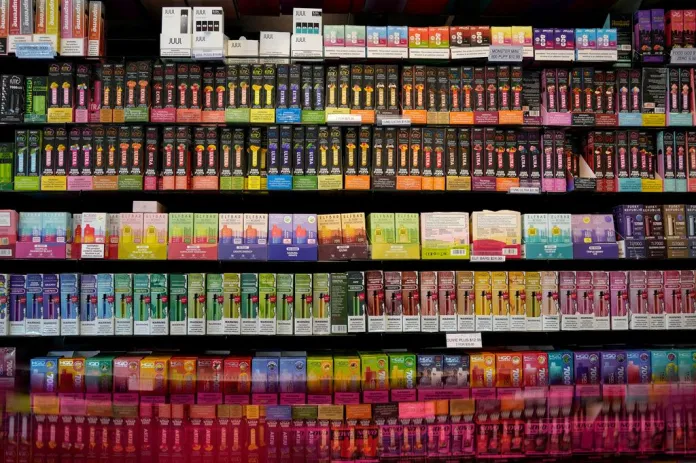
A coalition describing itself as acting for public health has filed suit against the Food and Drug Administration over its decision not to prioritize enforcement against certain vaping products and nicotine pouches while their marketing applications remain under review. According to the plaintiffs, allowing these products to remain on the market is a threat to public health. In fact, this is just another attempt to make it harder for Americans who smoke to access products that could dramatically reduce their risk of disease.
This case has remarkably little to do with protecting public health and a great deal to do with perpetuating an ideological opposition to nicotine. Several of the organizations involved, including Truth Initiative, Campaign for Tobacco-Free Kids, and Parents Against Vaping, receive substantial financial support from the network of organizations funded by Michael Bloomberg, who has spent billions of dollars promoting a misguided abstinence-only approach to nicotine. Their long-standing objective has not been to encourage smokers to switch to lower-risk products but to eliminate nicotine use altogether, no matter the human cost. Essentially, “quit or die.”
The lawsuit argues that vaping products should not remain available without FDA marketing authorization. Yet, the FDA has authorized more than 1,000 combustible cigarette products during the past five years, in addition to the thousands of cigarette products that have remained legally available under federal law. Those cigarettes kill nearly 500,000 Americans every year.
If authorization alone were a measure of public health value, cigarettes would appear to be among the safest consumer products in America. That is obviously absurd.
By comparison, the FDA has authorized only 45 vaping products in its entire history.
Extensive scientific evidence has shown that vaping products expose users to far fewer toxic substances than smoking. Public health authorities in the United Kingdom have concluded that vaping poses only “a small fraction of the risks” associated with smoking. Around the world, countries that have allowed smokers to switch to safer nicotine products have generally experienced substantial declines in smoking prevalence.
In fact, many of the products at the center of this lawsuit are sold legally in Europe and many other countries. Those jurisdictions generally rely on notification systems and product standards rather than the extraordinarily slow and cumbersome authorization process used by the FDA.
The plaintiffs argue that flavored vaping products and nicotine pouches are popular among young people. Preventing youth nicotine use is an entirely legitimate public health objective, but adult smokers remain the group at greatest risk by an overwhelming margin. More than 480,000 Americans die every year from smoking-related diseases. Millions more continue smoking despite wanting to quit.
Those smokers deserve access to regulated alternatives that carry far lower risks than combustible cigarettes. One must wonder what motivation the plaintiffs have for being so determined to protect the incumbent cigarette trade in the way that they do.
The FDA’s own backlog has created a situation in which products that can help smokers quit remain stuck in regulatory limbo for years. Rather than asking the agency to accelerate scientific reviews, these organizations have instead chosen litigation that could remove products from the market entirely. The obvious solution is to speed up approvals for products supported by the evidence, not to deprive smokers of access while bureaucratic delays continue.
What this lawsuit actually shows is a failure of sensible regulation rather than a public health policy mistake. The plaintiffs repeatedly invoke the protection of children, as anti-nicotine campaigns always do, yet they rarely acknowledge that the same flavors attractive to some young people are also valued by countless adults who have successfully quit smoking. Removing those options has damaging consequences for adult smokers, consequences which this misguided lawsuit can only make worse.
Every time that innovation is delayed, more Americans continue smoking products known to cause cancer, heart disease, emphysema, stroke, and many other illnesses.
MICHAEL BLOOMBERG’S WAR ON VAPING PUTS CRIMINALS OVER CONSUMERS
The most encouraging development in recent months has been the FDA’s growing willingness to recognize the role that tobacco harm reduction can play in reducing smoking-related disease. Its recent authorization of modified risk claims for nicotine pouches demonstrates that evidence-based regulation is possible, but this lawsuit promotes the exact opposite.
The greatest obstacle to reducing smoking in America is no longer a lack of viable safer alternatives. It is the determination of a small but influential group of activists to keep those alternatives out of smokers’ hands. If their energy were devoted to accelerating access to proven lower-risk products instead of obstructing them through litigation and protecting cigarette sales, the result would be a huge benefit to public health.
Martin Cullip is an international fellow at the Taxpayers Protection Alliance’s Consumer Center and is based in South London, United Kingdom.
Continue reading...
[ H/T Washington Examiner ]