









WHAT’S HAPPENING TODAY: Good afternoon and happy Thursday, readers! Folk-pop singer Noah Kahan sold out Washington’s Nationals Park last night, bringing what has become the soundtrack of New England to the district.


 Oil is back over $100 and ships are avoiding a crucial oil trade route, but it’s not the Strait of Hormuz this time. Tensions are escalating in the Red Sea and the Bab el-Mandeb strait, putting more pressure on global oil supplies.

 Daily on Energy also takes a deep dive on a new critical minerals mining site set to be developed in Arizona, which is working with tribal groups in the surrounding areas.
Welcome to Daily on Energy, written by Washington Examiner energy and environment writers Callie Patteson (@CalliePatteson) and Maydeen Merino (@MaydeenMerino). Email cpatteson@washingtonexaminer dot com or mmerino@washingtonexaminer dot com for tips, suggestions, calendar items, and anything else. If a friend sent this to you and you’d like to sign up, click here. If signing up doesn’t work, shoot us an email, and we’ll add you to our list.
OIL SURGES ABOVE $100 AS ANOTHER STRAIT FEELS THE SQUEEZE:
For the first time in two months, oil prices soared above $100 a barrel, as the markets fear greater escalation in the Middle East and a second strait closure.
Just before 3 p.m. EDT today, Brent crude had jumped by 7.05% and was selling at $100.70 a barrel. West Texas Intermediate also surged 6.09% and was priced at $92.12 a barrel.
The price jump was primarily driven by vessels facing the risk of strikes from the Iranian-backed terrorist group known as the Houthis that has threatened to attack some ships passing through the Bab el-Mandeb.
So what is the Bab el-Mandeb? The Bab el-Mandeb Strait separates the Red Sea and the Gulf of Aden, and is the only entry point of the Red Sea from the Indian Ocean. Through the Suez Canal, on the other side of the Red Sea, it also connects the Indian Ocean to the Mediterranean Sea.
Given its strategic location, the Bab el-Mandeb is considered one of the most crucial chokepoints for global trade in crude oil, similar to the Strait of Hormuz, Strait of Malacca, and Suez Canal.
Approximately 4.2 million barrels per day transited the strait in the first half of 2025, according to the Energy Information Administration. For comparison, about 20.9 million barrels per day transited the Strait of Hormuz during the first half of last year.
Are ships moving through? This week, the Houthis said they would be imposing a naval blockade on ships from Saudi Arabia attempting to travel through the Bab el-Mandeb. Since then, Houthi militia have launched attacks against at least two Saudi Arabian tankers sailing through the Red Sea.
The Institute for the Study of War said that at least seven ships changed course to avoid transiting through the Bab el-Mandeb. Commercial shipping traffic hasn’t come to a complete halt, as ship tracking data reviewed by the ISW found that 30 commercial vessels passed through late Tuesday into Wednesday.
For maps illustrating the strait, and for more information on how greater traffic disruptions could influence prices, check out Callie’s latest here.
SOUTH32 HERMOSA PRESIDENT TALKS SUSTAINABILITY AND COMMUNITY ENGAGEMENT IN MINING:
Building trust with communities, tribal nations, and improving sustainability efforts is essential for the future of the mining industry, South32 Hermosa president Pat Risner told Maydeen.
“If we’re going to onshore these supply chains, we have to be better as an industry at securing the social license to operate,” Risner said, adding that stakeholder and community acceptance is also essential for the mining projects.
Earlier this month, South32 Hermosa completed the environmental review to develop its mining and processing project in Santa Cruz County in Arizona. The project is meant to produce five critical minerals: zinc, manganese, silver, lead, and copper.
Risner said that tribal engagement remains a significant challenge in the industry, as projects often encounter tribal opposition and litigation. He noted that the company has built a relationship with tribes in the project area.
“It’s important that we be far more proactive and good at building relationships with tribes and local communities, so that they see value in these projects being in their communities or in areas where they have cultural connections,” Risner said.
Local communities and environmental groups have raised concerns about the project’s impacts on endangered species, habitats, and water usage.
Risner said the project has more than a decade of baseline biological data on sensitive species, along with a cultural resources inventory. He said this information has helped the project to avoid impacts to threatened and sensitive species.
“Our company has a goal of no net loss of biodiversity, which we’re working with outside conservation groups and others,” Risner said.
Over the mine’s projected 70-year lifespan, the project would disturb about 750 acres, with 450 acres already affected by historic mining, Risner said. He added that typical open-pit mines in the U.S. involve 10,000 to 40,000 acres of surface disturbance. The project is also designed to use 90% less water than a typical mining operation, he said.
Risner said the project is working on a good neighbor agreement with local city governments, where it will commit to additional environmental protections than the state and federal permits require. He added that he believes it will be on a path to net-zero mining operations as well.
“We believe we’ve got a really good pathway to not only work towards that social license to operate, but address a lot of those concerns…” Risner said.
All the rest
HIGH OIL PRICES PROP UP TEXAS FOSSIL FUEL INDUSTRY: An analysis conducted by the Texas Alliance of Energy Producers reveals that the Lone Star State has hugely benefited from the higher oil prices caused by the war in Iran, adding back thousands of jobs for local producers.
While around 7,900 oil and gas sector jobs in Texas were shed last year, the Alliance estimates that roughly 2,100 were added back in the first half of 2026.
“While not nearly recovering the industry jobs lost last year, the increase thus far in 2026 is a welcome reversal of that trend, and is almost certainly connected to the conflict-based higher prices this year,” Alliance Petroleum Economist and President Karr Ingham said.
In the same time frame, the state saw its rig count increase by 34 to an average of 263 in the first six months of the year. Ingham attributed this entirely to the higher oil prices. Production is also on the up, with the state pumping out an estimated 5.83 million barrels per day in June. This is just below the record – 5.84 million barrels per day – hit in July 2025. The Alliance expects the industry to hit a new record in the coming months.
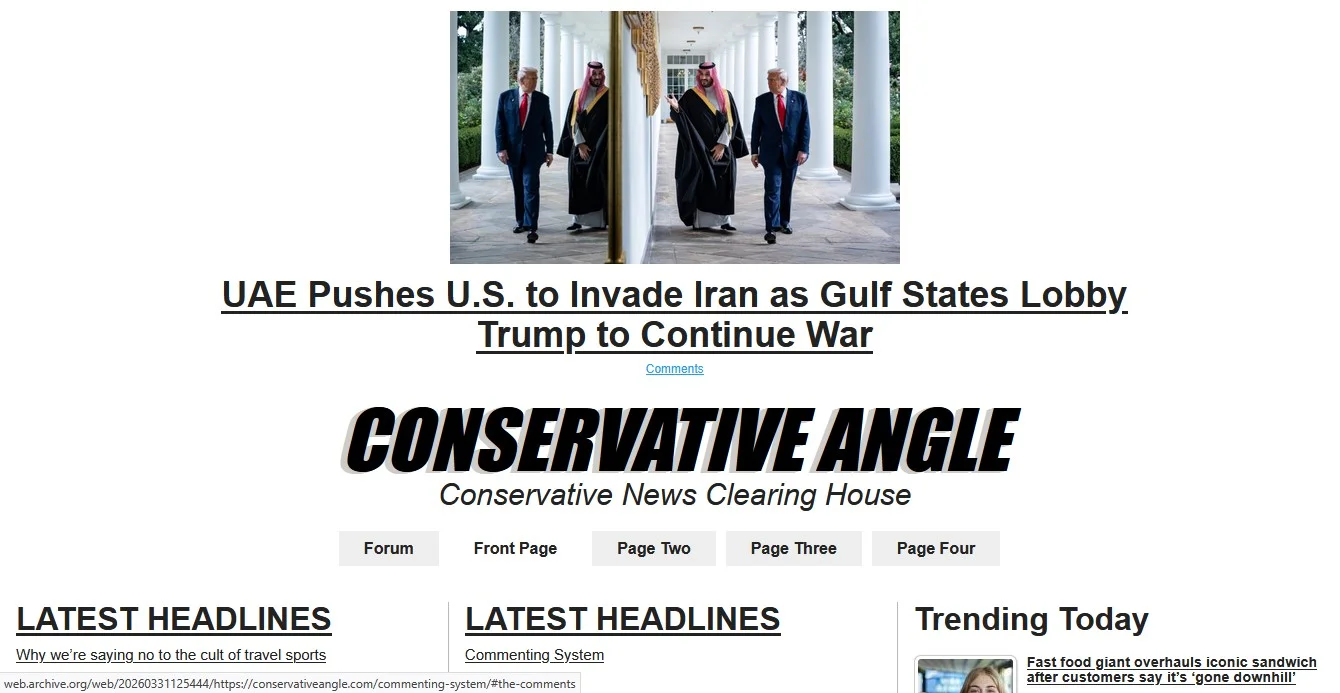
LATEST ON THE U.S.-SAUDI NUCLEAR DEAL: While the “peaceful nuclear cooperation agreement” was signed by U.S. and Saudi Arabian officials yesterday, President Donald Trump laid out new terms and conditions for the deal today.
In a post to Truth Social this morning, Trump said the deal hinges on Saudi Arabia joining the Abraham Accords, which were brokered by Trump during his first presidency to establish diplomatic relations between Israel and several surrounding Arab nations.
Trump also clarified that the deal will not allow for the enrichment of nuclear materials. News of the deal sparked concerns among former Israeli officials yesterday, who claimed that allowing uranium enrichment in Saudi Arabia could trigger a “nuclear arms race” in the Middle East.
When pressed by reporters as to why that detail was left out of the announcement yesterday, White House Press Secretary Karoline Leavitt said “the president is always the final dealmaker.”
Our take: Normalizing relations with Israel very likely will put the whole deal up in the air, as Saudi Arabia has said it will not pursue diplomatic relations with Israel until there is a pathway for establishing a Palestinian state.
CHINA PLANS TO BOOST WIND AND SOLAR POWER: China plans to boost wind and solar generation by 53% over the next five years.
Wind and solar, backed up by storage, would be able to supply 8% of China’s installed capacity during peak demand and cover 20% of electricity use during demand spikes, according to the plan released today, Reuters reports.
China also plans to add over 300 gigawatts of renewable peaking capacity, or renewables that will be dispatched when demand spikes. Beijing also targets 570 gigawatts of hydropower capacity by 2030, which is up from 450 GW for 2025. Wind and solar currently account for about 20% of the power in its transmission network.
ICYMI – U.S. WEIGHS OFFSHORE NUCLEAR POWER: The nuclear energy renaissance could be hitting the seas – literally. The Trump administration announced yesterday that the Interior Department’s Marine Minerals Administration signed a Memorandum of Understanding with the Nuclear Regulatory Commission to explore offshore nuclear power projects.
They are weighing developing nuclear projects on the Outer Continental Shelf, 3.2 billion acres of submerged lands located off the Gulf, Atlantic and Pacific Coasts that are managed by the federal government. Most of the current energy development in the OCS is traditional fossil fuels and offshore wind.
There are no commercial nuclear power plants that are approved or planned to be built in federal waters. But, as the Trump administration looks to quadruple domestic nuclear capacity by 2050, it makes sense officials would look into every possible avenue to deploy the carbon-free technology.
“Submerged reactor systems have been safely deployed in naval applications for decades, demonstrating their potential as a reliable source of energy in demanding marine environments,” MMA acting director Matt Giacona said. “While no commercial deployment on the Outer Continental Shelf is planned or approved at this time, it could greatly strengthen America’s energy security in the future.”
RUNDOWN
Bloomberg How Extreme Heat Is Shifting Corporate Bottom Lines
Inside Climate News To Block Renewable Energy Projects, Texas Republicans Have Weaponized Conservation Concerns
E&E News Data centers drive gas demand — and help a turbine-maker
Axios What it’s like inside the data centers powering the AI boom
Continue reading...
[ H/T Washington Examiner ]