









The Supreme Court told America’s universities that race could no longer be used as an admissions shortcut.
President Trump’s Justice Department now says one of the nation’s major medical schools responded by building a new system behind the old one.
It had neutral-sounding labels. It had separate applicant pools.
And according to federal investigators, it was designed to keep producing racial preferences after the Supreme Court had ordered them out.
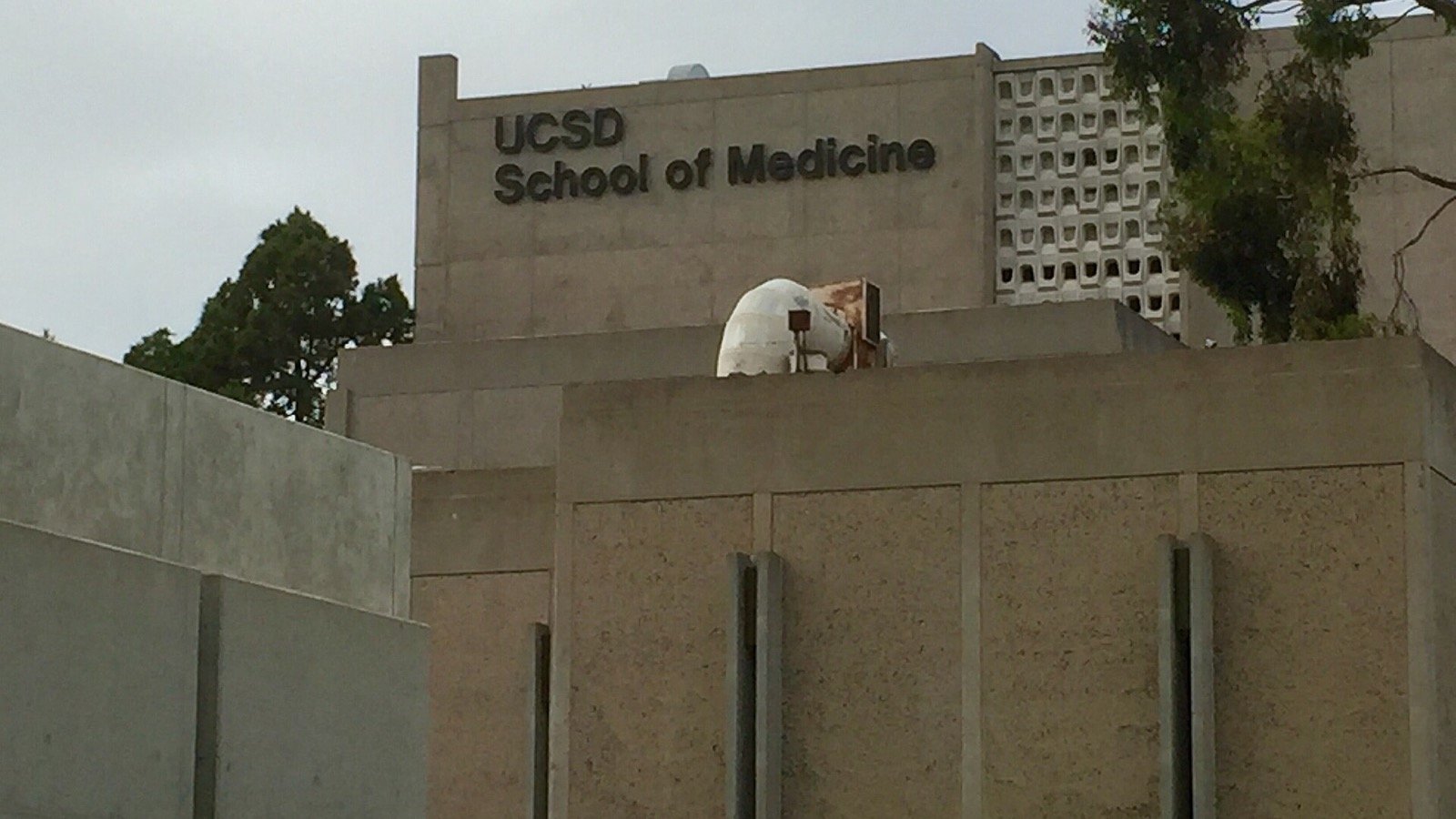
The school is the University of California San Diego School of Medicine.
In an eight-page findings letter released Monday, the Justice Department’s Civil Rights Division said UC San Diego intentionally discriminated against applicants on the basis of race in violation of Title VI. Assistant Attorney General Harmeet Dhillon called it a “shadow application process.”
The department announced the finding publicly here:
How The “Shadow” System Allegedly Worked
The Justice Department’s announcement says admissions officials used race-neutral-sounding criteria to increase the number of applicants the school classified as underrepresented minorities in medicine. The accompanying findings letter lays out the machinery in much greater detail, including the thresholds, interview batches, and internal messages behind the federal conclusion.
Before the Supreme Court’s 2023 ruling in Students for Fair Admissions v. Harvard, UC San Diego sorted applicants into three academic groups. Group A had the highest MCAT and GPA thresholds.
Group B included a lower academic threshold available only to applicants the school considered underrepresented minorities or from disadvantaged backgrounds. Group C covered certain California residents who did not qualify for Group B.
After the ruling, the A, B, and C thresholds became race-neutral on paper.
Then, according to DOJ, the school’s director of admissions divided every group again: A and A-with-hardship, B and B-with-hardship, C and C-with-hardship.
Applicants in those subgroups were placed into batches of 30 for review. Only eight applicants from each Group A batch, six from each Group B batch, and three from each Group C batch could receive ratings that guaranteed an interview.
That structure mattered. If more applicants from a favored racial group were placed into separate hardship batches, more of them could reach the interview stage than they would have in a single combined pool.
The letter also says reviewers could see applicants’ race while assigning interview ratings during the 2023-2024 and 2024-2025 admissions cycles.
The Internal Email That Got DOJ’s Attention
One of the most revealing pieces of the federal case is an internal email sent just before the Supreme Court issued its decision.
On June 15, 2023, the school’s admissions director wrote that roughly 550 applicants classified as underrepresented minorities would fall out of Group B and into Group C under the new criteria.
His recommendation, as quoted in the letter: “I would recommend that we purposely select some students from Group C.”
DOJ says the director then created a “bump up group C” plan that could send as many as 62 additional lower-scoring applicants to interviews. Later communications described prioritizing hardship, disadvantage, or “distance traveled” over applicants considered more advantaged.
Again, a hardship question is not automatically a racial preference. Medical schools are allowed to evaluate an applicant’s character, perseverance, experience, and individual circumstances.
The federal allegation is much narrower and much more serious: DOJ says UC San Diego deliberately used those categories as proxies for race, then manipulated the size and composition of applicant pools to reach a desired racial result.
The Numbers Were Not Subtle
The Justice Department says it analyzed applicant-level data from the school’s 2019 through 2025 school years.
For the incoming class of 2023, the letter reports an admission rate of 6.18% for Black applicants and 2.45% for white applicants. In 2024, the rates were 5.25% and 2.10%.
In 2025, they were 5.14% and 1.96%.
The 2025 academic medians also showed a wide gap. Admitted Asian applicants had a median GPA of 3.96 and a median MCAT score in the 96th percentile.
Admitted white applicants had a 3.93 GPA and a 92nd-percentile MCAT.
The medians for admitted Black applicants were 3.81 and the 79th percentile. For admitted Hispanic applicants, they were 3.86 and the 79th percentile.
Those disparities do not prove illegal discrimination by themselves. DOJ says its conclusion comes from combining the data with the subgroup system, access to race during review, and internal communications about increasing admissions for particular racial groups.
UC San Diego Pushes Back
UC San Diego has not admitted wrongdoing.
In a statement reported by the Los Angeles Times, the university said the medical school has always applied uniform academic thresholds to all applicants. The school’s current admissions page also states that the University of California does not discriminate or grant preferences based on race or other protected categories.
UC San Diego said it remains committed to complying with state and federal law and intends to work constructively with the federal government. That response leaves a sharp factual dispute: the school’s public position is that it used uniform standards, while DOJ says its internal subgroup process changed which applicants advanced after those standards were applied.
This is also important: the DOJ letter is an administrative finding, not a court verdict.
The department says it is seeking a voluntary resolution that would bring the school into compliance. If those negotiations fail, DOJ says it will file suit.
UC San Diego would then have the opportunity to challenge the government’s evidence and legal theory in court.
The Supreme Court Already Drew The Line
The Supreme Court’s 2023 opinion did not forbid universities from considering how an applicant overcame hardship or how a life experience shaped that person’s character. It allowed schools to consider an applicant’s individual discussion of how race affected that person’s life and what the experience revealed about character or achievement.
It did forbid schools from using essays or other devices to recreate the same racial admissions regime under a different name.
That distinction is the whole case.
If UC San Diego evaluated each applicant as an individual, regardless of race, the school’s records should be able to show it. If officials instead built parallel pools to engineer racial outcomes, changing the labels would not make the preference legal.
And this case is bigger than one California campus. In June, the Justice Department expanded similar admissions investigations to 15 additional medical schools.
The students admitted to UC San Diego are not the defendants here. They did not design this system, and they should not be turned into political targets.
The people who designed and administered the process are the ones who owe applicants an honest accounting.
Medical-school seats are scarce. The training is partly supported by taxpayers.
The doctors who emerge from these institutions will hold other people’s lives in their hands.
Applicants deserve clear standards applied equally.
Not one admissions system for the public—and a shadow system for the people making the decisions.
Continue reading...
[ H/T WLT Report ]