








Southern Japan was still counting the damage from a massive earthquake when a second emergency erupted.
The first shock struck the Kumamoto region late Tuesday afternoon, snapping roads, damaging buildings, starting fires and throwing parts of Kyushu into darkness.
Then, after the shaking had stopped and an evacuation was underway, an explosion tore through one of the prefecture’s largest shopping malls.
Rescue crews were searching the wreckage Tuesday night as workers remained unaccounted for and police warned that lives may have been lost.
NHK WORLD’s first aerial look showed just how widespread the emergency response had become:
The Japan Meteorological Agency placed the quake at 4:27 p.m. local time on July 28. Its epicenter was in the Kumamoto region at a shallow depth of roughly 10 kilometers, or about six miles.
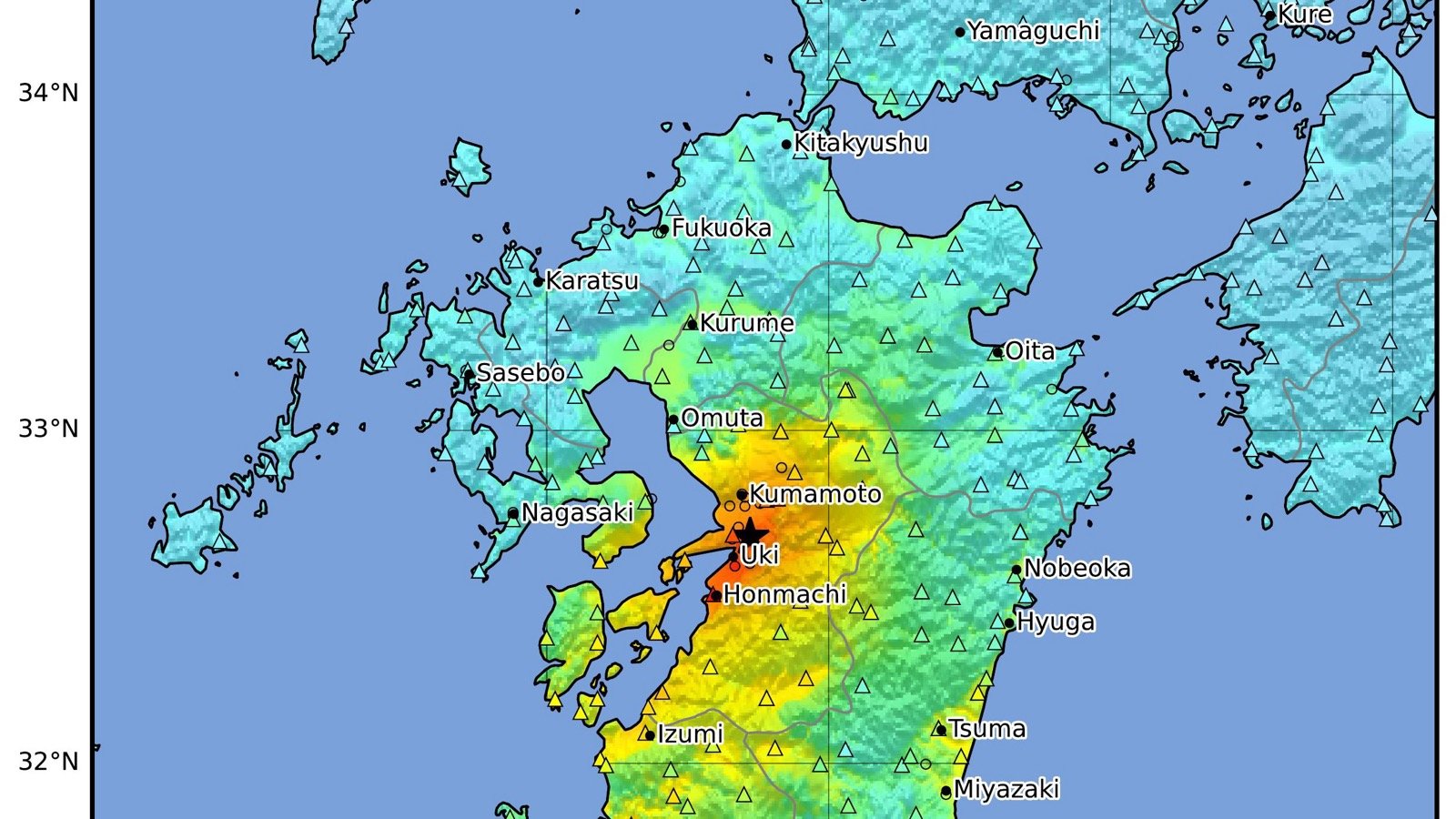
JMA gave the earthquake a magnitude of 7.1 and recorded a maximum seismic intensity of 7 in Uki City and Hikawa Town. That is the highest point on Japan’s shindo scale, which measures the strength of shaking at a particular location rather than the total energy released by the quake.
Strong shaking spread well beyond the epicenter. Kumamoto’s southern ward registered an upper 6, while multiple communities across Kumamoto, Nagasaki, Kagoshima, Fukuoka, Saga and Miyazaki reached levels capable of causing major damage.
The agency issued a tsunami advisory for the Ariake and Yatsushiro Seas, then lifted it within two hours. No tsunami was observed from the inland quake.
The U.S. Geological Survey reviewed the same event at magnitude 6.8, centered about three miles east of Uto at a depth of 10 kilometers. JMA’s detailed mechanism page also lists a moment magnitude of 6.8 alongside its domestic magnitude of 7.1.
Those figures describe the quake through different measurement methods. They do not change what people on the ground experienced: the most severe level of shaking Japan’s intensity scale can record.
USGS placed the event on its highest alert tier for likely economic losses. Its current ShakeMap concentrates the strongest modeled shaking around Uto, Uki and the southern side of Kumamoto.
The reviewed location sits close to heavily populated communities and major transportation routes.
Japan’s government moved quickly from assessment to emergency response.
The Prime Minister’s Office of Japan said Prime Minister Sanae Takaichi had received reports of injuries, power outages and fires, along with damaged roads and bridges and collapsed buildings. She said the government had created an emergency task force and was putting lives first.
Thousands of military personnel were being deployed to assist rescue operations while aircraft surveyed the hardest-hit areas. The government told agencies to collect damage information immediately, coordinate with local authorities and put rescue work ahead of everything else.
Authorities also warned residents to stay away from damaged structures and prepare for more strong shaking. Rail service across Kyushu was halted for inspections, flights were grounded and sections of highway cracked or shifted.
The earthquake itself was only part of the crisis.
Reuters reported that an explosion rocked Aeon Mall Kumamoto after customers and employees had begun evacuating following the initial quake. One side of the roughly 200-store complex was ripped open, exposing steel beams and scattering debris across the parking lot.
Fire officials said multiple people were trapped. NHK reported that roughly 20 to 30 workers were unaccounted for, while police told TBS that fatalities were feared.
The exact cause of the blast was still unknown. The explosion happened in the quake’s aftermath, but officials had not established that the earthquake directly caused it.
Hospitals were also treating scores of injured people. Reuters cited NHK reports that one hospital had received more than 50 patients and another about 40, including 10 people in serious condition.
Video from inside the region captured the violent side-to-side motion as it happened:
Kumamoto City reported that 181 shelters were open by 9 p.m. local time, housing 1,512 people from 858 households. Officials had ordered every city shelter opened as the damage assessment continued into the night.
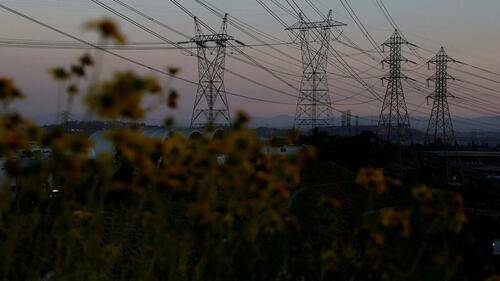
Power was out at more than 47,000 homes across the prefecture at that hour. Parts of the city also lost gas and water service, while emergency crews responded to fires, people trapped in elevators and a road crack that forced a closure near the Midorikawa River.
The city applied Japan’s Disaster Relief Act across 21 municipalities because large numbers of people had been injured or faced an immediate threat to life and safety.
Japan’s Nuclear Regulation Authority reported no abnormalities at three nearby nuclear power plants, removing one of the most feared possibilities from the early damage picture.
Kumamoto knows how dangerous the next phase can be.
A devastating earthquake sequence struck the same region in 2016. The larger shock arrived after an earlier major quake, a history Japanese officials invoked as they warned people not to assume the danger had passed.
The first hours brought maximum-level shaking, widespread infrastructure damage, fires, blackouts, injuries and a mass evacuation.
What followed at the mall turned an already serious disaster into a race against time.
For the families waiting on word from rescue crews, the earthquake may have ended in seconds. The emergency did not.
Continue reading...
[ H/T WLT Report ]