

As he first announced the terms of the memorandum of understanding with Iran, deceptively so, Vice President JD Vance flippantly told Megyn Kelly that if the 60-day negotiations with Iran failed, “the straits are still open … and … really, you know, we can get on with our lives as a country.” If only that were so.
The glaring problem with Vance’s contentions, obvious to all, was that billions in benefits were immediately transferred to Iran — and thus to its terrorist Revolutionary Guard — without any requirement of counter-performance, including permanent opening of the Strait of Hormuz.
Iran immediately sold $6 billion in sanctions-free oil. Isn’t it a logical inference that at least some of this windfall was used by the Guard to purchase weapons? The two American soldiers killed in Jordan recently were hit by Iranian missiles, as were Bahrain and Kuwait. While media are now questioning President Donald Trump’s early claim that Iran’s military capabilities had been largely destroyed, common sense suggests he was correct at the time of the ceasefire.
Did the three-month ceasefire allow the reconstitution of the ravaged Guard and fund the recent attacks? Most likely.
With resumed funding, Iran’s de facto capitulation that had been perhaps two weeks away as of the ceasefire on April 8, 2026, has now likely been pushed at least two months into the future. How much blood and treasure will have been lost in these unnecessarily extended months of battle?
One vapid but pervasive trope, uttered by vicious partisans such as Sen. Christopher Murphy (D-CT), is that the Iran action has been a “war of choice,” and therefore is somehow contemptible. But all wars are wars of choice, and the difference among them is the degree to which the chooser is about to be killed or conquered.
So, the true question is whether we prefer American bombing now, before Iranian nukes and intercontinental ballistic missiles are fully developed, or later, when they are in full play.
Were Iran to have nuclear weapons, Murphy would clearly view a war with Iran as reckless endangerment of millions. Which brings us to the Strait of Hormuz.
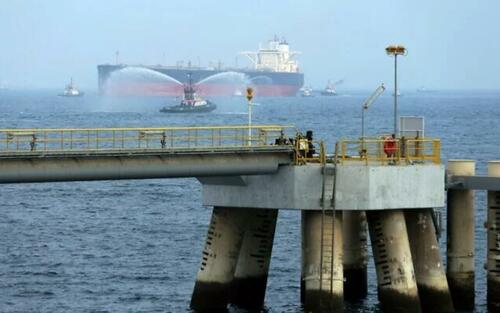
Yes, Iran had closed the strait after the initial American attacks, but does anyone believe this was a recent Iranian idea? Isn’t it reasonable to assume that, once Iran stockpiles a nuclear arsenal and long-range missiles, its tolls would be unreasonably high, gas prices would soar, and we would be unable to break the permanent chokehold Iran would place on the strait?
The loss of prestige from the bumbled MOU and naive ceasefire is now pervasive. To the rest of the world, including China, the U.S. seems a weak-kneed and credulous pawn of the Iranian negotiators. The instant delays give anti-war objectors a basis to claim that Trump had no plan to end the war and had been played by Israeli Prime Minister Benjamin Netanyahu.
The latter claim is today more valid, per Vance, than it was when Trump maintained a more aggressive posture, which, with Israel, would save advanced civilization.
In short, Iran’s de facto capitulation was within sight as of the April 8, 2026, ceasefire date. Now, Trump’s politics are tricky, as he gives strong ally Israel the Heisman stiff-arm, while his negotiators still hopelessly chase Iranian negotiators without authority to bind the Guard.
After aligning our country with the realpolitik Israel of Netanyahu, Trump appeared strong, principled, and strategically farsighted. After reversing course by adopting Vance’s Obama-like approach, Trump now appears impulsive and easily influenced.
How can this ship be righted?
We cannot agree to another ceasefire. And we cannot, even if the Iranian negotiators have binding authority, once again give Iran billions of dollars without any immediate substantial benefit to the U.S., as opposed to a gossamer “agreement to agree.”
The only rational option for substantial short-term improvement is all-out bombing sufficient to open the Strait of Hormuz, combined with a strangling blockade. At that point, time is on America’s side, and we can wait this out until the Guard crumbles. It is not wishful thinking to conclude that this promising strategy can be successful by September.
OPINION: IRAN HAS DRAWN AMERICAN BLOOD AGAIN. TRUMP CANNOT RESPOND WITH WORDS ALONE
Winston Churchill is credited with noting about America’s belated entry into World War II, “Americans can always be counted on to do the right thing, once all other possibilities have been exhausted.”
Vance has indeed exhausted all other possibilities. “No deal” bombing can open the strait, and it is the right thing for Americans to do.
John D. O’Connor is a former federal prosecutor and the San Francisco attorney who represented W. Mark Felt during his revelation as Deep Throat in 2005. O’Connor is the author of the books Postgate: How the Washington Post Betrayed Deep Throat, Covered Up Watergate and Began Today’s Partisan Advocacy Journalism and The Mysteries of Watergate: What Really Happened. O’Connor and Felt also collaborated on the 2006 book, A G-Man’s Life: The FBI, Being ‘Deep Throat,’ And the Struggle for Honor in Washington.
Continue reading...
[ H/T Washington Examiner ]