







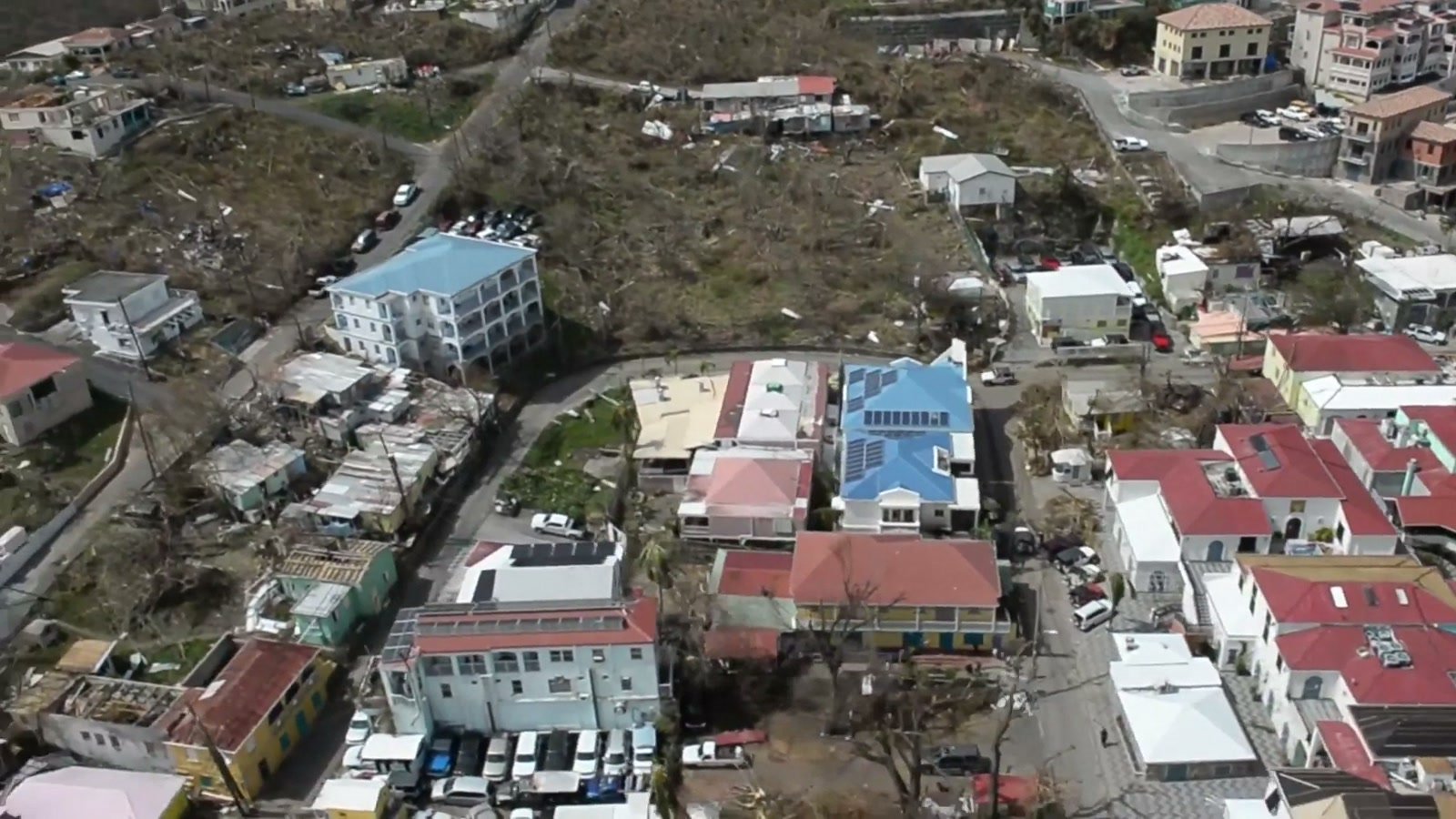
Nearly nine years after Hurricanes Irma and Maria tore through the U.S. Virgin Islands, families are still waiting for homes to be repaired and critical infrastructure to be rebuilt.
Now President Trump’s Department of Housing and Urban Development has stopped new federal business with the agency entrusted with almost $2 billion for that recovery.
The numbers explain why.
HUD announced Monday that it had immediately suspended the Virgin Islands Housing Finance Authority from future federal procurement and nonprocurement transactions.
The action is pending an inspector general investigation and any proceedings that follow. It is not a final debarment, and it does not mean that every dollar already obligated to an active project has been clawed back.
It does mean the authority cannot keep approaching the federal government for new money as if the record below never happened.
 Working with @WHFraudTF, HUD has cut off funding for another corrupt organization.
Effective immediately, new grants for the Virgin Islands Housing Finance Authority are suspended.
VIHFA officials have prioritized kickbacks over helping families recover from disasters.…
— Scott Turner (@SecretaryTurner) July 20, 2026
Congress provided $1,917,330,884 in Community Development Block Grant disaster recovery and mitigation money. According to HUD, the authority had spent $571,239,436 through May, or 29 percent.
That leaves roughly $1.3 billion unspent while Virgin Islanders continue living with the consequences of two Category 5 storms. A child who entered elementary school when the storms struck could be approaching high school while many promised home repairs remain unfinished today.
A spreadsheet cannot show the human cost. Every unfinished line represents a roof, an apartment, a power connection or a family that was promised help.
The authority projected that its single-family rental rehabilitation program would finish 95 homes. It completed two.
It projected 440 homeowner rehabilitations. It completed 72.
Its multifamily rental program projected 1,643 units and completed 319. A separate mitigation housing program projected work on 329 single-family and multifamily homes and completed zero.
The same table recorded zero completed economic-development projects out of 18 projected. Meanwhile, the authority had spent more than $52.6 million from the money set aside for administration.
HUD’s table shows something broader than one stalled contractor or one delayed grant. Several distinct housing, economic-development and grid programs are all years behind at the same time.
What has VIHFA done with their nearly $2 billion budget? Their program have pitiful completion rates.
For example:
Single Family Rental Rehab: 2%
— Scott Turner (@SecretaryTurner) July 20, 2026
The electrical-grid record is just as grim. Of a $67.7 million grid budget, approximately $1.1 million had been spent through May.
That is about 2 percent.
To be fair, not every program was frozen in place. The authority reported completing 477 of 572 projected public-facility projects, an 83 percent completion rate.
But repaired public facilities do not erase two rehabilitated rental homes out of 95. They do not turn zero mitigation homes into places where people can live.
And they do not make a 2 percent grid-spending rate acceptable after almost nine years.
There is another number that should make every taxpayer stop: $52,657,309.
That is how much HUD says had been spent from money set aside for administrative costs. It equals 55 percent of the administrative allotment.
It is not 55 percent of the full $1.9 billion award. Even with that denominator stated correctly, administrative money was moving much faster than relief for many of the people the program existed to serve.
The concerns go beyond delay. A March 2026 review by HUD’s inspector general rated the authority’s fraud-risk management practices at or below the lowest desired level.
HUD’s notice also alleges that the authority sought approximately $6.2 million in disaster funds for costs FEMA had already paid. That request goes straight to the authority’s assurance that the same costs would not be paid twice.
That figure should be described carefully. HUD’s inspector general found duplicate-benefit and overpayment concerns, but said weak records prevented auditors from determining the complete extent of improper payments across the reviewed projects.
The formal notice says the authority certified that it had systems to prevent duplicate payments and detect fraud. HUD now argues those assurances were false or unreliable.
The concern is larger than one reimbursement request. Without dependable records and controls, officials cannot know whether the next bad claim will be stopped before more federal money goes out the door.
An agency responsible for nearly $2 billion should be able to produce records that let auditors calculate the exposure.
One case has already produced a conviction.
Former authority chief operating officer Darin Richardson was sentenced in March to 36 months in federal prison.
The Department of Justice said trial evidence showed that Richardson helped award a multimillion-dollar contract to a company whose owner later gave him $107,000 disguised as a business investment.
He was convicted of criminal conflict of interest, bank fraud, false statements and money laundering.
Prosecutors said the lumber contract grew from roughly $3 million to $4.5 million. According to HUD’s notice, much of that lumber later deteriorated before it could be used in the recovery effort.
Richardson’s conviction does not prove every allegation against the authority or its current leaders. HUD’s notice says that, to the department’s knowledge, neither the authority nor any other senior employee had been criminally charged, convicted or found civilly liable over the alleged false statements at issue.
Governor Albert Bryan Jr. says the territory will fight the suspension.
As reported by the Virgin Islands Consortium, Bryan called HUD’s action an overreach and argued that several cited problems were years old and had already been corrected.
He questioned the timing, said the territory received no advance warning and promised an appeal.
Bryan acknowledged that the authority has fallen short, while insisting that its record includes real progress Washington’s announcement failed to credit. He said the suspension could slow active recovery work and hurt the residents the federal programs are supposed to help.
Bryan also pointed to unusually high construction costs, federal matching requirements and the difficulty of coordinating HUD and FEMA reimbursement rules. He said enforcement should not interrupt housing and recovery projects that families still need.
Those arguments deserve to be heard. The formal notice gives the authority 30 days after receipt to request a hearing, identify disputed facts and submit evidence.
If it contests the action, HUD must make a final decision on the record presented by both sides.
But an appeal cannot make these completion rates disappear.
The people of the Virgin Islands should not be forced to choose between federal accountability and finally getting the recovery they were promised. They deserve both.
HUD should move quickly, follow the evidence and protect any legitimate project that is delivering results. The territory should open its books, answer every allegation and show where every dollar went.
The worst outcome would be another long bureaucratic standoff while storm victims wait.
Nearly nine years was already far too long.
This is a Guest Post from our friends over at 100 Percent Fed Up. View the original article here.
Continue reading...
[ H/T WLT Report ]