








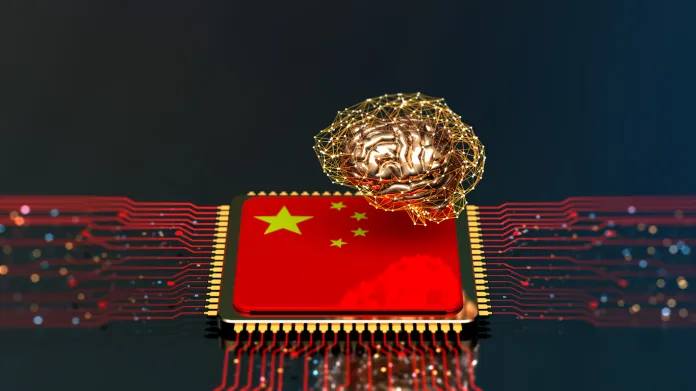
Following the release of Kimi K3, the world’s leading open-weight AI model, by Chinese company Moonshot AI, American tech companies are scrambling to catch up. While the Department of Commerce maintains that the United States still leads the AI race, it is clear our adversaries in Beijing are closing the gap quickly.
This has prompted lawmakers and regulators to take a renewed look at the unique structure of open-source and open-weight AI models such as Kimi K3. The White House and Capitol Hill are deliberating a number of proposals to ban or severely limit such models, but Silicon Valley is overwhelmingly pushing back.
While lawmakers should continue evaluating legitimate national security threats posed by foreign AI, Congress should not restrict the development and diffusion of American-built open-source and open-weight models. Doing so would jeopardize thousands of American jobs, unnecessarily damage investment, and further entrench today’s dominant AI firms against emerging competitors.
Unlike more familiar models such as ChatGPT and Claude, open-source models make their code and/or model weights publicly available and free to download. This allows businesses across the country to deploy and customize these models for their own customers, creating a compounding effect throughout the economy with every new release.
Open-source models are integral to America’s entrepreneurial ecosystem — there are over 2 million public open-source AI models, with most of them used by only a select group of people. Venture capital firm Andreessen Horowitz has described such models as a core driver of economic opportunity and technological advancement. Research shows they bring about tremendous cost-savings for business and consumers alike, to the tune of billions of dollars.
The buildout of data centers and other infrastructure needed to support AI is already fueling a boom in construction and skilled-trade jobs. As this technology transforms work across both blue-collar industries and the knowledge economy, open-source AI will be central to its adoption at every level. Restricting open-source development would slow that growth, putting future jobs and economic opportunities at risk.
Likewise, new restrictions would unsettle investors, discouraging the capital formation needed to scale startups and expand existing AI infrastructure. Much of America’s recent economic growth has been driven by the technology sector, with AI playing an increasingly important role. Millions of Americans whose pensions, 401(k)s and savings are invested in these companies have a stake in continued innovation. Open-source models accelerate AI deployment across industries ranging from healthcare to retail, broadening the technology’s economic impact.
New regulations limiting open-source AI would also stifle the next generation of startups and weaken genuine market competition. Thinky Machines, for example, an emerging open-weight AI lab gaining attention for its first model release, could face existential hurdles, while closed-source incumbents such as Anthropic and OpenAI would continue operating largely unaffected.
THE END OF INTERNET PRIVACY: EUROPE HIJACKS AMERICAN TECH, AND CHINA BENEFITS
Allowing open-source models to flourish enables companies to run AI infrastructure more independently, affordably, and securely. Restricting that model would leave consumers with fewer choices, entrepreneurs with fewer opportunities, and the American economy with less innovation.
If policymakers are concerned about China catching up in AI, the answer is not to handicap one of America’s greatest competitive advantages. Washington should target genuine security risks without undermining the open innovation that has long powered American technological leadership. Leave American open-source alone.
Sam Raus is the David Boaz Resident Writing Fellow at Young Voices. Follow him on X: @SamRaus1.
Continue reading...
[ H/T Washington Examiner ]