






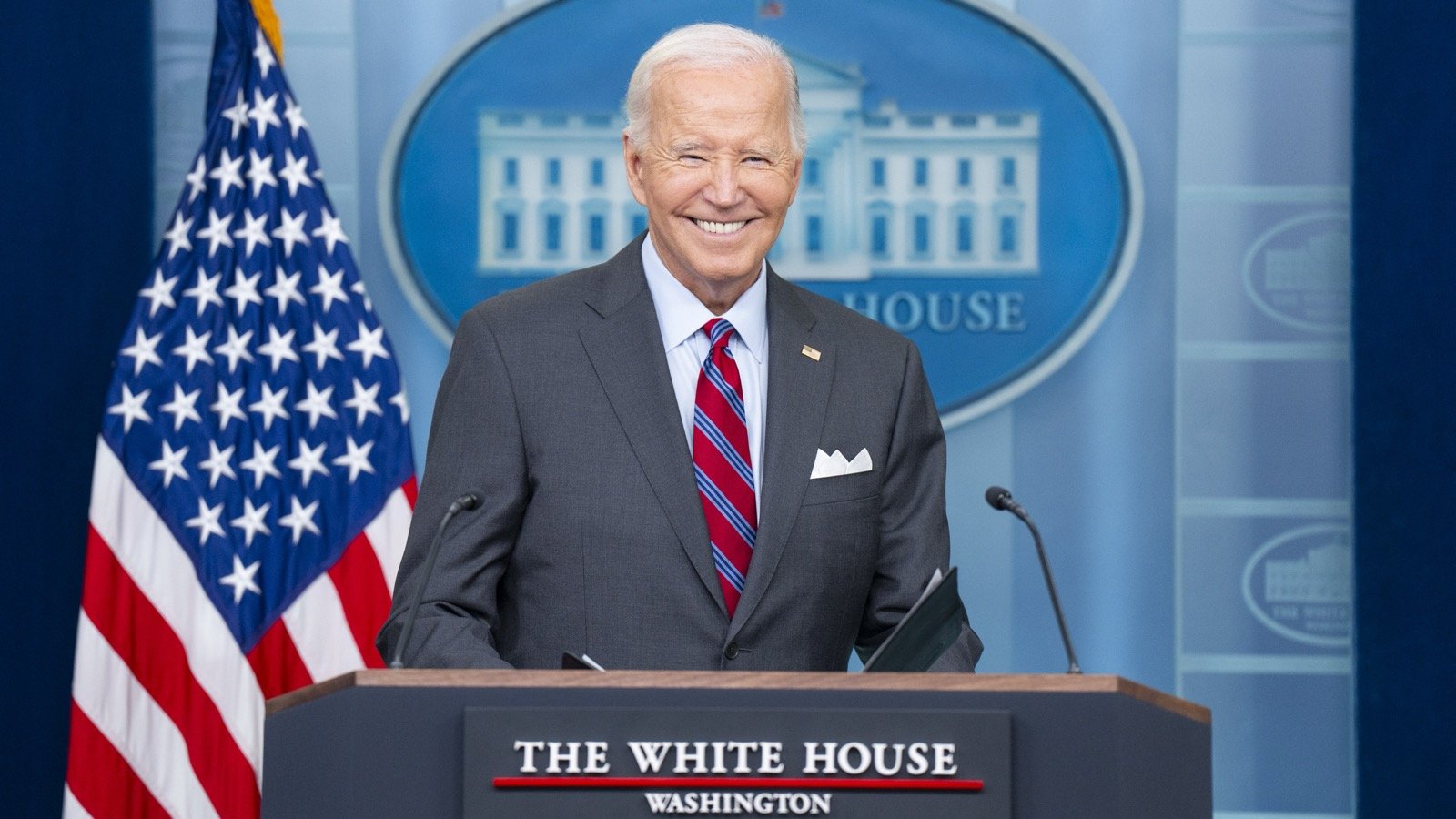
Joe Biden has spent months trying to keep a set of recordings out of public hands.
A federal appeals court just made that task much harder.
In a divided 2-1 ruling, the U.S. Court of Appeals for the District of Columbia Circuit rejected Biden’s emergency request to block the Justice Department from releasing redacted audio and transcripts of conversations he had with memoir ghostwriter Mark Zwonitzer.
The decision does not mean the tapes will be released tonight. The panel paused its ruling until August 3, giving Biden a narrow window to seek further review.
But unless another court steps in, material the former president has fought to keep private is now on a path toward disclosure.
The Associated Press reported that Chief Judge Sri Srinivasan and Judge Gregory Katsas formed the majority, while Judge Florence Pan dissented. Srinivasan was appointed by Barack Obama, Katsas by President Trump and Pan by Biden.
The judges issued their ruling late Monday after an earlier temporary pause. Their new stay expires August 3, giving Biden time to request review by the full appeals court or the Supreme Court.
The majority concluded that the public has a “substantial” interest in the redacted material. Whatever privacy intrusion remains after the government’s proposed redactions, the judges found, likely does not outweigh that interest.
Pan took the opposite view. She stressed that the conversations occurred inside Biden’s home, involved personal subjects and entered government custody through a criminal investigation that ended without an indictment.
Biden’s spokesman said the former president disagreed with the ruling but respected the judiciary.
That split captures the real fight. Biden says these were private conversations for a book.
The other side says the recordings became evidence in a federal investigation, informed a special counsel’s charging decision and now bear directly on whether the Justice Department treated a president differently from any ordinary citizen.
The public-interest argument won.
The recordings date to 2016 and 2017, when Zwonitzer interviewed Biden while working on the memoir “Promise Me, Dad.” Federal investigators later obtained the material during special counsel Robert Hur’s probe into Biden’s handling of classified documents from his years in the Senate and the vice presidency.
That is how old book interviews became federal evidence.
Special Counsel Robert Hur said investigators found evidence that Biden willfully retained and disclosed classified material after leaving office, including classified information about Afghanistan.
The final investigative report ran 345 pages. Hur investigated classified documents found at the Penn Biden Center and Biden’s Delaware home, including material dating to his Senate and vice-presidential service.
Hur nevertheless declined to recommend criminal charges. His report laid out evidentiary weaknesses, Biden’s cooperation and the difficulty prosecutors would face proving willfulness beyond a reasonable doubt.
Investigators had to determine whether Biden knowingly broke the law or simply forgot that sensitive papers and notebooks remained in his possession. Hur concluded that the available evidence would not support a conviction beyond a reasonable doubt.
It also said a jury could view Biden as a sympathetic, well-meaning elderly man with a poor memory.
The report specifically relied on Biden’s recorded conversations with Zwonitzer. Investigators said Biden sometimes read from notebooks containing sensitive national-security information and, in one recorded exchange, told the ghostwriter that he had found “all the classified stuff downstairs.” Biden has denied improperly sharing classified information.
Now the public may get to hear more of the underlying evidence instead of relying entirely on competing descriptions from lawyers and politicians.
The legal road to this point has been unusually tangled.
Biden’s Justice Department initially argued that the recordings were protected from release under federal public-records law. After President Trump returned to office, the department reversed course and said it intended to provide redacted versions to the House Judiciary Committee and the Heritage Foundation, which had sought the material through the Freedom of Information Act.
Biden then sued his former department to stop the disclosure.
The Justice Department’s case summary explains why U.S. District Judge Dabney Friedrich rejected his request in June. The court noted that Hur’s publicly released report relied on the Zwonitzer material both in discussing Biden’s alleged disclosure of classified information and in explaining the decision not to prosecute.
That made the recordings relevant to more than Biden’s private life. They became part of a national dispute over prosecutorial discretion, the former president’s mental condition and the government’s handling of evidence involving the most powerful office in the country.
Friedrich concluded that Biden had not shown the department acted unlawfully when it determined that his reduced privacy interests were outweighed by the public interest. The appeals court has now refused to preserve the injunction while the broader appeal continues.
There is an important distinction here. These are not the same recordings as Biden’s 2023 interview with Hur, portions of which surfaced last year.
These are the earlier conversations with his ghostwriter — the tapes that helped investigators reconstruct what Biden knew, what he possessed and what he said after leaving the vice presidency.
Nor is release guaranteed on August 3. Biden could ask the full D.C. Circuit to reconsider the panel’s decision or seek emergency relief from the Supreme Court.
Either move could delay disclosure again.
Still, the burden has shifted.
Biden is no longer asking a court to preserve the status quo while judges decide whether his privacy claim is likely to succeed. He has lost that request at both the district and appellate levels.
For years, Americans heard that the special counsel’s written description was enough and that the underlying audio added nothing the public needed to know.
Two courts have now rejected that basic position.
If the recordings are released, Americans will not have to take Hur’s word, Biden’s word or the Justice Department’s word for what happened in those conversations.
They will be able to listen for themselves.
Continue reading...
[ H/T WLT Report ]