








Via ZeroHedge
The tit-for-tat escalation between the US and Iran entered its tenth day as another tanker was struck in the Strait of Hormuz. Meanwhile, the Iran-backed Houthis threatened shipping at a second strategic chokepoint in the southern Red Sea.

US Central Command launched strikes targeting Iranian command and control centers, missile and drone launch sites, and air defenses to “further degrade Iranian military capabilities used to attack commercial shipping in the Strait of Hormuz.”
President Trump wrote on Truth Social, “Every time Iran kills an American soldier, they will pay for that killing many times over!”
Still, Pakistan and Qatar are urging both sides to return to their positions before the latest escalation began on July 9. Iran says it remains open to diplomacy but will not negotiate under attack, while the Trump team has signaled that strikes will continue until Tehran stops attacking tankers and bulk carriers in the critical waterway. Reuters reported that mediators have proposed a 10-day ceasefire.
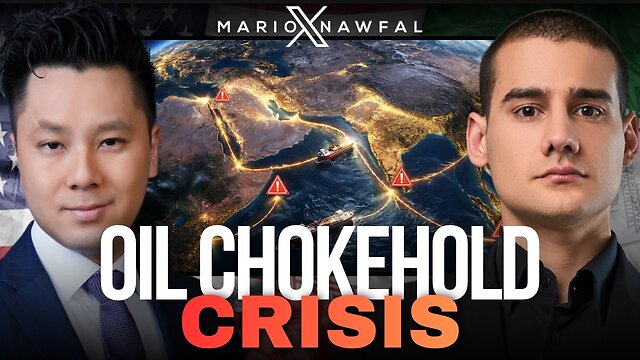
Shipping flows in the Hormuz have all but slowed, according to new Bloomberg data. As of Tuesday morning, just six vessels have transited the critical waterway. The data doesn’t account for ships turning off transponders.

Bloomberg reports that Iran struck another tanker in the strait:
The flare-up in violence sent Brent crude oil futures surging in recent weeks to over $90 a barrel, with Goldman commodity expert Daan Struyven warning on Monday that oil prices could rally to $120 if there is no de-escalation.

“Escalation in the Middle East and the decline in estimated Persian Gulf flows to below 45% of pre-war levels have pushed oil prices back up,” Struyven said in a note to clients.

Related:
Meanwhile, US consumers are feeling the pinch again at the pump, with the national average for regular 87-octane gasoline topping $4 a gallon once more. This is the politically sensitive line in the sand at which the Trump administration takes notice and consumer behavior begins to shift down at convenience stores, gas stations, and QSRs (quick-service restaurants).

Latest headlines (courtesy of Bloomberg):
US-Iran Tit-For-Tat
Diplomacy & Ceasefire Efforts
Regional Risks
Energy & Market Impact
Continue reading...
[ H/T The Burning Platform ]
The tit-for-tat escalation between the US and Iran entered its tenth day as another tanker was struck in the Strait of Hormuz. Meanwhile, the Iran-backed Houthis threatened shipping at a second strategic chokepoint in the southern Red Sea.

US Central Command launched strikes targeting Iranian command and control centers, missile and drone launch sites, and air defenses to “further degrade Iranian military capabilities used to attack commercial shipping in the Strait of Hormuz.”
President Trump wrote on Truth Social, “Every time Iran kills an American soldier, they will pay for that killing many times over!”
Still, Pakistan and Qatar are urging both sides to return to their positions before the latest escalation began on July 9. Iran says it remains open to diplomacy but will not negotiate under attack, while the Trump team has signaled that strikes will continue until Tehran stops attacking tankers and bulk carriers in the critical waterway. Reuters reported that mediators have proposed a 10-day ceasefire.
Shipping flows in the Hormuz have all but slowed, according to new Bloomberg data. As of Tuesday morning, just six vessels have transited the critical waterway. The data doesn’t account for ships turning off transponders.

Bloomberg reports that Iran struck another tanker in the strait:
The flare-up in violence sent Brent crude oil futures surging in recent weeks to over $90 a barrel, with Goldman commodity expert Daan Struyven warning on Monday that oil prices could rally to $120 if there is no de-escalation.

“Escalation in the Middle East and the decline in estimated Persian Gulf flows to below 45% of pre-war levels have pushed oil prices back up,” Struyven said in a note to clients.

Related:
Meanwhile, US consumers are feeling the pinch again at the pump, with the national average for regular 87-octane gasoline topping $4 a gallon once more. This is the politically sensitive line in the sand at which the Trump administration takes notice and consumer behavior begins to shift down at convenience stores, gas stations, and QSRs (quick-service restaurants).

Latest headlines (courtesy of Bloomberg):
US-Iran Tit-For-Tat
- The US and Iran have exchanged strikes for a 10th consecutive day, with US Central Command targeting Iranian military command centers, launch sites, maritime capabilities, and air defenses.
- Iran has retaliated by attacking US military sites in Kuwait and Jordan.
- Trump vowed Tehran “will pay” after Iran killed three US soldiers.
- According to the Washington Post, US intelligence reports suggest US strikes are unlikely to move Iran.
- Iran’s Khorramabad area in Lorestan Province was attacked earlier today.
Diplomacy & Ceasefire Efforts
- Iran’s Interior Minister Eskandar Momeni began meetings Tuesday with mediators in Pakistan as diplomats sought to salvage a collapsed interim deal.
- Mediators have proposed a 10-day ceasefire between Iran and the US to revive the interim deal, according to an unidentified senior Iranian official cited by Reuters.
- Iran’s president said communication with Supreme Leader Khamenei has increased, per Tasnim reports.
Regional Risks
- The Kaifan, an oil-products tanker owned by Kuwait Oil Tanker Co., was struck by an unknown projectile in the Strait of Hormuz northeast of Oman’s Limah.
- The Houthi militant group in Yemen is threatening to blockade Saudi Arabia and target shipping in the Red Sea, adding to regional maritime risks.
- Southeast Asian nations expressed “serious concern” over the conflict, warning of spillover effects on regional trade, food security, and energy markets.
Energy & Market Impact
- Goldman Sachs says Brent crude could top $120 per barrel by the fourth quarter if Strait of Hormuz disruptions persist, though its base case remains $80 per barrel assuming de-escalation.
- European natural gas futures extended gains, surging more than 20% over the previous seven sessions, as the conflict tightens supply ahead of winter.
- Pakistan and Bangladesh were forced to buy some of their most expensive LNG shipments in years due to supply disruptions from the conflict. Pakistan LNG paid about $21.88 per MMBtu, its highest since 2022, according to traders with knowledge of the matter.
Continue reading...
[ H/T The Burning Platform ]