





Hollywood has rediscovered Homer. It is time America’s schools did the same.
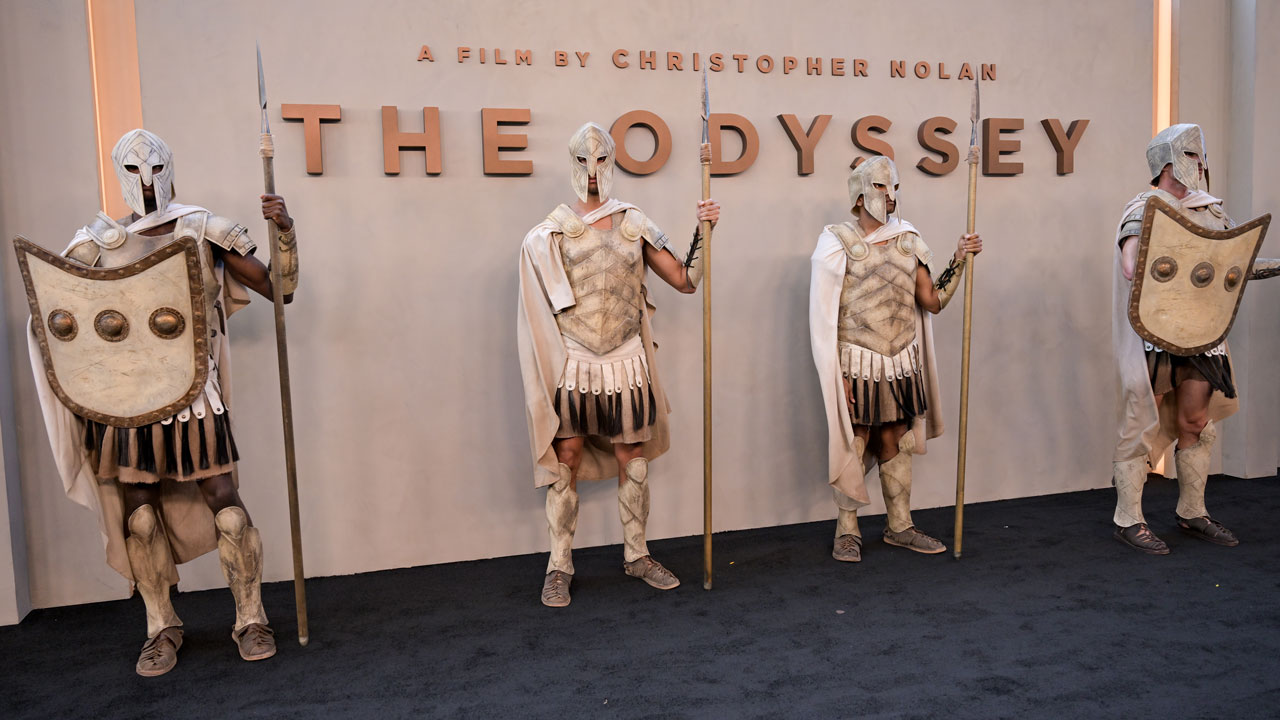
Christopher Nolan’s film “The Odyssey” opened with ticket sales of $264.1 million worldwide, including $124.5 million in the United States and Canada. Half its domestic audience was between 18 and 34 years old.
That’s no small achievement for a story composed nearly 3,000 years ago.
Not surprisingly, some casting choices bear the imprint of Hollywood’s obsession with imposing contemporary progressivism on the past. But the film’s success has nonetheless created a remarkable opportunity for conservatives.
Millions of people, many of them young, are suddenly talking about Odysseus, Penelope, Ithaca, and Troy. More importantly, they are reaching for the original. Publishers Weekly, citing Circana BookScan, reported that print sales of Homer’s “Odyssey” have risen 76% this year.
Conservatives should seize this moment to press for something more important than another cinematic blockbuster: the revival of classical education in America’s schools.
For decades, the educational establishment has pushed aside the great works underpinning Western civilization. Homer, Plato, Aristotle, Shakespeare, Dante, the Bible, and America’s Founders are too often treated as relics of an unenlightened past, useful mainly as targets for criticism.
In their place, students are offered ideology masquerading as education. They are encouraged to view history chiefly through race, gender, and oppression, and to distrust the civilization they inherited before even learning what it contains.
A genuine education does not tell students what to think. It teaches them how to think by introducing them to questions mankind has wrestled with for thousands of years: What is justice? What do we owe our families and our country? What is courage? When must desire give way to duty?
“The Odyssey” endures because it confronts such questions. Odysseus is intelligent but flawed, courageous but repeatedly tempted. He seeks to return not merely to a place, but to his home, his wife, his son and the kingdom for which he bears responsibility.
Some of his greatest battles are against his own pride, appetite, and weakness.
Classical education places such truths at the center of learning. It emphasizes close reading, reasoned argument, history, logic, and rhetoric. It challenges students to confront great ideas rather than memorize fashionable slogans.
It also promotes something many schools have forgotten: Education is about forming character as well as imparting information.
John Adams understood this well. On May 18, 1781, he wrote from Amsterdam to his son John Quincy, who was not yet 14. Along with Dutch, the younger Adams was immersed in Latin and the classics.
“All the End of Study is to make you a good Man and a useful Citizen,” Adams told him.
That sentence captures what education was meant to achieve in the early republic: cultivating the judgment and virtue needed to preserve a free society.
This does not mean replacing progressive indoctrination with conservative indoctrination. The goal is to cultivate minds capable of distinguishing assertion from argument and passing trends from enduring wisdom.
Fortunately, Americans are responding.
According to the Thomas B. Fordham Institute, drawing on Arcadia Education data, classical education now encompasses more than 1,500 public, private, and charter schools serving nearly 700,000 students. It is projected to reach roughly 2,600 schools and more than one million students by 2035. Between 2019 and 2023 alone, 264 new classical schools opened nationwide.
That growth is encouraging, but nowhere near enough.
A free society cannot long survive when its future citizens do not understand its history, institutions, or the responsibilities of liberty.
Classical education is not nostalgia, nor does it require pretending that Western civilization has never fallen short. The West has made mistakes. But it also developed the principles that enabled those mistakes to be recognized and corrected: reason, natural law, equality before the law, and ordered liberty.
That is why progressives are determined to sever young Americans from their civilizational inheritance.
A student who has read Plato, the Bible, Shakespeare, the Federalist Papers, and Abraham Lincoln is harder to manipulate than one whose knowledge of history begins with social media.
Parents, school boards, and lawmakers should use the excitement surrounding Nolan’s film to promote classical schools, expand school choice, and restore the great books to curricula.
Schools should invite students not merely to watch “The Odyssey,” but to read it, debate it, and consider what its lessons demand of them.
Hollywood has reminded America that the classics can still capture the public imagination.
Now our schools must rediscover their power to shape minds and form character.
For if the West is to endure, its children must first understand what they have inherited.
Continue reading...
[ H/T The Daily Signal ]