




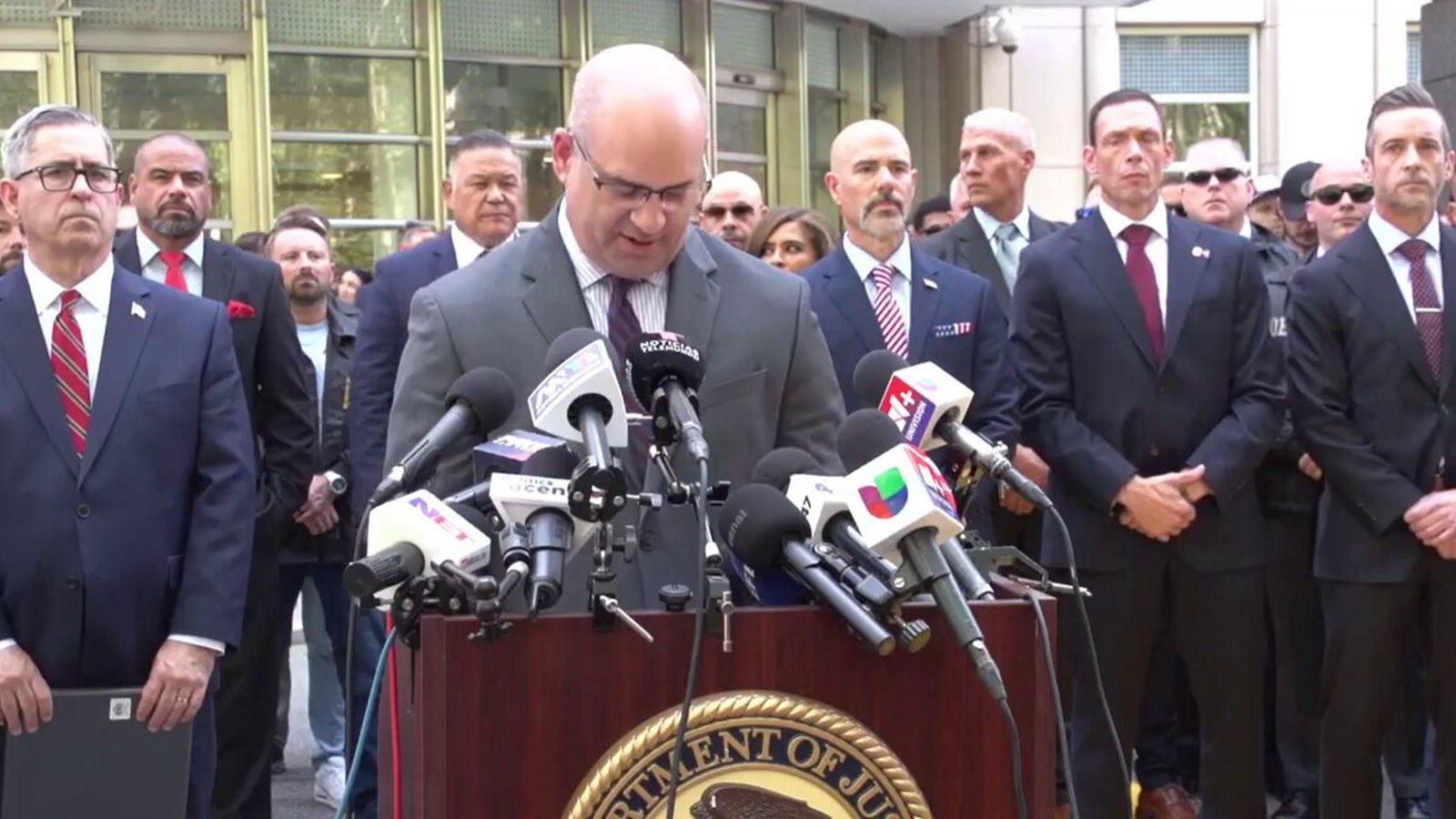
For nearly four decades, Ismael “El Mayo” Zambada García built his power on a simple belief: he could outlast every badge, every indictment and every government hunting him.
On Monday, an American courtroom reduced that legend to two numbers.
Life.
And $15 billion.
The 76-year-old co-founder of the Sinaloa cartel was sentenced to spend the rest of his life in federal prison and ordered to forfeit $15 billion in drug-trafficking profits.
The Justice Department’s sentencing announcement describes a criminal enterprise that moved lethal quantities of cocaine, heroin, methamphetamine and fentanyl into the United States while sending billions in illegal proceeds back to Mexico.
Prosecutors said Zambada used bribery to buy protection, intimidation to silence witnesses and murder to defend the cartel’s power. He pleaded guilty to serving as a principal leader of a continuing criminal enterprise and to a racketeering charge.
The operation was not some street gang with a bigger budget. It had international transportation routes, chemical suppliers, money-laundering networks, corrupt officials and an enforcement arm willing to kill anyone who got in the way.
That is why President Trump’s decision to treat the Sinaloa cartel as a foreign terrorist organization matters.
These groups sell far more than contraband. They poison American communities, destabilize a neighboring country, corrupt governments and turn the border into a commercial artery for organized violence.
Zambada’s arrest came in July 2024, before President Trump returned to office. The investigation itself stretched across administrations and depended on years of work by American and Mexican law enforcement.
There is no need to rewrite that timeline. The real achievement is more durable: the government did not let a decades-old case fade away after the headlines moved on.
Monday’s sentence was folded into the administration’s Homeland Security Task Force initiative, which brings federal agencies together against cartels, transnational gangs, trafficking rings and the financial systems that sustain them.
That approach recognizes an uncomfortable truth. Arresting one kingpin is not enough if his money, suppliers, lieutenants and corrupt protectors remain untouched.
The $15 billion figure needs one important qualification.
It is a forfeiture judgment, not a pile of cartel cash already sitting in a federal vault.
Associated Press reporting from the courtroom says prosecutors have not identified or recovered assets equal to that amount. The judgment reflects the criminal proceeds attributed to the cartel during Zambada’s leadership and gives the government a legal claim against forfeitable assets it can find.
That distinction does not make the order meaningless. It makes the next phase obvious: follow the money, seize what can be traced and force every facilitator to wonder whether the fortune was ever really safe.
The AP also reported that Zambada apologized in court and urged younger people to reject the violence he used for decades. He acknowledged in his guilty plea that his cartel was responsible for moving at least 1.5 million kilograms of cocaine, most of it into the United States.
Words of regret cannot restore a life lost to fentanyl, undo a murder or rebuild a family shattered by addiction. They do, however, strip away the mythology.
The untouchable cartel strategist ended up in a jail uniform, asking an American judge to recommend a prison hospital for his declining health.
For years, El Mayo’s freedom sent a message of its own: become rich enough, violent enough and connected enough, and perhaps justice will eventually stop looking.
Monday sent the opposite message.
Justice can be late. It can be painfully slow.
For one of the most powerful traffickers in modern history, it finally arrived with no release date—and a bill large enough to follow every hidden dollar he left behind.
This is a Guest Post from our friends over at 100 Percent Fed Up. View the original article here.
Continue reading...
[ H/T WLT Report ]