


Visitors headed to America’s flagship history museum are about to encounter something the Smithsonian never planned to put on display.
And they may see it before they even reach the front door.
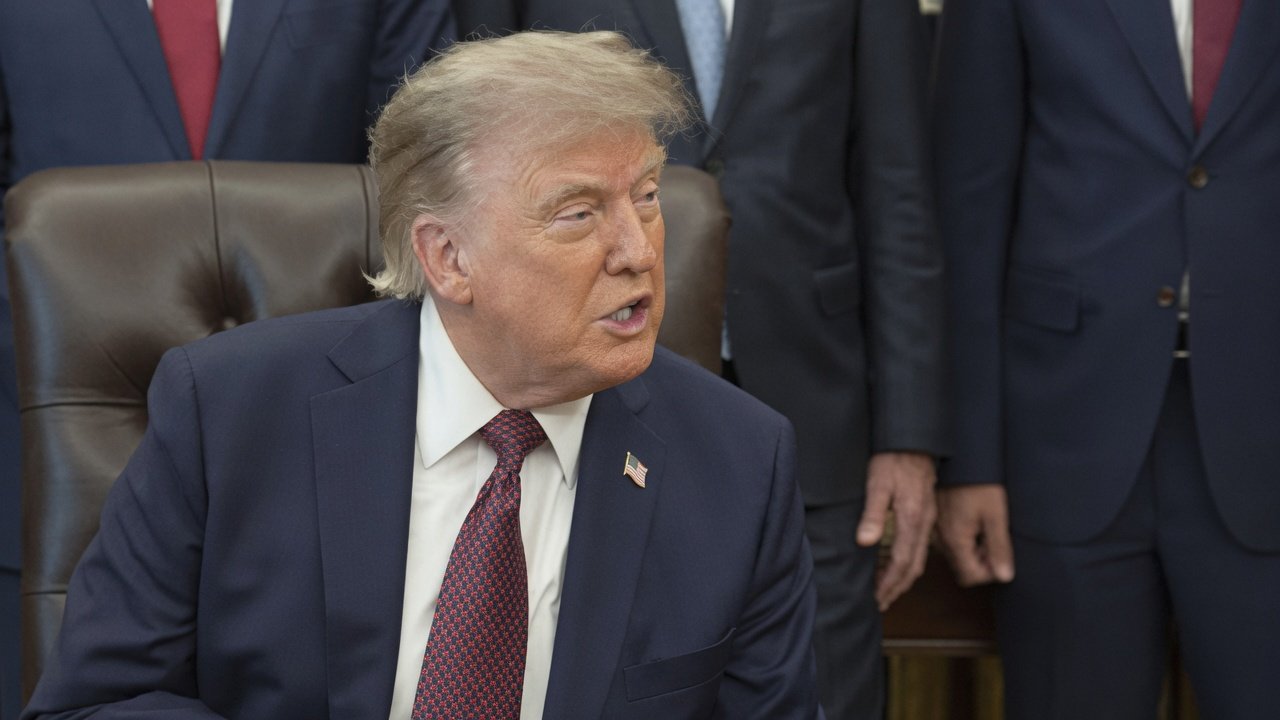
President Trump signed a new executive order Friday directing the National Park Service to place temporary signs along the public sidewalks and walkways leading to the Smithsonian’s National Museum of American History. The White House published the full directive Friday afternoon, making the museum’s approaches part of the administration’s response.
The signs will warn visitors about what the White House calls “ideological capture” inside the museum and direct them to other resources about the nation’s history. They must also tell visitors that exhibits should be renovated in line with the review’s findings.
That alone would be a remarkable public rebuke of one of Washington’s most powerful cultural institutions. The criticism will sit on federal land at the very point where families and tourists approach the museum.
But the order goes further. It calls for temporary exhibits or signs on National Park Service land that correct information the administration considers inaccurate, with special attention to the museum’s treatment of the 56 signers of the Declaration of Independence during America’s 250th anniversary year.
The Park Service must place the notices on federally maintained approaches to the museum. They are supposed to describe the review’s findings, state that exhibits should be renovated and direct the public to historical information the administration considers accurate.
The directive goes well beyond a vague demand that the Smithsonian “do better.” It takes the dispute directly to museum visitors.
If the administration believes it cannot immediately change what people see inside the building, it will tell them why on the way in.
The order also names the Interior Department, Office of Management and Budget, General Services Administration and Domestic Policy Council. Those officials must identify lawful ways to encourage corrections through existing statutes, executive actions, funding rules and contract conditions.
Implementation remains subject to available appropriations and applicable law. The Interior Department is responsible for the order’s publication costs.
The order follows a months-long review by the White House Domestic Policy Council. Its resulting 162-page report, Saving America’s Story, argues that the National Museum of American History has drifted away from teaching a shared national inheritance and toward using history as an instrument of political activism.
The report places much of the responsibility on museum leadership. It points to statements by director Anthea Hartig describing history as a tool of social justice and discussing the need to “reframe” the traditional celebratory narrative of American history.
It then works through exhibits, educational material, outside partnerships and public programming that the authors say repeatedly reduce the American story to oppressors and victims.
Among its most serious accusations, the report says the museum gives the Founders’ religious convictions and natural-rights arguments little room while framing Christianity chiefly through conquest and exclusion. It also argues that the 250th-anniversary programming failed to give the Declaration’s 56 signers the prominence they deserve.
Those accusations moved from a White House report to testimony under oath when the House Oversight Committee convened a July 21 hearing titled “Rewriting American History: Examining the Smithsonian’s Efforts to Reshape the Past.”
The committee said it would examine allegedly divisive or inaccurate programming and the role of activist organizations in shaping the museum’s presentation of the country. The hearing took place in the Rayburn House Office Building three days before Trump signed Friday’s order.
Hartig appeared as the museum’s chief witness. She testified alongside Heritage Foundation senior fellow Mike Gonzalez and Hillsdale College constitutional-government professor Matthew Spalding.
Republicans used the hearing to test the report’s claims against the person running the museum. One of the most politically explosive exchanges came when Rep. Brandon Gill asked about material linking ordinary traits to white-supremacy culture.
Rep. Brandon Gill was referring to material cited in the White House report from a museum-linked “MASS Action Toolkit.” The exchange cut through the academic language and exposed the deeper problem: ideas most Americans would consider absurd had found their way into the orbit of the national museum.
Rep. Tim Burchett pressed her on another set of examples discussed in the report: sexualized and gender-related material that had appeared in museum exhibits or associated resources.
Hartig rejects the White House’s description of her institution.
According to The Associated Press, she said the report did not fairly represent the museum’s full body of work. She argued that expanding the traditional narrative means adding evidence, objects and voices that earlier histories left out—not erasing the nation’s past.
Hartig also said the institution does not take sides in America’s political debates. She acknowledged room for improvement while defending the scholarship, collections and programming produced by museum staff.
That defense deserves to be stated accurately. The administration is alleging ideological capture; Hartig’s answer is that broader representation strengthens the national story rather than replacing it.
The museum is not empty of patriotic treasures. Its anniversary presentation, “In Pursuit of Life, Liberty and Happiness,” includes 250 objects spread throughout the building.
Thomas Jefferson’s writing desk, a Revolutionary War-era gunboat and the Star-Spangled Banner are among them.
Republicans at the hearing acknowledged that important material exists. Their complaint was that the story of the Founding is scattered, difficult to locate and frequently overshadowed by an ideological framework built around race, class, gender and power.
That distinction matters.
No honest museum should airbrush slavery, broken promises, war, discrimination or any other dark chapter out of American history. Pride that depends on hiding the truth is fragile and false.
But honesty is not the same thing as contempt.
A national museum can confront America’s failures without treating the nation itself as a crime scene. It can teach the distance between the Founders’ ideals and the country’s conduct while still explaining why those ideals changed the world—and why generations of Americans fought to make the country live up to them.
The White House says the Smithsonian has lost that balance.
There is also a practical reason the administration believes it has standing to intervene: money.
The Domestic Policy Council report says the Smithsonian received $1.0805 billion in federal appropriations for fiscal year 2026. The White House argues that an institution supported so heavily by American taxpayers has a duty to steward the nation’s history rather than use that trust to push an activist project.
Trump’s order therefore directs the Interior Department, Office of Management and Budget, General Services Administration and Domestic Policy Council to identify every lawful authority available to encourage corrections—including funding requirements and contract conditions.
That could matter far more than the signs.
The Smithsonian is not a normal executive-branch agency that a president can simply command from top to bottom. It is a federally connected trust instrumentality governed by a Board of Regents that includes the chief justice, the vice president, members of Congress and citizen regents.
The order appears designed around that unusual structure. It does not claim to rewrite every display case by presidential decree.
Instead, it uses executive control over surrounding Park Service property and federal financial leverage to force the confrontation into the open.
That is why the visitor signs are so shrewd.
They do not require permission from Smithsonian curators. They create a competing explanation at the exact point where millions of Americans decide how to understand what they are about to see.
Critics will call that political interference in history. Yet the museum’s defenders cannot plausibly argue that its own choices are free of politics while its leadership openly discusses activism, advocacy and reframing national narratives.
The real question is not whether history will be interpreted. It always is.
The question is who gets to do the interpreting, which assumptions are treated as neutral and whether taxpayers are allowed to object when the institution bearing their name no longer reflects them.
President Trump has now delivered his answer.
During the 250th year since the Declaration of Independence, the administration will not allow the Smithsonian’s leadership to have the final word on America’s story.
The reckoning will begin on the sidewalk.
This is a Guest Post from our friends over at WLTReport. View the original article here.
The post President Trump Orders A Smithsonian Reckoning — Visitors Will See It Before They Walk Inside appeared first on 100PercentFedUp.com.
Continue reading...
[H/T 100PercentFedUp]


