
![The Financial Jigsaw, Part 2 (86) – CHINA’S SOCIAL CREDIT SYSTEM; How It Works – Game of Life – Using Artificial Intelligence (AI) – [07-25-26]](https://substackcdn.com/image/fetch/$s_!28mi!,w_1456,c_limit,f_auto,q_auto:good,fl_progressive:steep/https%3A%2F%2Fsubstack-post-media.s3.amazonaws.com%2Fpublic%2Fimages%2Fdb93ec00-48d1-4b8d-8666-ce8869841d0e_1037x670.png)




I learned to read through turning the pages of the New Yorker. It was the cartoons and ads that hooked me, but after I grew fascinated by silent films, I always looked in the back of the magazine for its pages of faraway weekly screenings, my head full of dreams.
Sixty years on, I remember that the most enticing listings were always from the Museum of Modern Art. The museum continues its primacy today, especially during Silent Movie Week, organized by department of film curator and scholar Dave Kehr and department assistant Steve Macfarlane, which begins July 29 at MoMA with a screening of D.W. Griffith’s Way Down East (1920). It will continue through Aug. 4, when a newly restored print of F.W. Murnau’s eerie and ecstatic Sunrise (1927) will be shown for the first time in New York.
In the larger cities, silent films were rarely “silent.” A band, a pianist, an organist, 78 rpm recordings, and sometimes an original score would accompany the screen action. MoMA will respect this tradition by including music for all its films. Opening night should be particularly engaging. Griffith himself supervised the two composers who wrote music for Way Down East, William Frederick Peters and Louis Silvers, and the musicologist Gillian B. Anderson will lead a 10-piece orchestra in the premiere of her reconstruction of what audiences might have heard over 105 years ago.
Most of us know The Student Prince through the 1954 setting of Sigmund Romberg’s operetta with singing by Mario Lanza. The director Ernst Lubitsch made many musicals himself but his version of the material, The Student Prince in Old Heidelberg (1927), was silent and has remained relatively obscure, as it was not successful with audiences or critics. It may be high time for a reevalution of the film, showing Aug. 1.
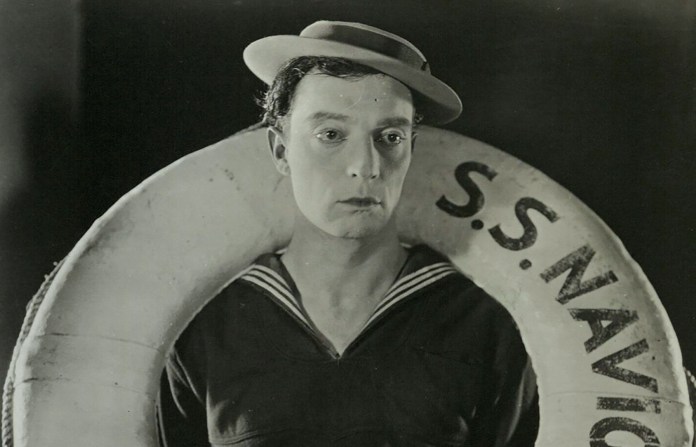
Buster Keaton in “The Navigator.” (The Museum of Modern Art Film Stills Archive)
" data-large-file="https://www.washingtonexaminer.com/wp-content/uploads/2026/07/LA.Culture.072926.jpg?w=696" height="658" width="1024" src="https://www.washingtonexaminer.com/wp-content/uploads/2026/07/LA.Culture.072926.jpg?w=696" alt="Buster Keaton in "The Navigator." (The Museum of Modern Art Film Stills Archive)" class="wp-image-4663029" style="width:761px;height:auto" srcset="https://www.washingtonexaminer.com/wp-content/uploads/2026/07/LA.Culture.072926.jpg 1400w, https://www.washingtonexaminer.com/wp-content/uploads/2026/07/LA.Culture.072926.jpg?resize=300,193 300w, https://www.washingtonexaminer.com/wp-content/uploads/2026/07/LA.Culture.072926.jpg?resize=768,494 768w, https://www.washingtonexaminer.com/wp-content/uploads/2026/07/LA.Culture.072926.jpg?resize=1024,658 1024w, https://www.washingtonexaminer.com/wp-content/uploads/2026/07/LA.Culture.072926.jpg?resize=150,96 150w, https://www.washingtonexaminer.com/wp-content/uploads/2026/07/LA.Culture.072926.jpg?resize=696,447 696w, https://www.washingtonexaminer.com/wp-content/uploads/2026/07/LA.Culture.072926.jpg?resize=1068,687 1068w" sizes="(max-width: 1024px) 100vw, 1024px">
Buster Keaton in “The Navigator.” (The Museum of Modern Art Film Stills Archive)
At an afternoon screening the next day, Aug. 2, there will be a triple feature of Charles Chaplin’s short films for First National from 1918 — the lovely A Dog’s Life; Shoulder Arms, a comedy set on the battlefields of World War I; and a 10-minute propaganda film to help sell U.S. Liberty Bonds that Chaplin made with his regular actors Albert Austin, Edna Purviance, and his brother Sydney.
Buster Keaton is often spoken of as Chaplin’s rival. In fact, aside from the fact that they both made great silent comedies, they had almost nothing to do with each other. Chaplin was generally warm and sentimental, while Keaton was cool and objective. The Navigator (1924), screening on July 30, was Keaton’s biggest success during his lifetime, and he named it at least once as his personal favorite among his films. This complicated story of mix-ups and mishaps at sea will be accompanied by the pianist and organist Ben Model, who will share keyboard duties with Makia Matsumura throughout the festival.
One film has long been particularly hard to find in a quality print. What Price Glory (1926), directed by Raoul Walsh and starring Edmund Lowe and Victor McLaglen, was a huge success in its time but fell out of copyright and was long available only in battered prints from smaller companies. This mixture of raucous comedy and unusually vivid war scenes was considered quite shocking for its time. The restoration being shown here on July 31 is magnificent. It should be noted that What Price Glory has no spoken dialogue but does incorporate sound effects — a technique that Chaplin also used in his last two “silents,” City Lights (1931) and Modern Times (1936).
John Ford’s 3 Bad Men was also difficult to find — and undervalued — for many years until 2007, when a gigantic DVD box set called “Ford at Fox” was issued, containing this Ford film and 23 others. Since then, it has received its own release and has won many admirers, especially for its panoramic images of the Old West. This showing of 3 Bad Men, on Aug. 3, will mark the premiere of a newly recorded orchestral score composed and conducted by Timothy Brock.
We are enormously lucky to have prints of 3 Bad Men and What Price Glory at all, for their negatives haven’t existed in almost 90 years. In the early morning of July 9, 1937, a storage unit in Little Ferry, New Jersey, where 20th Century Fox stored dangerously flammable nitrate film, simply exploded. It was ruled as a spontaneous combustion, apparently because of the summer heat combined with gases escaping from decomposing film, sending flames some 100 feet into the air and killing a 13-year-old boy.
This was the filmic equivalent of the destruction of the Library of Alexandria. Within a few minutes, 683 of the 820 silent films Fox made between 1914 and 1929 were no more. Whole careers vanished in the inferno — all but two of Ford’s 40 silent Westerns that he made for Fox no longer existed, and almost all the early films by the young cowboy star Tom Mix went with them. The legendary “vamp” Theda Bara, whose image as Cleopatra has become one of the most recognizable icons of the silent screen, lost almost all of her films (including all but a few minutes of Cleopatra). It was even worse for Valeska Suratt, whose 11 feature films were destroyed, without a surviving fragment.
We are particularly lucky that Iris Barry, the founder and first curator for MoMA’s film department, toured the world after her appointment in 1935 and acquired original prints of these perishable films. Indeed, the San Francisco Film Preserve version of Sunrise is far and away the most beautiful I’ve ever seen, due in part to the incorporation of parts of the MoMA print that was bought so long ago.
Sunrise vies with King Vidor’s masterpiece, The Crowd (1928), as my favorite silent drama and also features sound effects. Spoken dialogue could hardly have “improved” Sunrise. Indeed, the late historian William K. Everson called it “a textbook illustration not only of what the silent film could achieve despite the lack of dialogue but, on the contrary, what it could achieve because of it.”
“The film is ambiguous as to its setting,” he elaborated. “Certain aspects suggest Europe but it could just as well be taking place in Canada or Georgia. Even the time period is arguable. Clothing is certainly not of the mid-1920’s and, if the automobiles are, then the stylized city set and the futuristic amusement park further — and deliberately — muddy the waters. Yet dialogue … would automatically have tied it to a period and a country, and the universality would have gone.”
WE’RE ALL TOO OLD FOR THE NEW ‘TOY STORY’ MOVIE
Everson was right. In fact, the film’s story would still be comprehensible if its few subtitles were removed (one of Murnau’s earlier silents — 1924’s The Last Laugh — has no titles whatsoever). The characters are not even given names but treated instead as pure archetypes — “The Man,” “The Wife,” “The Woman From the City,” and so on. Murnau planned Sunrise as a timeless, Aesopian fable, and he succeeded. The story is simple and implausible, about a man who sets out to drown his wife but falls ever more deeply in love with her instead. (Many contemporary viewers will mistrust the outcome.)
Still, go on and marvel. Those who have never explored silent film will have a wonderful introduction ahead of them next week. The rest of us will simply bask in the glowing beauty of what film was able to accomplish in the early 20th century and be grateful for what we still have.
Tim Page began making his own silent 8mm films in 1966, a pastime that was captured in the short film A Day With Timmy Page (1967). He is a professor emeritus at the University of Southern California and the winner of the 1997 Pulitzer Prize for Criticism for his writings about music in the Washington Post.
Continue reading...
[ H/T Washington Examiner ]