
![The Financial Jigsaw, Part 2 (86) – CHINA’S SOCIAL CREDIT SYSTEM; How It Works – Game of Life – Using Artificial Intelligence (AI) – [07-25-26]](https://substackcdn.com/image/fetch/$s_!28mi!,w_1456,c_limit,f_auto,q_auto:good,fl_progressive:steep/https%3A%2F%2Fsubstack-post-media.s3.amazonaws.com%2Fpublic%2Fimages%2Fdb93ec00-48d1-4b8d-8666-ce8869841d0e_1037x670.png)


Growing up in Australia, I never fully understood why Americans fought so fiercely for their rights.
I knew, in theory, that rights mattered. But America’s arguments over the First Amendment, the Second Amendment, and other constitutional freedoms often seemed excessive. It took living in Australia, watching how quickly a government can move when rights are treated as privileges, to understand why Americans are right to be so protective of theirs.
Looking at America as it celebrates its 250th birthday, it is impressive to see the level of patriotism Americans have for their Founding Fathers and for the principles on which the country was built. The founders understood the concept of natural rights and recognized the danger of allowing governments to strip those rights away.
Thinkers such as John Stuart Mill also highlighted the importance of protecting individual liberty from government power and the tyranny of the majority. Countries such as Australia, however, developed a different perspective. Although the framers of the Australian Constitution drew inspiration from the American system, they failed to adopt the same understanding of natural rights that the American Founding Fathers had grasped.
At first glance, America and Australia are culturally similar — same language, same movies, many of the same arguments. But on free speech, they’re worlds apart.
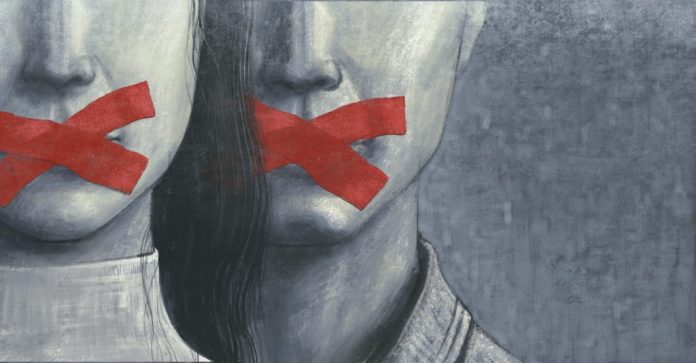
In America, free speech is enshrined in the Constitution; in Australia, it isn’t protected at all. Australia treats it as a privilege; America treats it as a right, and that distinction matters. A right is something government must respect. A privilege is something it can regulate, narrow, or revoke whenever it decides circumstances demand it.
This difference was on display through the COVID-19 lockdowns, when Australia went viral for some of the strictest measures of any democracy, and again, far more tragically, after the 2025 Bondi Beach shooting, which took 15 lives.
In the days after the Bondi massacre, Prime Minister Anthony Albanese warned that “far-right” extremism was on the rise, despite the attack being carried out by radical Islamist gunmen. Soon after, his government fast-tracked the “Combatting Antisemitism, Hate and Extremism” bill through Parliament. Officials said it came together quickly — the speed suggested otherwise. Tucked inside were new restrictions on what the government calls “hate speech.”
That came on the heels of New South Wales Premier Chris Minns, who has been candid about where Australia stands on free expression. Asked whether the laws infringed on free speech, he didn’t dodge it. “Yeah, it does,” he reportedly said — adding that Australia doesn’t “have the same freedom of speech rules that they have in the United States,” and that “if what’s required to keep the public safe lets ordinary Australians enjoy their city, that’s exactly what we’ll do.”
This isn’t an isolated case. In 2024, the same government tried to push through a bill giving regulators power to formally determine what counts as “misinformation,” in effect, what it disagrees with. The bill was withdrawn after backlash, but the instinct behind it is the same instinct on display today.
What the Australian government fails to grapple with, and what America has always understood, is that freedom comes with a cost. When you have freedom of speech, you will sometimes get hate speech. But the real question is what’s worse: letting that speech exist, or letting government decide it knows better? Strip away that freedom, and you don’t just lose a right — you damage the fabric of democracy.
America has come close to this fate, too. During the Biden administration, Murthy v. Missouri reached the Supreme Court. Missouri and Louisiana, joined by five individuals — including epidemiologists who’d criticized COVID lockdowns and the owner of a conservative news site that had been deplatformed — sued the administration, arguing it had pressured social media companies to remove content it deemed “misinformation,” largely about the pandemic, in violation of their First Amendment rights. The Court sided with the government not on the merits, but on a technicality: The plaintiffs lacked “standing” to bring the suit. That never settled whether the pressure crossed a line, but it forced the issue into the open.
That’s the ingredient Australia is missing. Australians often pride themselves on a laid-back, “she’ll be right” attitude — but on this issue, that same instinct has worked against them. Americans, by contrast, treated the First Amendment as sacred and fought for it in court, in public, and in principle. Australia and Britain, by comparison, have largely just absorbed the restrictions.
STOP APOLOGIZING FOR YOUR BELIEFS: WHY COLLEGE KIDS NEED TO GROW A SPINE
That’s the warning. The instincts behind the Biden administration’s approach to “misinformation” are the same instincts now reshaping Australia’s relationship with free speech — and they don’t belong anywhere near the First Amendment. Americans don’t need Australia as a model. They need it as a cautionary tale.
Free speech, even speech we find hateful, has to be protected, because the power to confront and correct what is hateful and wrong is itself part of what makes a society strong. A free society can hear bad ideas and still choose to reject them — on its own terms, not the government’s.
William Nye is a Brisbane-based Australian university student and writer.
Continue reading...
[ H/T Washington Examiner ]