







WHAT’S HAPPENING TODAY: Good afternoon and happy Wednesday, readers! We’re halfway through the week and we hope it’s been a good one so far!
 With help from our editor Joe Lawler, we’re taking a closer look at some energy developments, including the latest efforts by the White House to expand its ratepayer protection pledge.

 We also speak with members of the National Coal Council, who have provided the Trump administration with 19 recommendations aimed at supporting the coal sector and its push for additional West Coast export coal terminals.
Welcome to Daily on Energy, written by Washington Examiner energy and environment writers Callie Patteson (@CalliePatteson) and Maydeen Merino (@MaydeenMerino). Email cpatteson@washingtonexaminer dot com or mmerino@washingtonexaminer dot com for tips, suggestions, calendar items, and anything else. If a friend sent this to you and you’d like to sign up, click here. If signing up doesn’t work, shoot us an email, and we’ll add you to our list.
WHITE HOUSE RATEPAYER PROTECTION PLEDGE GAINS 200 SIGNATURES:
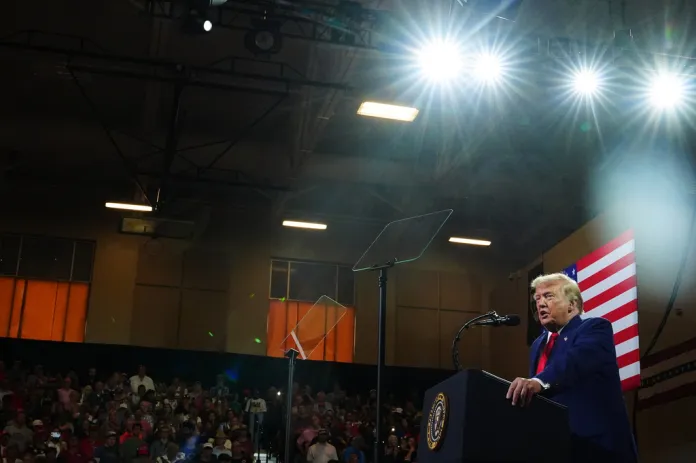
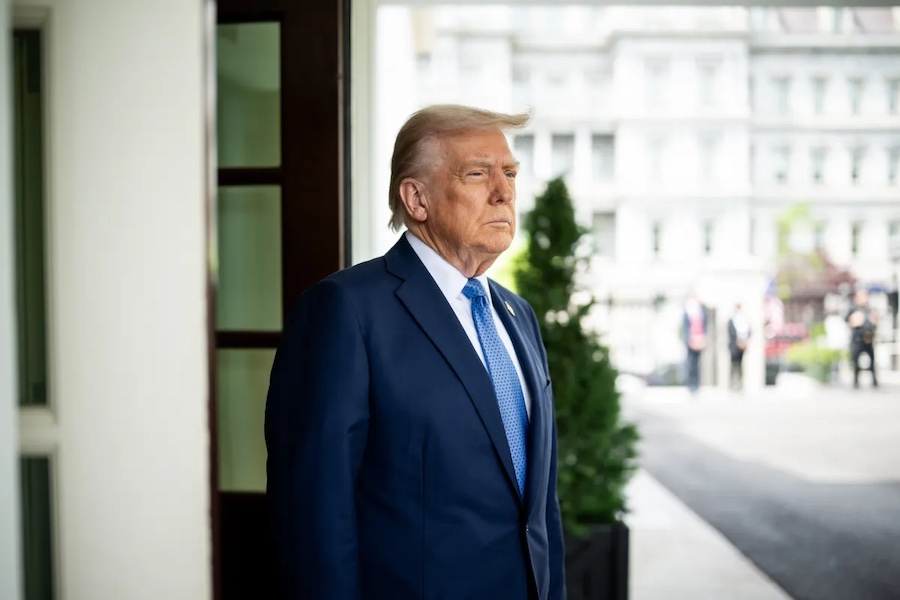
The White House plans to hold a signing event tomorrow at the Environmental Protection Agency to add 200 more signatures to its Ratepayer Protection Pledge.
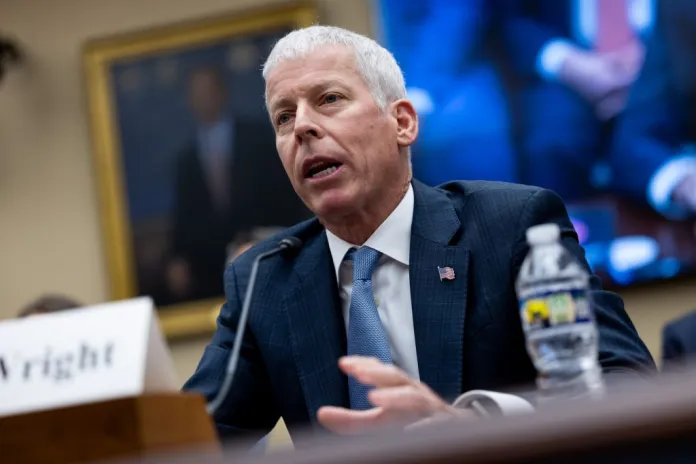
NextEra Energy, Duke Energy, Equinix, and Digital Realty are among the new signatures to be added to the White House’s pledge, as reported by the Wall Street Journal. At the signing event, President Donald Trump will be joined by Energy Secretary Chris Wright and Environmental Protection Agency Administrator Lee Zeldin, a White House official said.
A White House official told Daily on Energy that Republican governors, including Louisiana’s Jeff Landry, Georgia’s Brian Kemp, Nebraska’s Jim Pillen, and Idaho’s Brad Little, are expected to attend the event and sign the pledge tomorrow.
The White House has also gained commitments from several data center developers, public power utilities, and electric cooperatives.
As previously reported by Daily on Energy, Republican Wyoming Gov. Mark Gordon has signed onto the pledge. Montana Gov. Greg Gianforte and Missouri Gov. Mike Kehoe have also committed.
The pledge was first signed in March by several big tech companies, which vowed to secure their own power when constructing data centers. Public opposition to data centers is growing across the country, as people are concerned about energy prices, water consumption, and noise pollution.
THE NATIONAL COAL COUNCIL PUSH FOR WEST COAST EXPORT TERMINALS:
Members of the National Coal Council are asking the Trump administration to support additional West Coast export terminals, arguing they are critical to opening the sector’s access to Asian markets.
Rob Creager, executive director at the Wyoming Energy Authority and a member of the council, told Maydeen that there is a “real opportunity” to cut down export times for countries in Asia that want U.S. coal supplies.
The National Coal Council held its second meeting yesterday, where members provided 19 recommendations to the Trump administration to support the industry and urged the administration to support additional West Coast coal export terminals. The administration last month provided financial support for the buildout of a coal export terminal in Oakland, California.
Creager noted that, aside from the Oakland terminal, Washington’s Millennium Bulk Terminals represent another opportunity to develop a coal export terminal. The coal sector has long tried to transform the port into a coal export terminal, but lawsuits have held up the development.
The council noted in its export report that the Pacific Northwest presents a “large geographical and regulatory barrier for U.S. coal exports.”
The push for additional terminals comes as the coal industry for several decades has been on a downward trajectory. Creager said these terminals are “super helpful” to the sector. He cited that Wyoming has cut its production by half in recent years, but argued coal and other fossil fuel generation are necessary during peak demand times.
The council also called on the Energy Department to increase investments for modernizing and preserving existing coal power plants through grants and loans.
Michelle Bloodworth, president and CEO of America’s Power and a council member, told Maydeen that the DOE grant and loan guarantees are “extremely important.”
She said that, due to the environmental regulatory uncertainty during the Biden and Obama administrations, utilities deferred a lot of needed investments to modernize coal plants.
All the rest
BAD NEWS FROM THE OTHER GLOBAL OIL CHOKEPOINT: It appears that traffic is slowing through the Bab el-Mandeb Strait, the other global oil chokepoint to be threatened in the conflict with Iran, contributing to higher oil prices.
The background: The Houthis, the Iranian-backed terrorist group based in Yemen, declared a maritime embargo of Saudi Arabia on Monday.
Although such threats are not new in the conflict, six ships have turned away from the strait following the declaration, according to the Washington Post.
Why it matters: About 4.2 million barrels of oil transit the strait per day in normal times, according to the Energy Information Administration, about 4% of global supply.
Meanwhile, traffic in the Strait of Hormuz has significantly slowed, with only 13 vessels crossing the waterway Monday and only nine yesterday, according to MarineTraffic.
What happened with oil prices: Brent crude prices rose about 2.6% to $93.43 a barrel as of this afternoon. West Texas Intermediate has gone up 2.32% to $86.30 per barrel.
EUROPE’S NATURAL GAS RESERVES LIKELY TO FALL SHORT BEFORE WINTER: Europe is unlikely to fill its gas storage sites to 80% capacity before the winter, due to market disruptions and competition from buyers in Asia, Equinor CEO Anders Opedal told Reuters.
Europe’s gas storage sites are about 54% full, which is the second-lowest level for this point in the year in 15 years.
The war in Iran has tightened the supply of natural gas to Europe and Asia, which have relied on supplies brought through the Strait of Hormuz. At the same time, Europe has also been phasing out Russian gas. Meanwhile, Asian buyers have been aggressively purchasing liquefied natural gas, raising prices for Europe.
“The gas that was supposed to come from Qatar was supposed to go to Asia, and that means that LNG that earlier in the year came into Europe is now going to Asia,” Opedal told Reuters, referring to the increased competition for global supplies.
TEXAS AND LOUISIANA FACE HEAT WAVE: Texas and Louisiana are facing extreme heat, which has been made worse by Tropical Storm Bertha and driving up electricity demand.
The National Weather Service said that heat index readings in southeast Texas could reach 116 degrees Fahrenheit, and parts of Louisiana could reach 115 degrees Fahrenheit, Bloomberg reported. The extreme heat warning remains in effect throughout the region through tonight at 8 pm.
Bloomberg noted that power demand in Texas is expected to reach a record 90 gigawatts this afternoon, passing the previous high of 85.508 gigawatts set in August 2023.
Tropical Storm Bertha is forecast to reach Louisiana’s southern coast this afternoon and then make landfall in Texas tomorrow night. The storm has weakened but it has increased humidity in the region.
RUNDOWN
Inside Climate News Global Warming Unmakes Winter in the US West
Bloomberg Luxury Homes Are Raising Risks for California’s Insurer of Last Resort
The Associated Press Endangered right whales could wait almost a decade for new US protections
Continue reading...
[ H/T Washington Examiner ]