



Police Departments nationwide embraced Flock Safety’s camera network as a force multiplier, saying the automated license plate readers help recover stolen vehicles, locate missing persons, and solve crimes faster.
But as the cameras spread into thousands of communities across the country, opposition has grown alongside them.
Residents and civil liberties advocates feel the cameras’ mere presence is a violation of their privacy and question how much data the cameras collect and how necessary they are for police investigations.
Flock rejects many of those criticisms and is adamant that municipalities own the data collected, emphasizing how its ALPRs are a victory for public safety.
Those competing narratives leave a central question that has become increasingly difficult for residents to answer: What exactly is Flock collecting, and what happens to that information once it’s captured by cameras?
Interviews with Flock, privacy policy experts, and residents living in communities riddled with Flock’s ALPRs reveal a gap that extends beyond disagreements over surveillance policy.
While critics argue the company has not been transparent enough about its technology and data practices, Flock often responds with broad assurances about privacy, contractual protections, and public safety benefits.
That gap, more than any single criticism, has become one of the company’s biggest challenges as it seeks broader public acceptance.
The company that spread seemingly overnight
Founded in 2017, Flock sells AI-powered camera and audio detection systems to local and state governments for use by law enforcement to better respond to crimes. The company started by aggressively selling to suburban and residential neighborhoods’ homeowner associations when residents were experiencing property crime.
By connecting these private networks to law enforcement across 49 states (all but Alaska), the system quickly blanketed entire metropolitan areas.
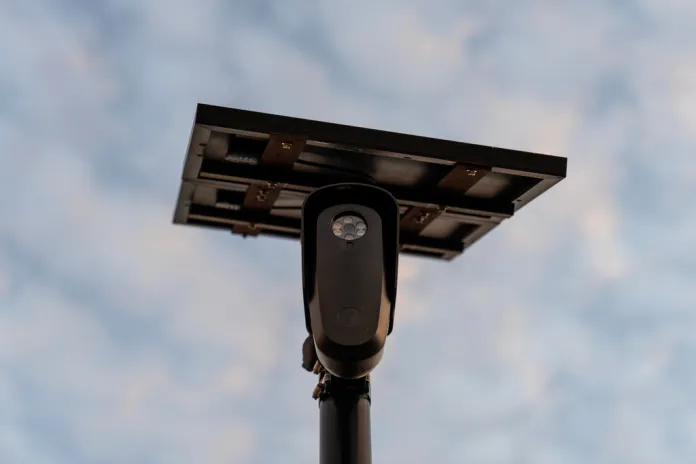
Their most recognizable product has popped up along roadways across the United States: automatic license plate readers. Flock’s Vice President of Government Affairs Kameron Simmons told the Washington Examiner that the company’s ALPRs are the “most important tools available to law enforcement.”
“In the United States, most crimes go unsolved,” Simmons said. “It’s often because law enforcement don’t have the evidence that they need to pursue a lead when a crime does occur. So, Flock is really designed to help agencies better detect, investigate, and respond to crime when it happens in their jurisdiction, and otherwise provide more objective evidence to officers to help them enhance public safety.”
To put the impact Flock’s ALPRs have on communities into perspective, Simmons explained that in 2025, roughly 10,000 missing persons were recovered with the help of Flock cameras.
“Flock serves as a force multiplier for agencies, so it doesn’t replace human police work, but it can help them make sure that they have the tools that they need to collect and respond to crime when it does occur,” Simmons said.
ALPRs essentially create a vehicle “fingerprint” by capturing still images and analyzing identifiable features, such as bumper stickers, dents, make, and model.
“What the camera is doing is collecting a still image of a vehicle when it passes the camera,” Simmons said. According to Flock’s website, cameras “are placed at common vehicle access points such as neighborhood entrances and parking lot exits.”
Simmons explained the vehicle information that is collected by ALPRs is stored by law enforcement for a set period of time to be accessed when it is needed for investigative purposes.
“What officers are getting are … alerts,” Simmons said. “If, for example, a missing person passes one of those cameras, or a suspect with an active warrant for, say, a homicide does the same … they can also use [ALPRs] for investigations to understand what vehicles were at the scene at the time when a crime occurred.”
Data collected by ALPRs are retained for 30 days before deletion, but Simmons noted law enforcement agencies can set their own retention schedules. Flock does not own the vehicle data, as law enforcement owns the data collected in its jurisdiction under its contractual agreements with the company.
“Data itself is stored in the [Amazon Web Services] cloud, but contractually the municipality actually owns that data, not Flock,” Simmons said, adding that “any local law enforcement agency exclusively decides whether they want to share data with any other law enforcement agency. That’s true of state and local law enforcement, and is true of the federal government as well.”
For Simmons, the ability to rapidly collect data that is easily accessible for investigations represents an incredibly useful tool for police. For privacy advocates, they represent something else entirely: the rapid expansion of a surveillance network collecting millions of pieces of information about drivers’ daily movements.
Dissidents see Flock cameras as mass surveillance
For Chad Marlow, the senior policy counsel at the American Civil Liberties Union, ALPRs are not a new issue because they have been around since the 1990s. Marlow said the concern with Flock Safety specifically started when the company took advantage of the lack of state regulations around ALPRs.
When Flock cameras started standing up in neighborhoods, many states did not have laws defining how long vehicle location data could be kept, who could see it, or whether a warrant was required, meaning Flock was legally free to build a massive, interconnected national database.
“You’re now talking about not just mass surveillance on the local level, but mass surveillance on the national level, which is obviously many many times more concerning,” Marlow said.
While Flock champions itself on not retaining data, Marlow counters that any level of data retention is a breach of privacy. For example, New Hampshire has a three-minute license plate retention standard, which only allows a plate to be run against a “hot list” of vehicles police are searching for.
“They just want to hold everything, and so the longer you hold it, the more dangerous it becomes because it can track patterns of our life,” Marlow said, explaining that individuals follow patterns in their everyday lives that can become noticeable after just a week.
The idea of long-term tracking became a flashpoint in Oshkosh, Wisconsin, when a Flock representative told the city council that Flock cameras do not create “heat maps,” or patterns of movement that particular vehicles travel most. When the city council found Flock’s statement to be false, the police chief called Flock to cancel the city’s contract.
Simmons said he was “at a high level familiar with the discussion in Oshkosh, but not the granularity of like what the product discussion was.” The Washington Examiner reached out to Flock for a follow-up on the discussion in Oshkosh but has not heard back.
Tracking and possible infringement on residents’ Fourth Amendment rights have caused a significant rift between communities and Flock. As of 2026, more than 5,000 municipalities have contracts with Flock, with over 100,000 cameras active.
One of those sounding the alarm is Will Freeman, the founder of Deflock, an organization dedicated to informing residents about Flock cameras. Freeman said he first noticed Flock cameras’ widespread use on a cross-country road trip.
“I saw the same cameras surrounding the entire downtown every exit, and I thought, ‘Wow, like these were not here when I was here a few years ago,’” he said. “I looked it up, and then I realized it was just general surveillance, and I think it just got worse from there.”
Freeman said he then posted to Reddit asking what people knew about Flock cameras, which was quickly met with shared concerns about an invasion of privacy.
As residents are raising concerns, municipalities are listening. Between August 2021 and mid-2026, a total of 82 Flock contracts were terminated across 28 states; half of those cancellations occurred in the first half of 2026.
While local reports from cities and towns that have terminated contracts with Flock, citing privacy concerns, Simmons said the cancellations can be due to a number of factors. He also noted Flock continues to work with police departments to renegotiate contracts to address worries.
“I think most people want to know that their cities are going to be safe, that they can trust their local law enforcement agency, and that they can trust their vendor,” Simmons said. “When those conditions are met, most people support license plate reader use. … There’s a variety of reasons that agencies you know choose to adopt certain technologies. It can range from you know budget to the specific types of public safety priorities that they have in their communities and everywhere in between.”
But Freeman counters Flock’s claims that ALPRs are a necessary tool in police work. When diving deeper into the company, Freeman conducted a ride-along with a local police department and found neighbors were willing to share video captured on home security systems, offering the same evidence Flock claims it uniquely grants access to.
“It’s not that it’s not a problem for them to get evidence, if they need evidence, [Flock] just makes it easier,” Freeman said. “It makes it easier with the side effects of making a database of where everyone’s been. And yeah, they like to talk about catching kidnappers, catching murderers, and if they have a vehicle description, like you don’t need it to put everyone into a database.”
While Flock’s website says it creates “a shared network built to stop crime,” Simmons emphasized the importance of respecting privacy.
PRIVACY ADVOCATES FRET OVER META IMAGE TOOL THAT WORKS ON PUBLIC ACCOUNTS
“We really do not believe that you have to make a decision between trading off privacy and public safety,” Simmons said. “The way that we’ve designed Flock, is the communities can have both, and we think that these tools are really important public safety technologies.”
Freeman and Marlow’s concerns about privacy, despite Flock’s attempt to turn down the temperature, have ultimately led to a bruising battle.
Flock’s biggest challenge may be itself
For both the ACLU and Deflock, the debate over Flock’s cameras is no longer just about privacy. It is about whether the company has meaningfully addressed the questions communities continue to raise as the technology spreads.
Marlow explained that Flock has done little to make a real change.
“Most of their responses to criticisms of their operations and their policies and their safeguards are PR responses,” Marlow said. “They’re not actual security and privacy forward responses.”
The most public example of Flock’s response to critiques, Marlow said, occurred when multiple press outlets found law enforcement officers had been using the system to track partners and romantic interests by inputting bogus investigation reasons.
“There was one police department that we know of alone in Oregon where the reason it put in for its investigation 111 times was ‘investigation,’” Marlow said.
Flock was made aware of officers misusing input for an investigative purpose, so the company switched to a drop-down menu to ensure a legitimate reason was provided for a vehicle search.
Freeman said that does little to address the problem.
“The same people using these systems, but they have a dropdown box. So now they’re not allowed to type in the honest reason, so they just select something from a dropdown box that disguises the reason,” Freeman said. “They just, they quickly adapt to whatever sounds like the issue. They don’t actually solve the request.”
A RENEWED WAR MEANS RENEWED GOP MIDTERM WORRIES
Marlow explained that in his opinion, Flock does not give privacy concerns any weight.
“They view every privacy concern about their company as a PR problem, not as a privacy problem, and so they will respond to it in a PR way,” Marlow said.
Continue reading...
[ H/T Washington Examiner ]