


A legal war that has been building for weeks just exploded into a 26-jurisdiction courtroom showdown.
And the fight is much bigger than one pot of federal money.
Twenty-five states and Washington, D.C., filed an 85-page federal complaint Thursday against two agencies in President Trump’s administration. The coalition is asking a judge to block a set of conditions attached to emergency-preparedness and homeland-security grants.
The case was filed in the U.S. District Court for the District of Rhode Island.
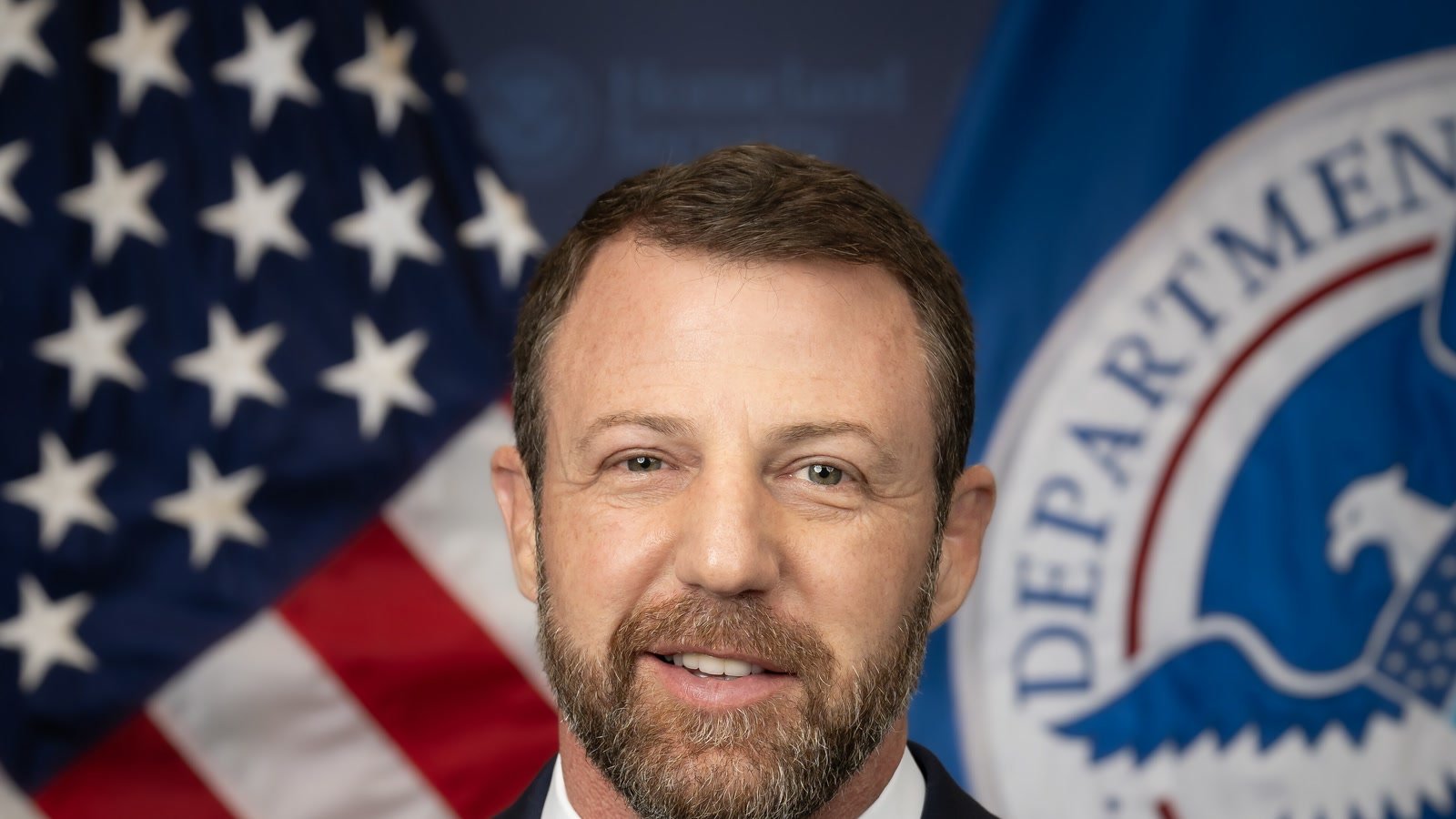
The named defendants are the Federal Emergency Management Agency, the Department of Homeland Security, acting FEMA head Robert J. Fenton and DHS Secretary Markwayne Mullin.
The coalition includes 24 attorneys general plus the governors of Kentucky and Pennsylvania. California, Illinois, New Jersey and Rhode Island are leading the case.
The immediate financial stakes are enormous.
According to the federal court complaint, the plaintiff states were allocated more than $740 million through the fiscal year 2026 Homeland Security Grant Program. DHS and FEMA plan to hold back at least 20% until the states satisfy the disputed conditions.
That places at least $148 million in immediate jeopardy, the states say. Continued noncompliance could threaten even more.
The complaint describes where that money goes. It supports state bomb squads, SWAT teams, fusion centers, emergency communications, cybersecurity programs, search-and-rescue units and specialized teams trained to respond to terrorism or weapons of mass destruction.
Many awards remain open for three years, so a fight over one funding cycle can disrupt programs long after the fiscal year ends.
But money is only the leverage.
The real fight is over who gets to set the rules for American elections.
The administration’s conditions require states to use the federal SAVE system to verify the citizenship of people in state voter-registration databases. They also require affected jurisdictions to move away from voting systems that rely on bar codes or QR codes and toward equipment that accepts hand-marked paper ballots.
States must conduct a manual audit covering at least 5% of ballots, reconcile the number of participating voters with the number of ballots cast and provide DHS with evidence of compliance.
Those are the election-security demands at the heart of the lawsuit.
Pennsylvania Gov. Josh Shapiro, one of the plaintiffs, framed them as a federal attempt to seize control from the states.
That is the coalition’s argument in its most politically charged form.
The states say election administration belongs primarily to them and that Congress never authorized DHS or FEMA to rewrite state election law through antiterrorism grants. They call the 20% holdback a financial penalty designed to force changes Congress never enacted.
That puts the funding mechanism itself under a federal judge’s microscope.
The political reality is just as striking: the requirements these officials are fighting include paper ballots, manual audits, voter-and-ballot reconciliation and citizenship checks.
Those are not shadowy demands hidden in a classified memo. They appear in the administration’s published grant terms.
The official fiscal year 2026 grant notice puts the full Homeland Security Grant Program at $1.064 billion, with 56 awards expected. The program funds the State Homeland Security Grant Program, the Urban Area Security Initiative and Operation Stonegarden.
The money supports counterterrorism, emergency response, cybersecurity, border coordination and protection for high-risk public spaces. It is not a small or symbolic program.
The application window closes July 24. The notice makes election security a national priority and keeps one-fifth of the relevant state and urban-area awards out of reach until DHS accepts the recipient’s proof of compliance.
DHS’s position is that election systems are critical infrastructure and that the federal government has a legitimate interest in demanding stronger safeguards before releasing the full award.
Secretary Mullin defended that broader push the same day the lawsuit was filed.
President Trump is leading from the front on election security.@DHSGOV is partnering with the states to secure their elections—but we can’t do it alone. ONLY Americans should decide American elections.
PASS THE SAVE ACT.pic.twitter.com/StojTgST8s
— Secretary Markwayne Mullin (@SecMullinDHS) July 23, 2026
FEMA offered an even more direct response after the suit landed.
In a statement reported by CBS News, the agency dismissed the challenge as partisan resistance to common-sense election protections. FEMA said states must take concrete steps to protect election integrity before receiving their complete Homeland Security Grant Program awards.
The agency also argued that election security is national security. That is the bridge the administration is using to connect voting procedures to a program best known for funding first responders, bomb squads, cybersecurity, disaster preparation and protection for vulnerable public sites.
The states want the court to tear down that bridge.
Their complaint invokes both the Administrative Procedure Act and the Constitution’s Spending Clause. It argues that Congress did not give DHS or FEMA authority to attach these sweeping conditions, that the agencies failed to follow lawful decision-making procedures and that the terms are vague, coercive or unrelated to the grants’ statutory purposes.
What are your thoughts?
TAP HERE TO ADD YOUR VOTE
The election provisions are only one branch of the case.
The coalition is also challenging immigration-enforcement conditions that could require states to assist with federal civil immigration operations. And it objects to language allowing FEMA to terminate grants when an award no longer advances agency priorities or the government’s view of the national interest.
The California Department of Justice says those provisions put billions of dollars in broader emergency-management funding at risk and create uncertainty for long-term programs. Its announcement points to grants that pay for emergency staff, counterterrorism work and preparations for natural disasters or mass-casualty events.
California also points to two earlier cases brought in the same Rhode Island federal court.
In 2025, the court blocked immigration conditions attached to FEMA funding. It later stopped DHS from redirecting homeland-security money away from jurisdictions the administration considered insufficiently supportive of its agenda.
The new complaint openly builds on those victories. One of the earlier rulings is on appeal, but the coalition clearly believes it has found a favorable battlefield.
California says it and its cities receive roughly $150 million from HSGP each year. Another FEMA program named in the fight helps states pay the emergency-management personnel who prepare for natural disasters and mass-casualty events.
The Illinois Attorney General’s office says the latest terms would force states to undo years of election-system planning and spend millions to satisfy policies unrelated to terrorism prevention. Illinois receives more than $40 million in HSGP funding each year for state and local readiness.
Illinois also objects that DHS has not disclosed the methodology states must use to reconcile voters and ballots. Its filing says state officials could be forced to abandon years of work and large investments while the midterm election is already approaching.
The same money supports preparations for terrorism, cyberattacks and other major threats. That is why the state says the election conditions are disconnected from the purpose Congress assigned to the grant.
That explains why the pressure is real.
It does not settle whether the pressure is lawful.
The judge’s task is narrower than choosing the best voting system. The court will have to decide whether DHS and FEMA may use these particular grants to require hand-marked paper ballots, citizenship verification and manual audits.
That distinction matters.
A state can support citizen-only voting and still argue that an executive agency exceeded its authority. The lawsuit itself does not prove that every plaintiff opposes every election-security measure on the merits.
At the same time, voters are entitled to notice what their officials are willing to fight in court.
Many Americans have spent years asking for auditable paper ballots, cleaner voter rolls and a reliable way to confirm that only citizens participate in federal elections. The Trump administration has now tied real financial consequences to those demands.
Twenty-five states and Washington, D.C., are telling a federal judge that the administration crossed the line.
The administration is telling the country that election security is too important to fund without accountability.
Now the question moves from political speeches to a courtroom.
And with the midterm elections approaching, this is one legal fight neither side can afford to treat as routine.
Continue reading...
[ H/T WLT Report ]