

President Trump's fraud crackdown just moved into one of the biggest money pipelines in Washington: federal student aid.
The target is a scam most Americans have probably never heard of, but taxpayers have been paying for it anyway.
They are called "ghost students." Fake or stolen identities get used to enroll, trigger aid, and vanish once the money goes out.
Rep. Kevin Kiley had already flagged just how bad this problem was getting in California's community college system:
Now the Trump administration says it is putting real-time screening directly into FAFSA.We recently learned an astounding one-third of community college applications in California are fake. They're just used for financial aid fraud.
Following our letter to the Secretary of Education, the Department is now implementing new identify verification requirements. pic.twitter.com/iRalTMdadu
— Rep. Kevin Kiley (@RepKiley) June 18, 2025
The Department of Education laid out the new system in its official announcement:
That is the meat of the story.Today, the U.S. Department of Education (the Department) launched a new, real-time fraud detection capability for the Free Application for Federal Student Aid (FAFSA®) form, marking the largest and most comprehensive, nationwide fraud prevention effort in the agency's history. Effective immediately, fraud detection is built directly into the FAFSA itself, with every applicant evaluated in real-time using risk-based identity screening. Applicants who display a certain level of fraud risk will now be required to present government-issued identification before accessing federal student aid funds such as Pell Grants and federal student loans.
The Department also recently began conducting a one-time review of all previously submitted 2026-27 FAFSA forms using the new screening technology, ensuring that all federal student aid program dollars are supporting students and families, not fraudsters. The Department estimates that its efforts to identify and deny federal student aid to fraudulent students will save taxpayers over $1 billion during this year's FAFSA cycle.
During the COVID-19 pandemic, the Biden Administration removed key verification safeguards, diverted resources away from fraud prevention, and required less than one percent of students to verify their identity following the submission of the FAFSA. These policies led to institutions across the country coming under siege by highly sophisticated fraud rings, 'ghost students,' and AI bots.
The Department strengthened real-time data-sharing with the Social Security Administration to prevent identity theft and stop money from going to dead individuals, saving the American taxpayer more than $30 million.
The Department resumed automated post-screening of student aid records, preventing overpayments to ensure lifetime federal Pell Grant limits are respected and enforced, saving American taxpayers more than $10 million.
The Department partnered with the U.S. Department of Homeland Security to ensure illegal aliens no longer receive federal student aid funds.
This is not just another government form update. The Department says suspicious applicants can now be challenged before Pell Grants and federal loans go out the door.
The agency is also going back through previously submitted 2026-27 FAFSA forms with the same screening technology.
Fox News Digital framed the new crackdown this way:
Fox's report added several key details that matter here.The Trump administration is stepping up its crackdown on fraud and "ghost students," launching a real-time fraud detection tool.
Americans deserve education. Fraudsters deserve nothing.
The new tool was launched directly into the FAFSA process on Monday morning, and potentially high-risk applicants can be flagged before they access taxpayer-funded student aid.
Those flagged applicants may have to provide government-issued identification before they can receive Pell Grants or federal student loans.
Fox also reported that the Education Department estimated more than $1 billion in taxpayer savings during this year's FAFSA cycle, and that the tool had already screened 50,000 applications by Monday afternoon.
That matters because ghost-student fraud is not simply a clerical problem. It can involve stolen identities, fabricated applicants, AI-powered bot activity, and criminal networks that enroll, trigger aid disbursements, and then disappear before schools realize what happened.
The U.S. DOGE Service put the broader student-aid fraud number in plain terms last month:
That earlier warning now looks like the setup for Monday's new FAFSA screening tool.Over $1 BILLION in federal student aid fraud has been stopped since January 2025.
This is what was uncovered:
— U.S. DOGE Service (@USDS) March 23, 2026
The Trump administration says the problem got worse after key verification safeguards were removed during the COVID-19 pandemic, when the Department says less than 1 percent of students were required to verify their identity after submitting FAFSA.
That is exactly the kind of opening fraud rings look for.
The Department says those policies helped leave schools exposed to fake applicants, stolen identities, AI bots, and criminal networks using the student aid system like an ATM.
Inside Higher Ed gave a closer look at what students and colleges may actually see when the system flags an application:
Inside Higher Ed reported that low-risk and moderate-risk applicants should see no change to the FAFSA process.Students may encounter a new identity-verification step.
Colleges have been grappling with fraudulent aid applications for years.
Some concerns and potential bumps in the road remain.
But high-risk applicants may be asked to complete a live automated camera check and present a valid government-issued ID. That could include a driver's license, passport, tribal ID, or permanent resident card.
If the applicant clears that check, the FAFSA process can continue.
If the applicant cannot clear it on the spot, the student's Institutional Student Information Record can be rejected, and the issue may have to be handled through the college or university financial aid office.
The outlet also highlighted a practical issue for legitimate students: if someone is flagged, a smartphone or tablet may be needed to complete the live verification, even if the FAFSA was started on a laptop or desktop computer.
That matters, because the best anti-fraud system still has to avoid trapping legitimate students in red tape.
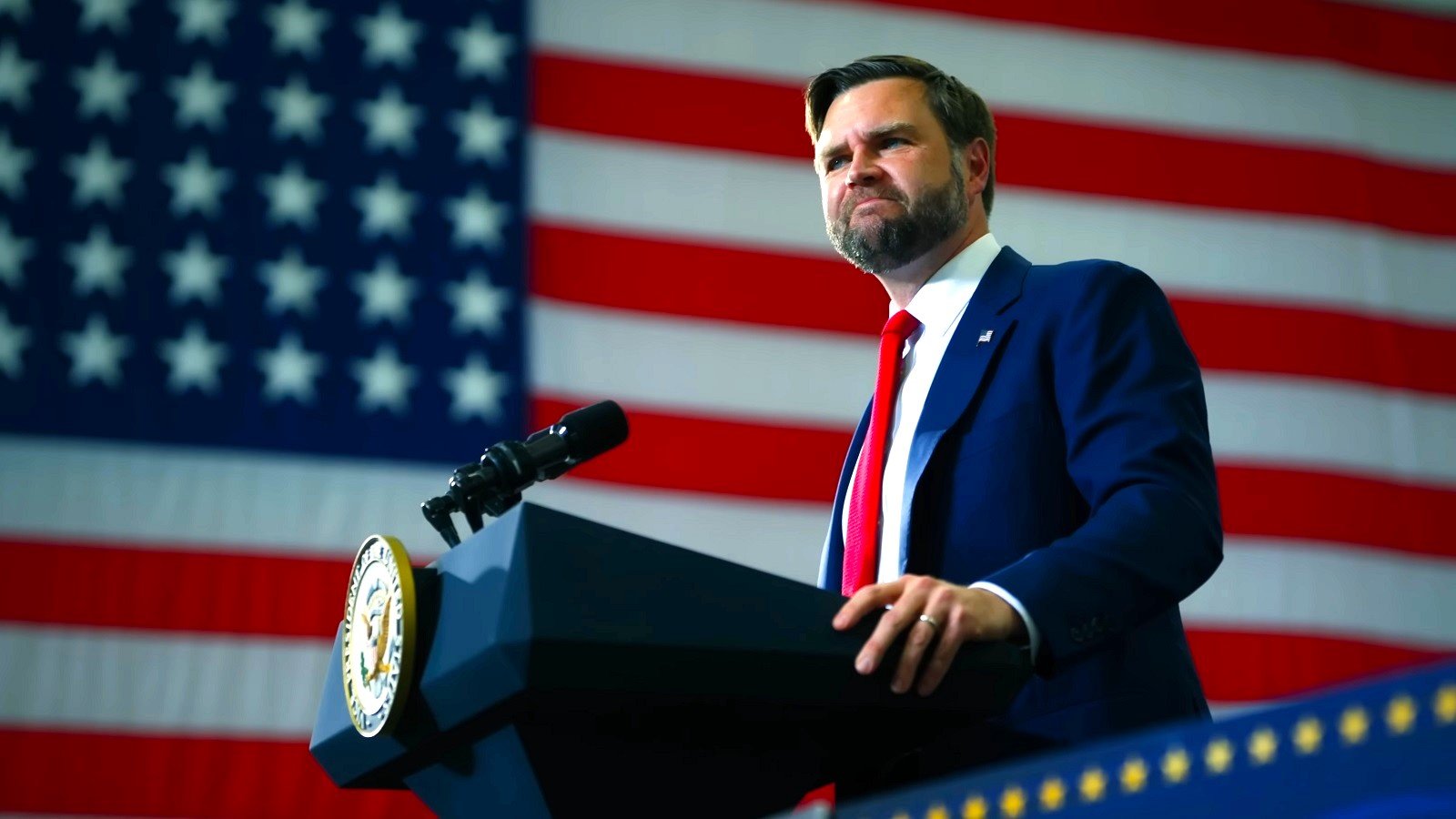
Vice President JD Vance is now chairing the White House Task Force to Eliminate Fraud, and the FAFSA move fits into that wider federal cleanup push.
Vance made the mission simple:
Federal student aid is supposed to help actual students, not organized fraud rings.“[Fraud] has to stop. The President of the United states has ordered us to stop it, and that's what this task force is going to do” – Vice President Vancepic.twitter.com/n9NuWUbnOP
— Vice President JD Vance (@VP) March 30, 2026
Real students need help paying for school. Real families need relief. Real taxpayers deserve to know their money is not being shoveled out to bots, scammers, and fake identities.
This is what government is supposed to do: protect the people who play by the rules and shut the door on those who don't.
The post <a href=https://wltreport.com/2026/04/27/trumps-fraud-czar-just-put-ghost-students-notice/#utm_source=rss&utm_medium=rss&utm_campaign=trumps-fraud-czar-just-put-ghost-students-notice target=_blank >Trump’s Fraud Czar Just Put ‘Ghost Students’ On Notice</a> appeared first on Conservative Angle | Conservative Angle - Conservative News Clearing House
Continue reading...