
Winter Storm In “Ludicrous Mode” As 10,000 Flights Canceled, Power Outages Near 1 Million, And Grids Strained
The major winter storm we’ve been tracking all week is now blanketing much of the eastern half of the U.S., with snow falling from Oklahoma through Louisville, Cleveland, Washington, DC, Baltimore, and Philadelphia, and now reaching Boston.
🚨 Our Winter Storm is in full LUDICROUS MODE, unleashing insane Snow and catastrophic Ice across the Eastern U.S.
❄️ This storm is every bit as big and impactful as forecast – a true Once in a Decade Winter Storm, and it’s nowhere near done.
🌨️ Snow is absolutely DUMPING… pic.twitter.com/0hPHbcMzjw
— Brady Harris (@StormCat5_) January 25, 2026
Impacts are already significant, with the largest surge in flight cancellations and delays since the Covid era: Airlines have canceled more than 10,00 U.S. flights for Sunday, according to the flight-tracking site FlightAware. Most in single day since Covid era.
every flight at DCA is canceled today. https://t.co/OsAss5Khft
— Jake Sherman (@JakeSherman) January 25, 2026
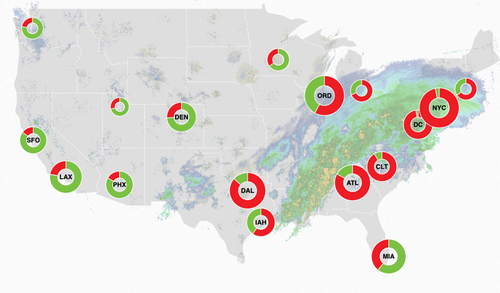
FlightAware’s Misery Map of delays and cancellations shows severe travel disruptions across major airports, from Dallas and Atlanta to Washington, DC, New York City, and Boston.
“Extremely cold air will follow, prolonging dangerous travel and infrastructure impacts into next week,” the National Weather Service wrote in an early morning weather update.
Attention now turns to energy risks, as extreme cold raises the threat of natural gas production freeze-offs and reduced pipeline flows, increasing the potential for power grid stress from Texas through the Mid-Atlantic and into the Northeast.
And so it begins. Per today’s early-cycle pipeline data, I calculate that #natgas production will tumble by 4.7 BCF/d from Friday to 101.4 BCF/d, down -1.8 BCF/d vs last year for the first year-over-year decline in over a year. Expect additional weakness a temporary freeze-offs… pic.twitter.com/KcZ4VDJcbF
— Celsius Energy (@CelsiusEnergyFM) January 24, 2026
Related:
NatGas Futs Erupt As Arctic Air Invasion Penetrates Deep Into U.S. South
US NatGas Spikes Most Since Ukraine Invasion On Arctic Blast, Major Winter Storm Threat
US NatGas Poised For Biggest Weekly Spike On Record As “Blizzard Of ’96” Fears Resurface
Appalachian NatGas Output Faces “Intense Losses” As Arctic Blast Drives Power Grid Risk Higher
NatGas Jumps 75% As Extreme Cold, Blizzard Risks Threaten Appalachian Gas Supply
NatGas “Tightening Shock” Sparks Historic Weekly Rally As Major Winter Storm Imminent
Winter Storm Threatens Appalachian NatGas With ‘Freeze Offs’ As Data Center Demand Tightens PJM Grid
Earlier, the Department of Energy issued a special emergency alert to “mitigate blackouts in the Mid-Atlantic” by allowing power plants operate above “environmental permits or state law.”
“As Winter Storm Fern brings extreme cold and dangerous conditions to the Mid-Atlantic, maintaining affordable, reliable, and secure power in the PJM region is non-negotiable,” said Secretary of Energy Chris Wright.
West Virginia’s coal fired power plants are saving the eastern electric grid this morning pic.twitter.com/ISgR8BuXKy
— savage daughter (@DonnaPrissyrn1) January 24, 2026
Wright noted, “The previous administration’s energy subtraction policies weakened the grid, leaving Americans more vulnerable during events like Winter Storm Fern. Thanks to President Trump’s leadership, we are reversing those failures and using every available tool to keep the lights on and Americans safe through this storm.”
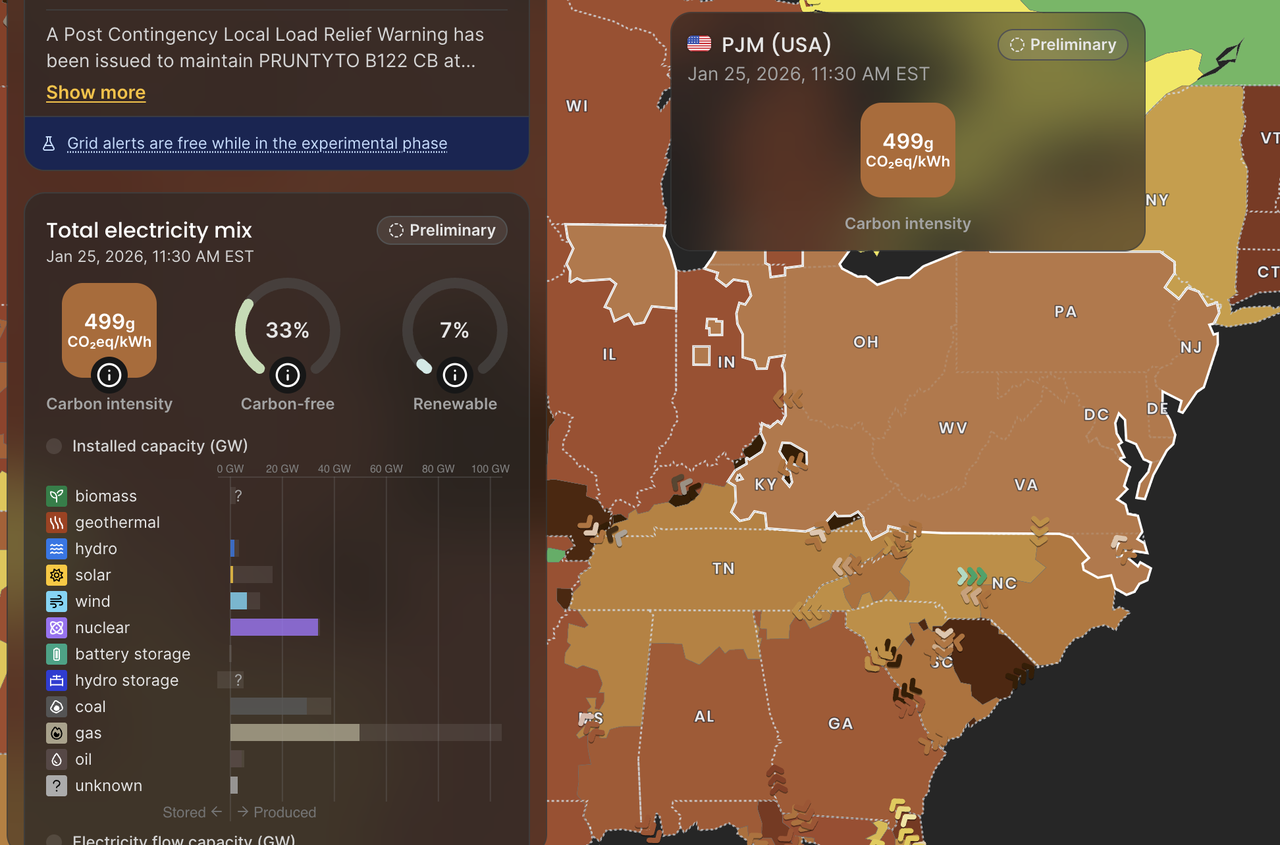
PJM Interconnection is the regional grid operator that runs wholesale electricity markets and grid reliability across much of the Mid-Atlantic and parts of the Midwest and South
The power generation mix on PJM is mostly NatGas, coal, and nuclear, with unreliable renewable power such as solar and wind barely producing power. In other words, fossil fuels and nuclear power are keeping the grid from collapsing as heating demand surges.
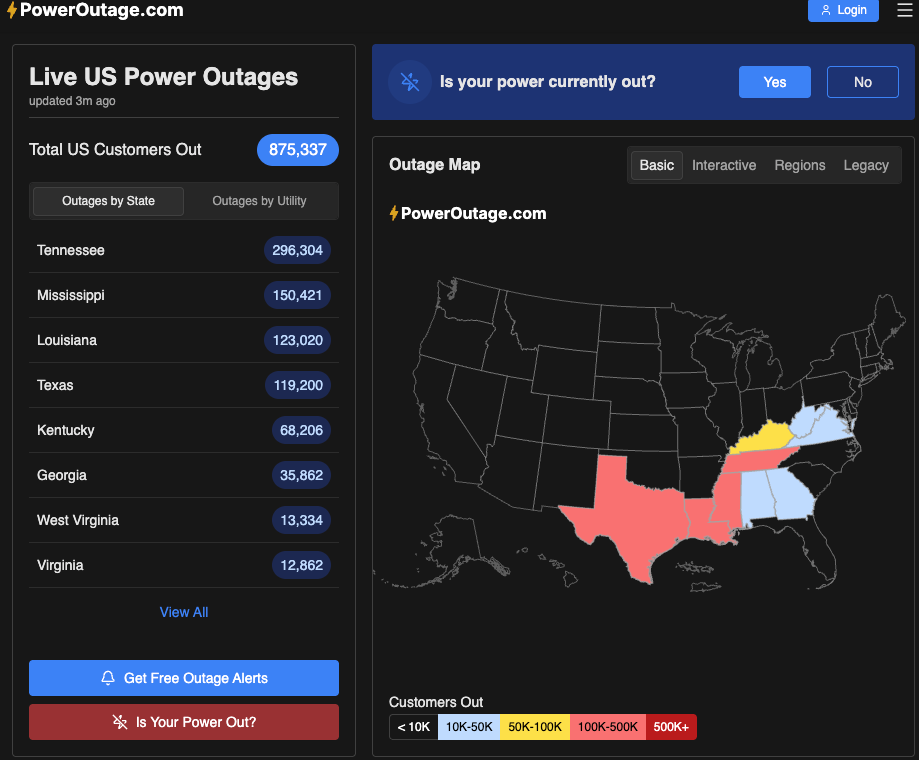
Power outage tracking website PowerOutage.com shows nearly 900,000 customers from Texas to Virginia without electricity. Tennessee has the highest number of outages at nearly 300,000, followed by Mississippi with about 150,000.
*Developing.
Tyler Durden
Sun, 01/25/2026 – 12:15
Google Search
