
“A Christmas Carol” offers redemption on steroids. Imagine Tony Soprano joining the Witness Protection program and starting a nonprofit for vulnerable mothers. Ebenezer’s makeover is that extreme.
That kind of arc always draws a crowd. Sometimes, said crowd can be massive. A certain pilot defied age, conventional wisdom, and his own ego to make “Top Gun: Maverick” the 2022 movie that Steven Spielberg claimed “saved Hollywood.” It’s just one of endless examples, but few characters are given the kind of emotional comeback Scrooge enjoys in the Dickens’ yarn.
Americans in particular crave tales of second chances and attempts to wipe a personal slate clean. “A Christmas Carol” excels on both fronts, letting Scrooge amend his selfish ways before he becomes a diaphanous ghost himself.
That also explains why we keep getting fresh takes on “How the Grinch Stole Christmas.” The “Carol” overlaps are obvious, down to the green ghoul’s heart expanding three times in the final passages.
Dickens never shared that kind of a literary X-ray with readers, but it’s hard to doubt Scrooge’s ticker didn’t undergo a change of sorts by story’s end.
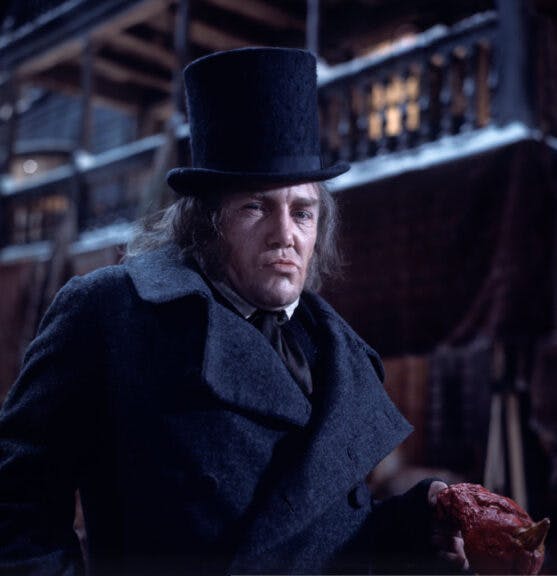
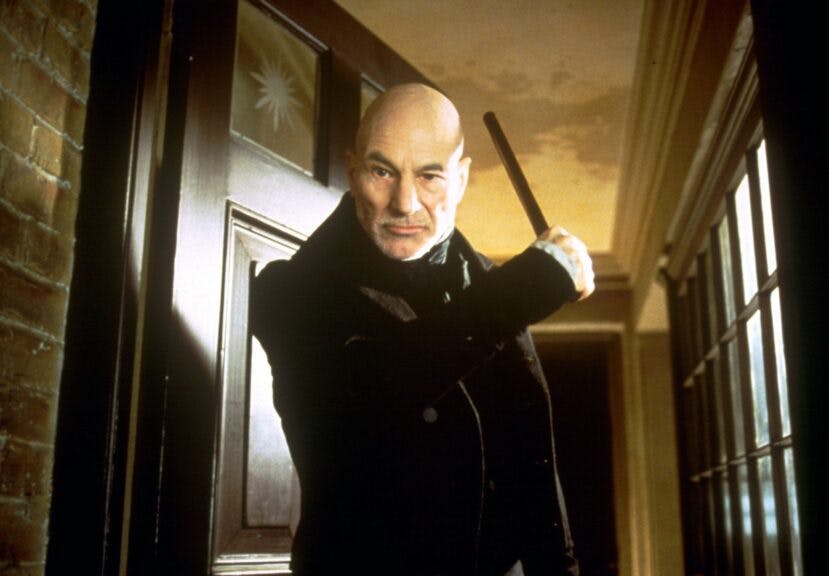
Ebenezer Scrooge offers one of the meatiest roles possible for an actor. It explains why so many legends have given life to the curmudgeon, including Patrick Stewart, Derek Jacobi, Michael Caine, Sir Ralph Richardson, and Albert Finney.
Keystone Colour/Getty Images
It’s the ultimate acting challenge, asking stars to embody a wicked character careening from rage and regret to rebirth.
The original tale may be set in the mid-1800s, but the story’s timeless approach remains storytelling catnip. Class envy. Greed. Family ties. Lost loves. It’s hard to name an essential emotion left out of the narrative.
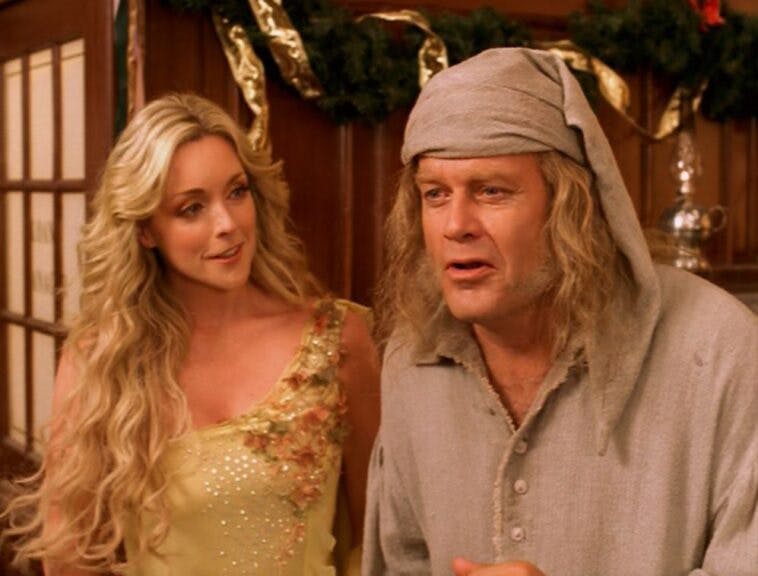
And, of course, the story’s spiritual implications can’t be overlooked. Even a sinful soul like Ebenezer can confess his transgressions with the hope he’ll be embraced by his Creator. His nightmarish journey finds ghostly visions exposing the error of his ways, an afterlife close-up meant to trigger his weak, but still worthy spirit.
Credit: Hallmark Entertainment/Mid Atlantic Films
His spiritual reboot won’t come easily, even with those ghostly visions taunting him at every step. Does it ever? But when he wakes up on Christmas morning, his heart is alight with good cheer. Even better? He can’t wait to share it, along with his wealth, with others.
Dickens considered himself a Christian, though he had complicated views on religious dogma. Scrooge’s generosity in the final act reflects his creator’s vision of Christian charity.
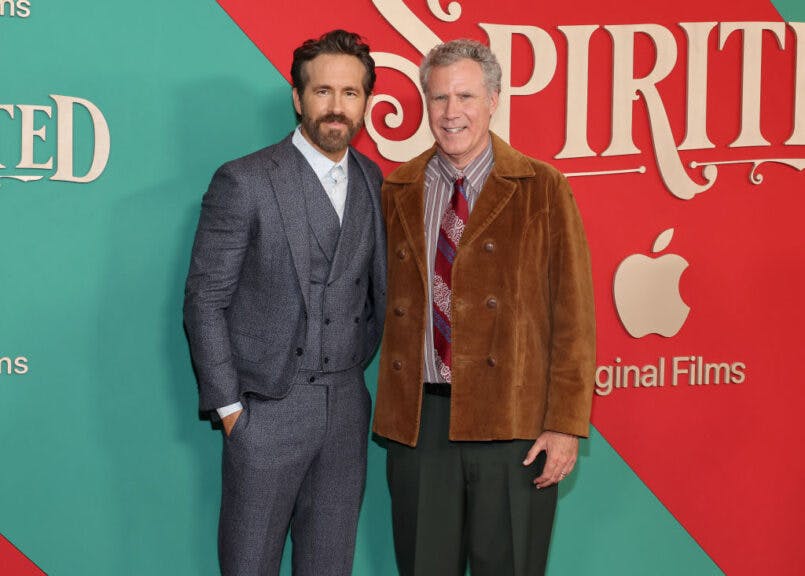
The story offers marvelous flexibility, inviting endless spins still tethered to its main themes. We’ve seen more than a few musical variations on “A Christmas Carol” from the aforementioned Mr. Magoo “Carol” to “Spirited,” the Apple TV+ original where Will Ferrell embodies a very 21st-century Scrooge.
Cindy Ord/Getty Images
It can even be viewed as a horror yarn with very little effort. Ghosts and morbid visions of the afterlife flash before Scrooge’s eyes, visuals that could easily transform into genre chills.
That may have attracted both West and Eggers, auteurs who relish ways to make audiences squirm. Just the tinkle-tinkle sound of a ghost’s chains bumping along a wooden floor alone is enough to rally goosebumps.
We even endured pre-woke gender swaps on the saga, including 1995’s “Ebbie” (with Susan Lucci) and 1997’s “Ms. Scrooge” with Cicely Tyson. And the less said about the rom-com spin on “Carol,” the forgettable 2009 film “The Ghosts of Girlfriends Past” with Matthew McConaughey, the better.
Chances are the West and Eggers projects won’t be the last Hollywood takes on “A Christmas Carol.” As long as we crave hope in a sometimes dark and dreary world, we’ll hunger to revisit Dickens’ yarn anew.
* * *
Christian Toto is an award-winning journalist, movie critic, and editor of
Want to break Grok, ChatGPT or your preferred A.I. bot? Ask it how many versions of Charles Dickens’ “A Christmas Carol” have been produced since the tale’s 1843 debut.
Over the decades, the irascible Ebenezer Scrooge has been portrayed by everyone from George C. Scott to Mr. Magoo. That doesn’t include endless literary updates (Faith Moore’s “Christmas Karol” being a recent highlight), high school productions and other takes on the classic yarn.
CBS Photo Archive/Getty Images
And the remakes just keep coming.
Indie filmmaker Ti West (“The Innkeepers,” “Pearl”) is working on a new version dubbed “Ebenezer: A Christmas Carol” to star Johnny Depp alongside Daisy Ridley, Ian McKellen, Sam Claflin, and Rupert Grint of “Harry Potter” fame.
“Nosferatu” director Robert Eggers has his own “Carol” plans to include Willem Dafoe in a role Scrooge McDuck made even more famous. That could be the creepiest “Carol” to date, given Eggers’ film resume.
But why? Sure, it’s easy to say Hollywood hearts beloved IPs for brand recognition alone. Plus, consumers will gobble up just about any Yuletide-themed flick. Netflix this season alone gave us fresh features like “Jingle Bell Heist,” “My Secret Santa,” and “A Merry Little Ex-Mas.”
The Hallmark Channel alone is a St. Nick movie factory come December, though none present an existential threat to holiday classics like “Elf” and “Home Alone.”
Those are partial explanations. The other reasons are more complicated and embedded in our cultural DNA.
Humans love redemption stories, period. It doesn’t matter what race or creed one may be, nor how a person voted in a given election. We flock to stories where a flawed soul finds something meaningful at long last.
Credit: TNT/Hallmark
“A Christmas Carol” offers redemption on steroids. Imagine Tony Soprano joining the Witness Protection program and starting a nonprofit for vulnerable mothers. Ebenezer’s makeover is that extreme.
That kind of arc always draws a crowd. Sometimes, said crowd can be massive. A certain pilot defied age, conventional wisdom, and his own ego to make “Top Gun: Maverick” the 2022 movie that Steven Spielberg claimed “saved Hollywood.” It’s just one of endless examples, but few characters are given the kind of emotional comeback Scrooge enjoys in the Dickens’ yarn.
Americans in particular crave tales of second chances and attempts to wipe a personal slate clean. “A Christmas Carol” excels on both fronts, letting Scrooge amend his selfish ways before he becomes a diaphanous ghost himself.
That also explains why we keep getting fresh takes on “How the Grinch Stole Christmas.” The “Carol” overlaps are obvious, down to the green ghoul’s heart expanding three times in the final passages.
Dickens never shared that kind of a literary X-ray with readers, but it’s hard to doubt Scrooge’s ticker didn’t undergo a change of sorts by story’s end.
Ebenezer Scrooge offers one of the meatiest roles possible for an actor. It explains why so many legends have given life to the curmudgeon, including Patrick Stewart, Derek Jacobi, Michael Caine, Sir Ralph Richardson, and Albert Finney.
Keystone Colour/Getty Images
It’s the ultimate acting challenge, asking stars to embody a wicked character careening from rage and regret to rebirth.
The original tale may be set in the mid-1800s, but the story’s timeless approach remains storytelling catnip. Class envy. Greed. Family ties. Lost loves. It’s hard to name an essential emotion left out of the narrative.
And, of course, the story’s spiritual implications can’t be overlooked. Even a sinful soul like Ebenezer can confess his transgressions with the hope he’ll be embraced by his Creator. His nightmarish journey finds ghostly visions exposing the error of his ways, an afterlife close-up meant to trigger his weak, but still worthy spirit.
Credit: Hallmark Entertainment/Mid Atlantic Films
His spiritual reboot won’t come easily, even with those ghostly visions taunting him at every step. Does it ever? But when he wakes up on Christmas morning, his heart is alight with good cheer. Even better? He can’t wait to share it, along with his wealth, with others.
Dickens considered himself a Christian, though he had complicated views on religious dogma. Scrooge’s generosity in the final act reflects his creator’s vision of Christian charity.
The story offers marvelous flexibility, inviting endless spins still tethered to its main themes. We’ve seen more than a few musical variations on “A Christmas Carol” from the aforementioned Mr. Magoo “Carol” to “Spirited,” the Apple TV+ original where Will Ferrell embodies a very 21st-century Scrooge.
Cindy Ord/Getty Images
It can even be viewed as a horror yarn with very little effort. Ghosts and morbid visions of the afterlife flash before Scrooge’s eyes, visuals that could easily transform into genre chills.
That may have attracted both West and Eggers, auteurs who relish ways to make audiences squirm. Just the tinkle-tinkle sound of a ghost’s chains bumping along a wooden floor alone is enough to rally goosebumps.
We even endured pre-woke gender swaps on the saga, including 1995’s “Ebbie” (with Susan Lucci) and 1997’s “Ms. Scrooge” with Cicely Tyson. And the less said about the rom-com spin on “Carol,” the forgettable 2009 film “The Ghosts of Girlfriends Past” with Matthew McConaughey, the better.
Chances are the West and Eggers projects won’t be the last Hollywood takes on “A Christmas Carol.” As long as we crave hope in a sometimes dark and dreary world, we’ll hunger to revisit Dickens’ yarn anew.
* * *
Christian Toto is an award-winning journalist, movie critic, and editor of HollywoodInToto.com. He previously served as associate editor with Breitbart News’ Big Hollywood. Follow him at HollywoodInToto.com.
The views expressed in this piece are those of the author and do not necessarily represent those of The Daily Wire.
Christmas Sale – Get 40% off New DailyWire+ Annual Memberships
