
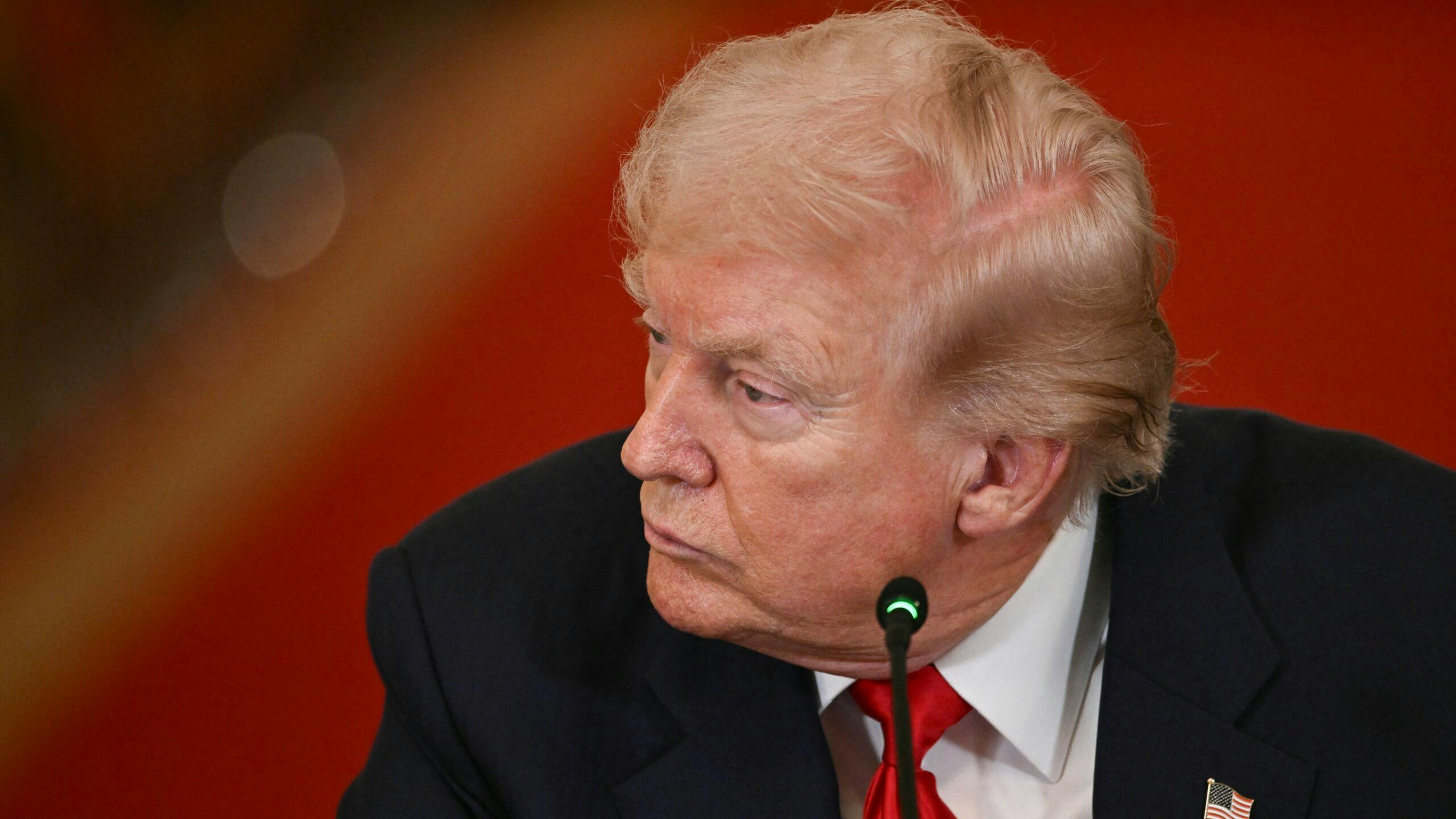
U.S. President Donald Trump met executives from seven defense contractors on Friday, he announced in a social media post, as the Pentagon works to replenish supplies drawn down by U.S. strikes on Iran and other recent military operations.
The meeting underscores the Trump administration’s drive to shore up weapons stocks after the Iran operation drew on munitions.
“We just concluded a very good meeting with the largest U.S. Defense Manufacturing Companies where we discussed Production and Production Schedules,” Trump said in a social media post.
Companies including Lockheed Martin, Raytheon parent RTX, BAE Systems, Boeing , Honeywell Aerospace, L3Harris and Northrop Grumman, attended the meeting, Trump said.
Pentagon negotiators have not been able to reach terms with large defense contractors as quickly as they would like, a U.S. official told Reuters earlier this week.
The administration has been steadily ratcheting up pressure on defense contractors to prioritize production over shareholder payouts. Trump signed an executive order in January to identify contractors deemed to be underperforming on contracts while distributing profits to shareholders.
Since Russia invaded Ukraine in 2022 and Israel’s military operations in Gaza, the U.S. has drawn down billions of dollars’ worth of weapons stockpiles, including artillery systems, ammunition and anti-tank missiles.
In a sign of the preparations underway ahead of Friday’s gathering, Deputy Defense Secretary Steve Feinberg held a call with select defense contractors on Wednesday evening, a previously unreported development, people familiar with the matter told Reuters, speaking on condition of anonymity. The Pentagon did not respond to a request for comment.
At the center of the talks are deals with large contractors like Lockheed Martin, two government sources and one industry executive said. In January the company reached a seven-year agreement with the Pentagon to increase annual production capacity for its PAC-3 missile interceptors to 2,000 units a year from about 600 previously. The company has announced it expects to quadruple production of its Terminal High Altitude Area Defense, or THAAD, missile interceptors to 400 per year from 96.
In the social media post following Friday’s meeting Trump said the companies had agreed to quadruple production of precision-guided munitions – but clarified efforts to increase production began three months ago.
Demand for air defense systems such as the PAC‑3 has surged among the United States and its allies amid heightened geopolitical tensions and the conflict in Iran.
The White House meeting also may coincide with the release of a supplemental budget request of around $50 billion, which Reuters was first to report on Tuesday. The new money would pay for replacing weapons used in recent conflicts including those in the Middle East. The figure is preliminary and could change depending on the length of the operation.
The supplemental request would come on top of an additional $150 billion in defense spending included in Republicans’ sweeping “one big beautiful bill.”
(Reporting by Mike Stone in Washington; editing by Diane Craft)
Google Search
