
Sharing one’s testimony of faith feels intimidating for a lot of people. Many Christians, churches, and discipleship programs get their guidelines from the apostle Paul’s testimony in Acts 26 when he stood before King Agrippa and shared his coming-to-faith story — starting with his former life, moving to his encounter with Jesus, and concluding with his decision to repent and follow Christ.
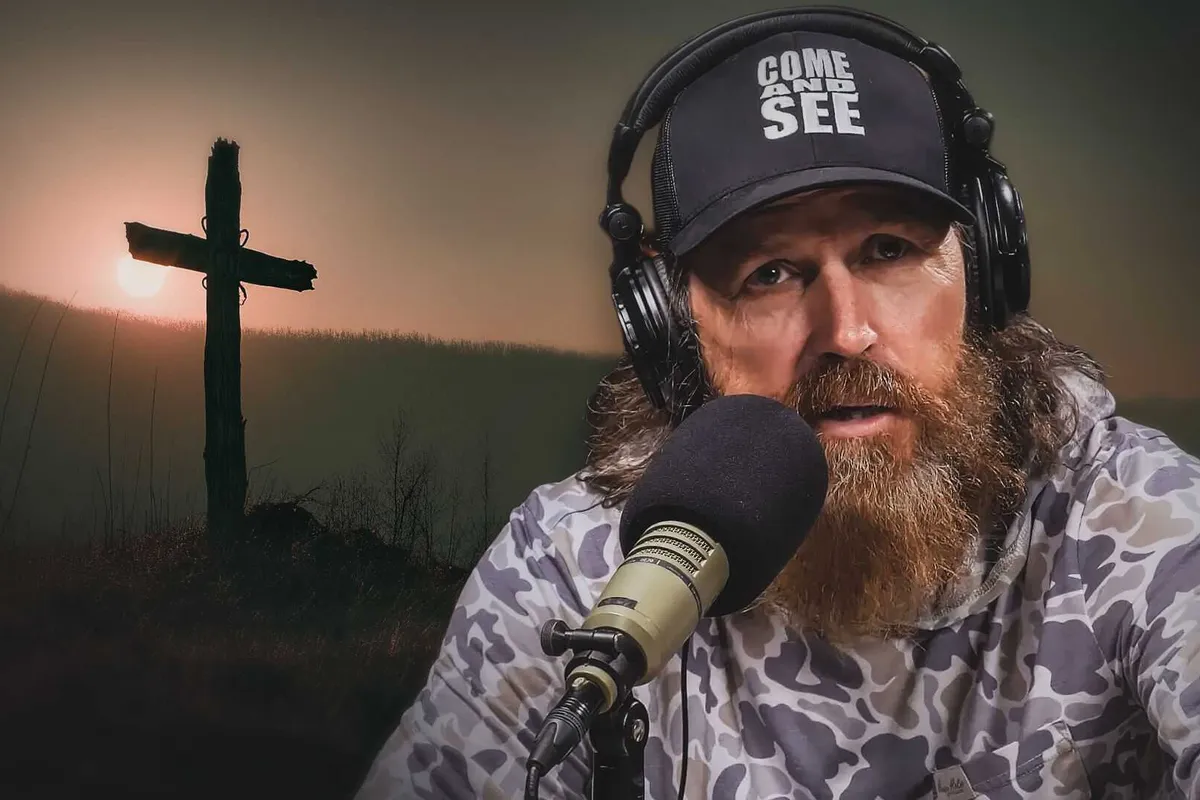
While Acts 26 is one of the most commonly used biblical models for creating personal testimony templates in Christian discipleship, Jase Robertson says that people are overcomplicating what should be a simple task.
“There’s one point,” he says, that a testimony hinges on: We give our lives up because He gave his life up for us.
A testimony, Jase says, “should be 99.9% about what He did, and your 0.1% is, I gave my life to Him.”
“Your testimony is, you’re going to point to Jesus and say, ‘You want to define love? You want to define how my life turned around? It all started with God becoming a human and giving up His life,’” he says.
Al agrees and says that too many people when sharing their testimonies overfocus on the bad things they did before they knew Christ, but “those things don’t matter” in light of the redemption Christ freely offers.
“The good part of the testimony is: I finally relented. I finally submitted,” he says.
This submission, Al argues, shouldn’t be just the focus of our testimonies; it should be the focus of the entire Christian walk. He points to the marriage passage in Ephesians 5:21, which instructs married couples to “submit to one another out of reverence for Christ.”
“That’s the idea,” Al says. “It’s the giving up of yourself, and it’s not just for marriage, but of course, it’s for everything.”
To hear more, watch the episode above.
Want more from the Robertsons?
To enjoy more on God, guns, ducks, and inspiring stories of faith and family, subscribe to BlazeTV — the largest multi-platform network of voices who love America, defend the Constitution, and live the American dream.
Google Search
