
There’s something almost elegant about a system collapsing under its own self-congratulation.
It’s almost impressive how efficiently Democrats can take a perfectly good idea and turn it into a cautionary tale.
Not slowly. Not accidentally. They don’t wander into dysfunction. They arrive there, like it’s on the invitation.
The White House Correspondents’ Dinner used to be a clever little détente, a once-a-year truce where politicians and journalists poked at each other with just enough honesty to keep the illusion alive. It had rhythm. It had bite. It even had a touch of humility, or at least a convincing impersonation of it.
Now it feels like a reunion of people who think they’re the reason the story exists in the first place.
And that’s the setup. That’s the environment. That’s the room where everyone congratulates everyone else for being so very essential.
Which makes what happened next feel less like an interruption and more like a diagnosis.
For years, Donald Trump looked at this event and declined the performance.
Not with a tantrum, not with a speech, just a quiet refusal to play along with a crowd that insists it’s observing power while constantly reshaping it.
Then he decides to attend.
Enter Donald Trump, a man who spent years declining the invitation. Not out of fear, not out of protest theater, but out of something far more offensive to that crowd: recognition. He saw the event for what it had turned into, a ritual where the press pretends to challenge power while quietly shaping it.
So when he finally shows up, it isn’t attendance. It’s disruption.
It’s the one guy who refused to join the magic show suddenly walking on stage and pointing at the wires.
And wouldn’t you know it, the illusion doesn’t just crack… it shatters.
A man travels across the country with something more serious than political disagreement on his mind, aiming to insert himself into the same physical space as the President.
That’s not commentary. That’s culmination.
Years of rhetoric, escalation, selective outrage, and narrative engineering don’t always stay theoretical. Sometimes they condense into a single individual who decides the story needs an ending… and he’s going to write it.
This doesn’t happen at a rally. It doesn’t happen in some chaotic public square where tension is expected. It happens at their event. Their night. Their carefully curated environment where everyone knows their role and the script rarely deviates.
And suddenly… nobody knows their role.
You saw the footage. The reaction. The shift from performance to instinct. People who spend their lives narrating danger for others suddenly encountering it without a teleprompter. Chairs scrape. bodies lower. eyes dart.
No commentary. Just movement.
For a brief moment, the people who define the national conversation experience something unfiltered. Not a headline or a panel discussion. Nor a segment with graphics.
Just fear.
That moment? Nothing new for President Trump. He knows the potential for death is just the job now. Another Tuesday, as it were.
The difference is, most of the time, the people in that room are safely removed from it. The media minions interpret and package it. They decide how much of it you’re allowed to feel.
This time, they felt it themselves.
Now contrast that with Trump’s posture in the aftermath.
By his own telling, surprised, sure. But not shaken in the way the room was. There’s a difference between encountering chaos and operating within it regularly. One rattles you. The other becomes part of your baseline.
And then he does something that doesn’t get enough attention in moments like this: he speaks calmly. Even generously on the surface. No theatrics. No visible spike in emotion.
But listen between the lines and it’s surgical.
Because he doesn’t need to accuse anyone directly. The setting does that for him. The contrast does that for him. The moment itself becomes the argument.
The media, which has spent years assigning danger labels like hall monitors with megaphones, suddenly finds itself in a room where danger doesn’t need a label. It just is.
And it didn’t arrive from the direction they usually point.
That’s the uncomfortable part. Not the politics, not the personalities, but the directional confusion. When reality doesn’t cooperate with the narrative, you get hesitation. You get softer language. You get a search for framing that doesn’t quite land.
Because if the story doesn’t behave, the storyteller has a problem.
And that brings us to the broader pattern.
For years, there’s been a steady drumbeat about where danger lives politically. Who represents it; embodies it. Who must be watched, flagged, contained. It’s been repeated often enough that it feels settled to a lot of people.
Then moments like this show up and refuse to fit.
Not cleanly. Not conveniently.
And instead of prompting a reset, they tend to get absorbed, reframed, or quietly moved along.
But every now and then, one of those moments happens in a room full of the very people responsible for shaping that narrative.
And they don’t get to edit it in real time.
They just have to sit there… or duck under the table… and experience it.
That’s what makes this different. Not just the incident itself, but the setting. The symbolism. The fact that a space designed to celebrate the relationship between media and power becomes, even briefly, a place where that relationship is exposed.
Not debated. Not analyzed.
Exposed.
So now the question isn’t just about what happened. It’s about what gets learned from it.
Because systems don’t usually change when they’re comfortable. They change when something disrupts the feedback loop. When the people inside them experience a version of reality they don’t control.
The White House Correspondents’ Dinner was supposed to be a night of controlled laughter.
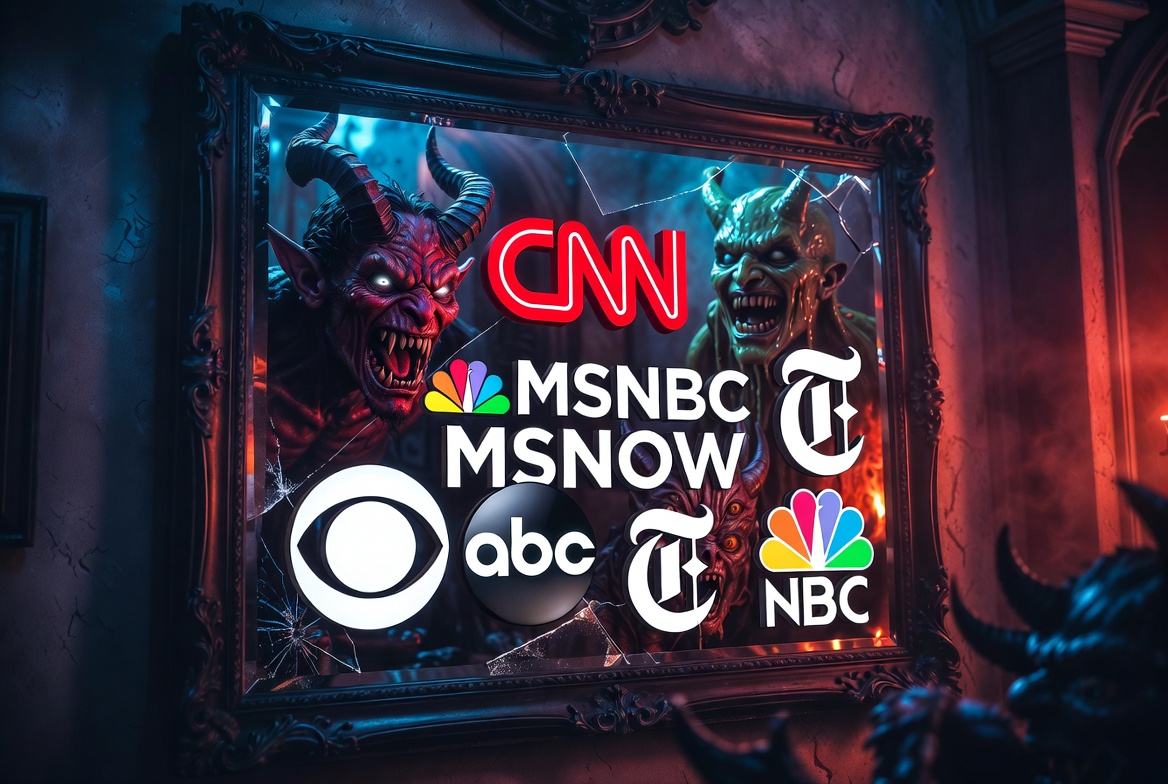
Instead, it turned into something closer to a mirror. No doubt the reflection wasn’t flattering.
[H/T The Black Sphere]
Google Search
