
Guest Post by Gold & Geopolitics
Physically AND metaphorically…
WhatsApp promises end-to-end encryption. Signal promises it. iMessage promises it. And you know what?
They’re telling the truth.
What you say is private. The actual content of your messages – scrambled into mathematical gibberish that only you and your recipient can decode. Military-grade encryption. Unbreakable. No one can read your words. Not Meta. Not Signal. Not Apple. Not the government. Not hackers. The technology works exactly as advertised.
Except.
There’s this thing attached to every message. It’s called “metadata”.
It’s who you messaged. When you messaged them. How often. How long the conversation lasted. Your location when you sent it. Their location when they received it. The device you used. Your IP address. Which WiFi network you were on. What groups you belong to. Who else is in those groups. The patterns of your communications – do you message more in the morning or evening? Do you talk to this person daily or weekly? Did your messaging pattern change recently?
Metadata doesn’t particularly care what you have said. Instead, it maps who you are, who you know, where you go, what you do, when you do it.
Your words are encrypted.
Your life is an open book.
All that metadata gets transmitted to the company. Meta gets every WhatsApp breadcrumb. Apple gets iMessage trails. Google gets everything that touches Gmail or Android. They store it. They analyze it. And of course, they monetize it.
Sometimes they share it with governments. Sometimes they sell it to data brokers. Sometimes it gets subpoenaed. And sometimes it just leaks.
→ And sometimes it gets you killed.
Israel developed an AI system called Lavender. It processed 2.3 million Palestinians in Gaza, assigning each one a score based on their likelihood of being affiliated with Hamas or Islamic Jihad. One of the key inputs feeding this targeting algorithm? WhatsApp metadata.
More specifically, which WhatsApp groups you’re in.
If you’re in a group with someone that Israel considers a militant, Lavender flags you. That’s it. That’s the algorithm. You didn’t plan anything. You didn’t say anything incriminating. You’re just in a group chat – maybe with neighbors coordinating aid during a war, maybe with extended family, maybe with people you barely know who added you months ago.
Doesn’t matter. The metadata says you’re connected. The AI says you’re a target.
According to +972 Magazine, over 37,000 Palestinians were marked this way. Israeli military operators spent roughly 20 seconds reviewing each target before approving strikes. On residential homes. With families inside. The system was built to find people in their houses, sources admitted, because “it’s much easier to bomb a family’s home”.
Ten percent error rate was considered acceptable.
Meta’s internal engineers warned that governments could monitor group memberships and locations without ever decrypting a single message. But WhatsApp kept advertising itself as a private messaging app with end-to-end encryption. Which is technically true.
Now imagine if someone in one of the groups you’re in gets flagged by an algorithm. Your neighbourhood watch, your school parenting group, book club, …
Suddenly you’re a datapoint in a targeting system. Not because of anything you did or said. Because of metadata.
Your encrypted words stayed private. But your connections got you bombed.
Of course the governments across the West are looking at this. And their first line of thinking is: “we need more of that”.
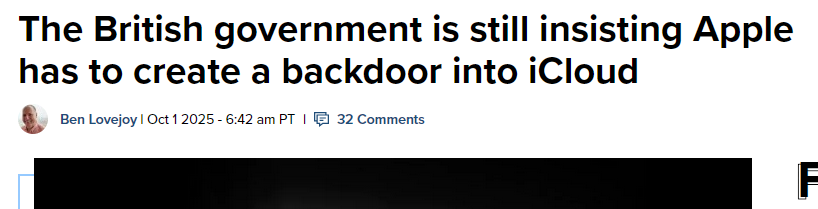
The UK tried to force Apple to backdoor iCloud encryption for world wide users. Apple disabled Advanced Data Protection for British users instead, rather than fight it. The EU is drafting a “Technology Roadmap on Encryption” to break into messages by 2026. They’re setting up a research campus to work out how to do it “lawfully”. The US keeps buying spyware from Israeli companies that already know how to do it.
And they’re all pretending this is about “catching criminals”.
Spoiler alert: it’s not. It’s about turning everyone into datapoints.
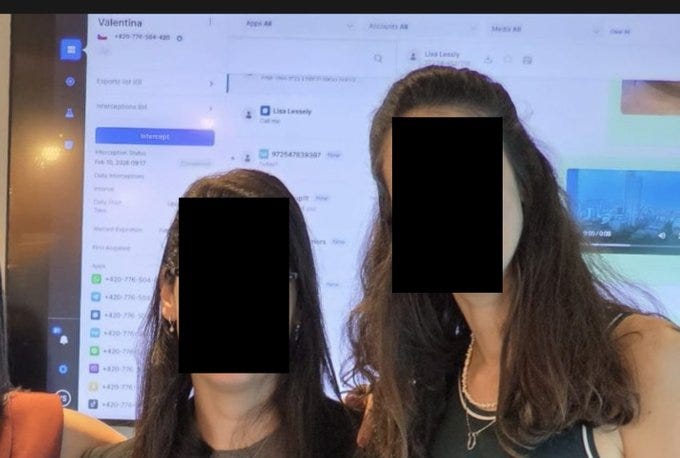
Last week, an Israeli spyware company called Paragon Solutions accidentally exposed its Graphite control panel on LinkedIn. Some lawyer posted a selfie showing active surveillance of a Czech phone number. Apps being monitored. Interception logs dated February 10th. Zero-click exploits that compromise devices without any action from the target.
The US government bought Graphite for ICE operations. Canada, Australia, Denmark, Singapore – all customers. These are “vetted governments” using commercial spyware to surveil their own populations and others.
Then Amazon aired a Super Bowl ad. Heartwarming story about finding a lost dog using Ring’s AI-powered “Search Party” feature. Upload a photo, and a network of neighborhood cameras tracks your pet.
What the ad inadvertently revealed: Ring has built a nationwide surveillance grid that can track movement patterns across entire communities. Thirty percent of U.S. households have video doorbell cameras. That’s eyes everywhere, feeding data into systems that can recognize faces, track individuals, log behavior patterns.
A leaked internal email from Ring founder Jamie Siminoff told employees the feature was introduced “first for finding dogs” and that the technology would eventually help “zero out crime in neighborhoods”. First dogs. Then everything else. The feature is on by default. Ring has already rolled out “Familiar Faces” – facial recognition that identifies people on your camera – and “Fire Watch.” A Ring spokesperson denies Search Party “processes human biometrics or tracks people”. Sure.
Ring had previously partnered with Flock Safety, a police surveillance company whose systems were accessed by ICE for immigration enforcement. After backlash, they canceled the partnership. They’ll be keeping the surveillance features, thank you very much…
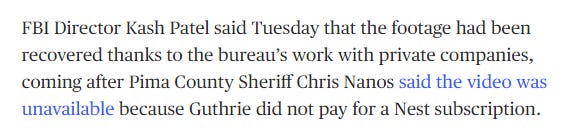
The FBI just announced it recovered footage from a Google Nest camera by executing “lawful searches” and excavating material from private companies’ systems that users thought was gone forever.
Everything is being collected. Everything is being stored. Everything can be accessed.
You’re just a datapoint now.
And they want more. Always MOAR…
Governments already have control of their digital bank records, but are now also pushing legislation to track cryptocurrency wallets – connecting every cold wallet to a real identity. The goal is to make financial privacy illegal. They want to know who owns what, where money moves, every transaction mapped.
For your safety, of course.
To “stop money laundering” and “terrorism” financing. Oh, and sprinkle a little “children protection” on top. (How did that work out with Epstein I wonder?)
The Netherlands just passed a wealth tax on unrealized gains starting in 2028. A third of your paper profits, taxed annually, whether you sell them or not. The government admits they’d prefer to only tax realized gains – you know, money you actually made – but that’s “not feasible” because delays cost them €2.3 billion per year. So they’re taking your money based on what they think your assets might be worth.
You could owe taxes on crypto that crashes the next day. On stocks that tank before you sell. You might have to sell just to pay the tax bill.
Everything must be digital. Everything must be visible. Everything must flow through systems they control. Cash is dirty. Crypto is suspicious. Privacy is what criminals need. Good citizens have nothing to hide.
They’re building a panopticon and calling it progress.
Meanwhile, the watchers exempt themselves from watching.
EU Commission President Ursula von der Leyen negotiated a €1.8 billion Pfizer vaccine deal via text messages with the CEO. Those messages vanished. When journalists requested them under transparency law, the Commission claimed texts were “short-lived” and not really documents. In May 2025, the European Court of Justice ruled the Commission acted unlawfully. The messages are still gone. Von der Leyen had done this before as German Defense Minister – deleted all messages when investigators probed her contract awards.
Former Dutch Prime Minister Mark Rutte used an old Nokia 301 for 14 years specifically because it made deleting easy. Every text, gone. Standard practice from 2010 to 2024.
Scotland’s former First Minister Nicola Sturgeon promised “full transparency” about COVID decisions. “Nothing will be off limits – emails, WhatsApps, private emails”. Then it emerged she’d deleted all her WhatsApp messages. All of them. She’d known there would be a public inquiry. She deleted them anyway. Officials treated deletion as daily routine. Scotland’s Information Commissioner said it “subverted” Freedom of Information principles. Scotland banned WhatsApp on government phones in response.
Romania held elections. Far-right candidate Călin Georgescu won the first round. The EU didn’t like that. Intelligence services claimed Russian interference via TikTok. The Constitutional Court annulled the election. Democracy paused.
Then investigators found Romania’s own governing National Liberal Party had paid for the TikTok campaigns that helped Georgescu. Not Russia. Their own government. But the election stayed annulled. US VP JD Vance called it Soviet-style, saying the court acted on “flimsy suspicions” and “enormous pressure from continental neighbors”.
These aren’t conspiracy theories. These are court rulings. Admitted facts. Documented scandals. But they get labeled conspiracies when you mention them.
The pattern is obvious: transparency for you, opacity for them. Surveillance of citizens, secrecy for the state. Track every euro you spend, delete every text they send. Monitor your WhatsApp groups, erase theirs. Map your financial transactions, lose their procurement records.
The UK COVID inquiry found “a significant number of messages were not retained, when they should have been – some deliberately, some accidentally and some in accordance with what owners believed was government policy”. Government officials discussed freedom of information laws in their group chats. They knew the rules. They deleted them anyway.
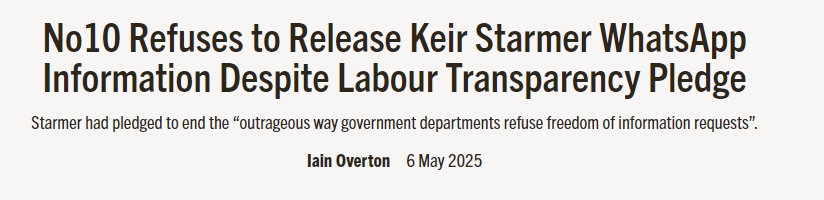
Current UK Prime Minister Keir Starmer’s office refused a FOIA request for his WhatsApp messages, claiming it would be “too costly” to review. This after Labour’s transparency pledges.

If transparency is necessary for security, let’s start with the government.
Full disclosure of all communications with corporations. Public records of every message, every meeting, every decision. Track which officials talk to which lobbyists. Transcribe EVERY phone call. Monitor which bureaucrats approve which contracts. Blockchain every procurement deal. Make their metadata visible. Open source ALL the data.
Let the internet sleuths have a field day building machine learning models on top of it.
If these surveillance tools are so important for catching criminals, use them on the people with actual power to commit massive crimes. Corruption. Fraud. Insider trading. Laundering taxpayer money through connected contractors.
But of course that won’t ever happen. Because this was never about security.
It’s about control.
They want to see everything you do while doing whatever they want in the dark. They want to track every connection you make while their networks remain invisible. They want to tax wealth they can monitor while hiding wealth they can’t. They want to prosecute you based on metadata while their metadata vanishes.
The encryption is real. The privacy is not.
You’re not a citizen anymore. You’re a datapoint in systems you cannot see, evaluated by algorithms you cannot challenge, flagged for attention based on patterns you don’t understand.
And somewhere, someone is looking at your metadata and making decisions about your life.
Maybe it’s a bit innocuous like an advertiser deciding what to sell to you. Maybe it’s an insurer deciding what to charge you. Or maybe it’s an algorithm deciding whether to flag you. Maybe it’s a targeting system deciding whether to strike you.
You won’t know it until it’s too late.
And now they want more. More tracking. More monitoring. More data. More control. All for your safety of course. All for your security. All for the greater good.
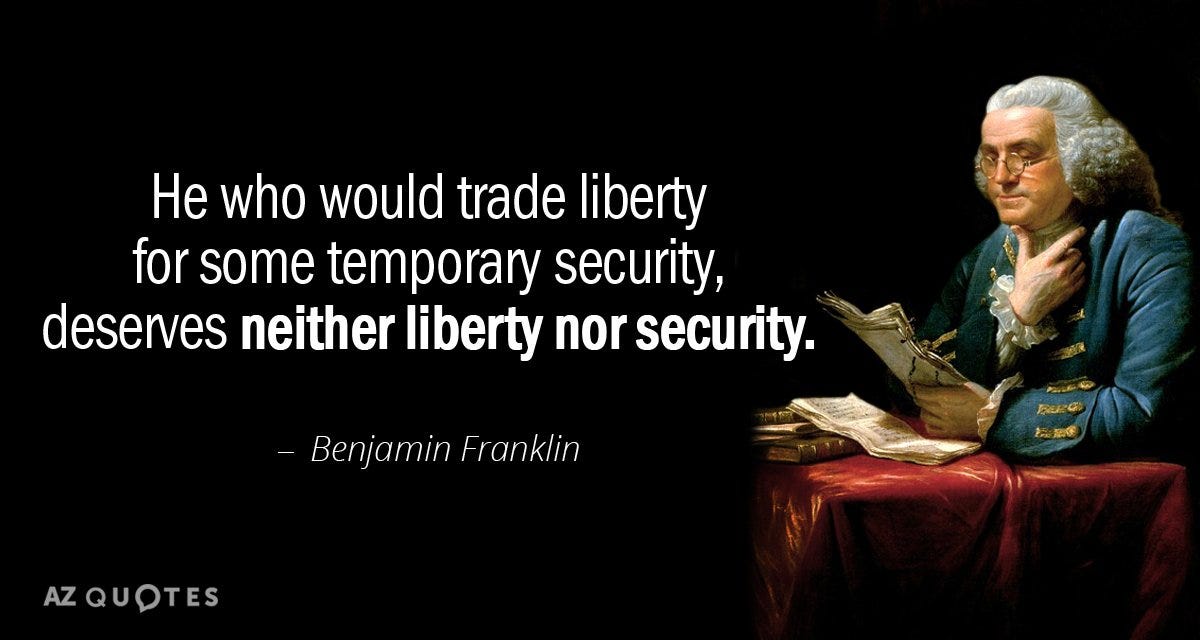
Just trust them.
After all, if you have nothing to hide, you have nothing to fear.
Unless you’re in the wrong WhatsApp group. Or live at the wrong address. Or know the wrong people. Or hold the wrong assets. Or vote for the wrong candidate. Or question the wrong narrative.
Then your metadata might just kill you.
