
The following article, Follow the Money, and Suddenly the Riots Get Quiet, was first published on The Black Sphere.
Every political era has its defining moment. Sometimes it’s a speech. Sometimes it’s a scandal. And sometimes, it’s an audit.
Because nothing terrifies ideological theater quite like accounting.
For years, Americans watched riots erupt with uncanny logistical precision, as if spontaneous outrage had somehow acquired professional branding, synchronized messaging, and a supply chain worthy of Amazon Prime. Protesters appeared overnight with printed banners, legal defense funds, transportation, media coordination, and enough matching slogans to suggest less grassroots activism and more corporate rollout strategy.
The question many asked, often dismissed as conspiratorial at the time, was disarmingly simple: Who paid for all this?
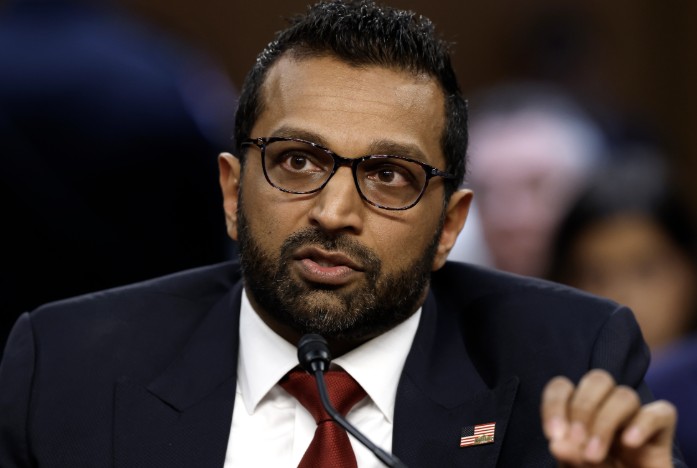
Now, according to FBI Director Kash Patel, investigators may finally have an answer.
Speaking on The Dan Bongino Show, Patel revealed that federal investigators have uncovered what he described as significant funding streams connected to Antifa-linked activity, suggesting that financial enforcement actions could soon follow. The report signals a shift away from debating street-level chaos toward examining the financial architects behind it.
BREAKING: FBI Director Kash Patel reveals on Dan Bongino that a MAJOR DISCOVERY has been made regarding the FUNDERS of Antifa terrorists
“Wait until you see what’s coming in the next month or two on the FUNDING STREAMS related to this.”
LFG!
“You and I had launched a… pic.twitter.com/Lp3o8Jls22
— Eric Daugherty (@EricLDaugh) February 18, 2026

And in politics, following the money is less a strategy than a demolition tool.
The End of “Mostly Peaceful” Accounting
For nearly a decade, Americans were told that Antifa was not an organization but an “idea.” Conveniently, ideas cannot be subpoenaed. Ideas don’t file taxes. Ideas don’t maintain bank accounts or coordinate bail funds across multiple states within hours.
Yet ideas also don’t purchase pallets of equipment or sustain nationwide operational momentum.
If Patel’s claims hold, the FBI investigation reframes the conversation entirely. Instead of asking whether violence occurred, the question becomes whether financial networks knowingly enabled it. That distinction matters enormously, because U.S. law treats funding differently than participation. Writing checks can carry consequences equal to throwing bricks.
The Left’s long-standing rhetorical shield relied on ambiguity. By insisting Antifa lacked structure, political allies could simultaneously benefit from its intimidation tactics while maintaining plausible deniability. It was political outsourcing, a system where chaos happened just far enough away to avoid responsibility but close enough to influence outcomes.
Now imagine that shield dissolving under forensic accounting.
Suddenly, slogans meet spreadsheets.
Follow the Money, Find the Strategy
Conservatives have long argued that modern political activism increasingly resembles venture capitalism. Causes receive seed funding, narratives scale through media amplification, and pressure campaigns generate political leverage.
If federal investigators have identified coordinated funding pipelines, the implications extend beyond a single movement. Financial scrutiny introduces accountability into a system that thrived on diffusion. When nobody owns the operation, nobody answers for it. When funding trails emerge, ownership becomes unavoidable.
Historically, political movements collapse not when they lose arguments but when they lose financing. The anti-war protests of the late 1960s fractured once organizational funding splintered. Occupy Wall Street dissolved as logistical support faded. Even powerful political machines weaken when donors grow nervous about legal exposure.
Money is oxygen. Remove it, and even the loudest revolution struggles to breathe.
Which explains why this investigation lands at a particularly delicate moment for Democrats heading into the 2026 midterms.
A Perfect Storm of Self-Inflicted Headwinds
The Democratic Party faces a convergence of challenges that, taken individually, might be manageable but together resemble political gravity switching on all at once.
Election integrity reforms, aggressively pursued by President Donald Trump’s administration, have tightened procedural oversight nationwide. Measures once dismissed as unnecessary now carry enforcement teeth, reshaping campaign strategies that previously relied on procedural gray zones.
Meanwhile, fundraising scrutiny has intensified. Platforms long central to Democratic fundraising infrastructure face growing legal and regulatory pressure, raising uncomfortable questions about compliance and transparency. Critics argue that what once functioned as a financial advantage now risks becoming a liability under closer examination.
If investigators successfully connect political violence to organized funding networks, the consequences could extend far beyond criminal prosecutions. Donors, corporations, and advocacy groups typically operate on risk calculations. Legal uncertainty alters those calculations overnight.
Nobody wants their charitable contribution introduced as courtroom evidence.
The Political Irony Nobody Can Ignore
Perhaps the most striking irony is philosophical.
For years, progressive activists championed expansive definitions of accountability, arguing that indirect support constitutes moral complicity. Corporations were condemned for donations. Individuals were pressured over associations. Silence itself was declared participation.
Now that same logic threatens to circle back.
If funding violent activism becomes legally actionable, the standards once applied selectively may suddenly apply universally. Political rhetoric, having stretched accountability to its broadest interpretation, may discover that definitions expand in both directions.
History enjoys symmetry.
What Happens If Arrests Follow?
Should arrests emerge from financial investigations, the political landscape changes overnight. Enforcement would signal that federal authorities view organized political violence not as episodic unrest but as structured activity subject to anti-terror or conspiracy statutes.
Such a development would carry three immediate effects.
First, deterrence. Activism dependent on institutional funding becomes dramatically riskier when legal exposure increases.
Second, narrative collapse. Media framing that relied on decentralization arguments becomes harder to sustain if prosecutors present organizational evidence.
Third, strategic vacuum. Political actors who relied on intimidation-by-proxy lose a tool without developing a replacement.
Movements accustomed to operating with unofficial enforcement arms rarely adapt quickly when those arms disappear.
The Midterm Equation
Midterm elections historically punish the party perceived as chaotic or extreme. If 2026 becomes defined by investigations into political violence financing, Democrats may find themselves defending not policy disagreements but associations.
That distinction matters to voters.
Policy debates invite disagreement. Law enforcement investigations invite distrust. And distrust, once seeded, spreads faster than any campaign message.
The Democratic Party’s challenge lies not merely in rebutting allegations but in overcoming accumulated public skepticism. Years of dismissing concerns about organized unrest now collide with the possibility that investigators possess documentation rather than accusations.
Political narratives survive controversy. They struggle against evidence.
The Larger Lesson
Politics ultimately rewards clarity. Voters tolerate ideological differences but recoil from perceived manipulation. If Americans conclude that unrest was financially engineered rather than organically driven, the backlash could reshape political alignments for years.
The Trump administration’s strategy, whether by design or instinct, appears rooted in structural pressure rather than rhetorical combat. Instead of arguing endlessly about ideology, target the infrastructure supporting it.
Cut funding, enforce laws, and allow consequences to speak louder than press conferences.
It is a strategy less theatrical but far more durable. Because protests end. Headlines fade. Cable panels move on. Financial records, however, never forget.
And if 2026 becomes the year political receipts finally take center stage, the most consequential slogan in American politics may no longer be shouted in the streets but printed quietly at the bottom of a bank statement.
Continue reading Follow the Money, and Suddenly the Riots Get Quiet …
Google Search
