
If you’re tired of censorship and dystopian threats against civil liberties, subscribe to Reclaim The Net.
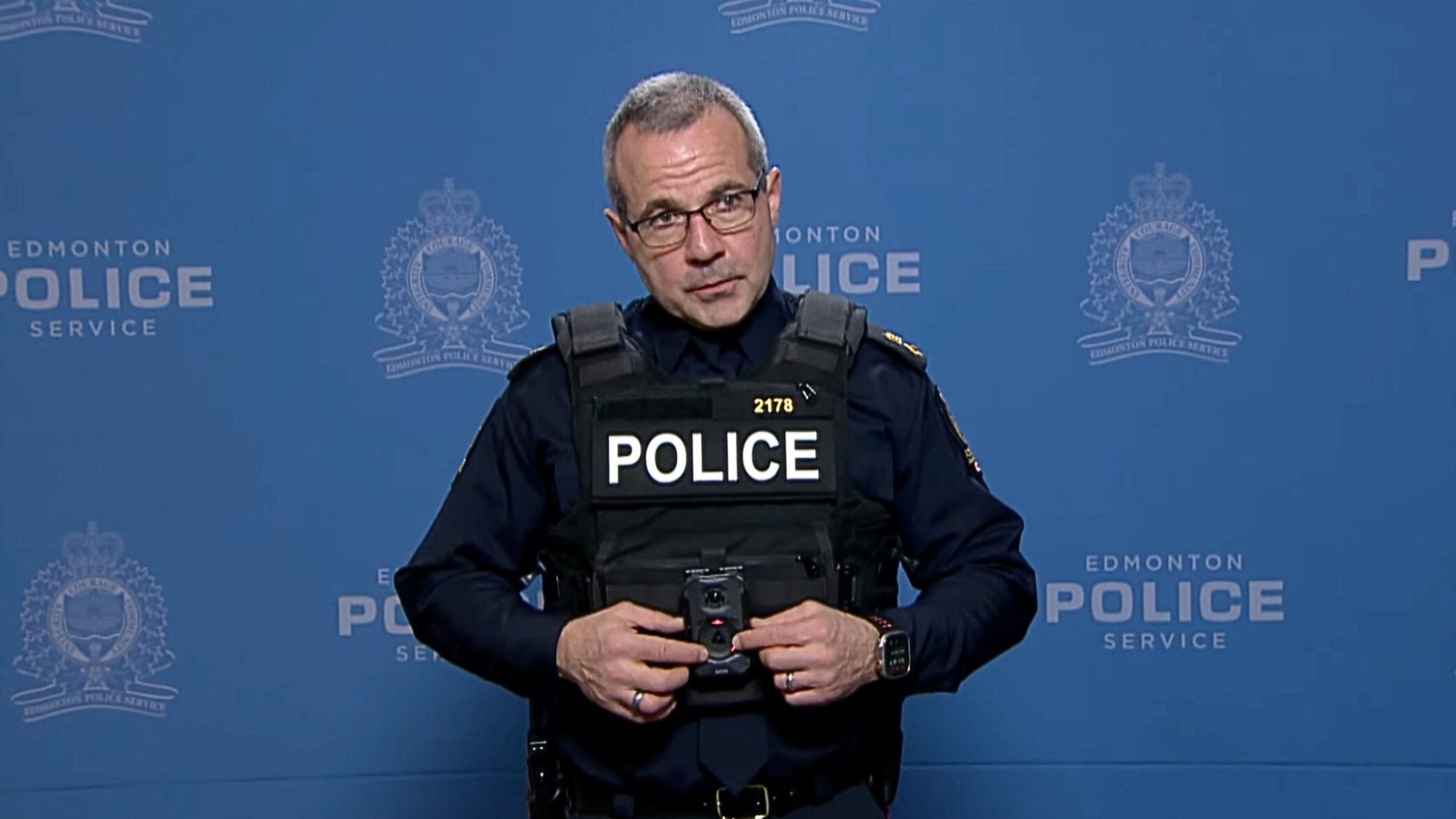
When fifty Edmonton, Alberta, police officers stepped onto city streets this week, they carried more than their standard-issue equipment.
Clipped to their uniforms were small, black devices capable of something no other police body camera in Canada has done before: recognizing faces.
The Edmonton Police Service (EPS) has become the country’s first force to test facial recognition-equipped body cameras, entering a new and deeply contested phase of public surveillance.
The pilot program, which runs through the end of December, puts the technology directly into daily policing.
The cameras, built by Axon Enterprise, the American company behind the ubiquitous Taser and many of North America’s police tech systems, connect field officers to a biometric network that scans faces against EPS’s existing database of mugshots.
Acting Superintendent Kurt Martin presented the move as a practical, safety-oriented upgrade.
More: The Next Surveillance Boom Is Taking Flight
With more than 6,300 individuals currently flagged for serious offenses, he said, the technology could help officers “recognize people who have outstanding warrants for serious offenses.”
For Martin, this is not about creating a digital dragnet but about closing cases faster and reducing risks in uncertain encounters.
The mechanics of the system reveal its complexity. When a camera records, every face within roughly four meters enters a digital pipeline where software compares it to known offenders in the EPS database.
Images without a match are supposed to be erased. The facial recognition feature is not always active; it remains off during routine patrols and switches on only when enforcement begins or during later investigative reviews.
Yet the question remains: how much discretion can a human exercise once the algorithm has made a suggestion?
Not everyone is convinced this experiment is ready for the real world.
What makes Edmonton’s pilot remarkable is how it integrates facial recognition directly into an officer’s line of sight.
Traditional systems rely on fixed cameras at airports or stadiums, where surveillance is static and predictable.
Body-worn cameras, by contrast, move through neighborhoods, homes, and private businesses, gathering footage that reflects the rhythms of daily life.
Even if non-matching faces are deleted, the simple act of scanning them reframes what it means to appear in public space.
Such technology edges society toward continuous, automated observation, a state where anonymity in public becomes a relic.
The EPS pilot is only a few weeks old, yet it is already a bellwether for Canadian law enforcement.
If you’re tired of censorship and dystopian threats against civil liberties, subscribe to Reclaim The Net.
The post Edmonton Becomes First in Canada to Test Facial Recognition Body Cameras in Police Pilot Program appeared first on Reclaim The Net.
Google Search
