
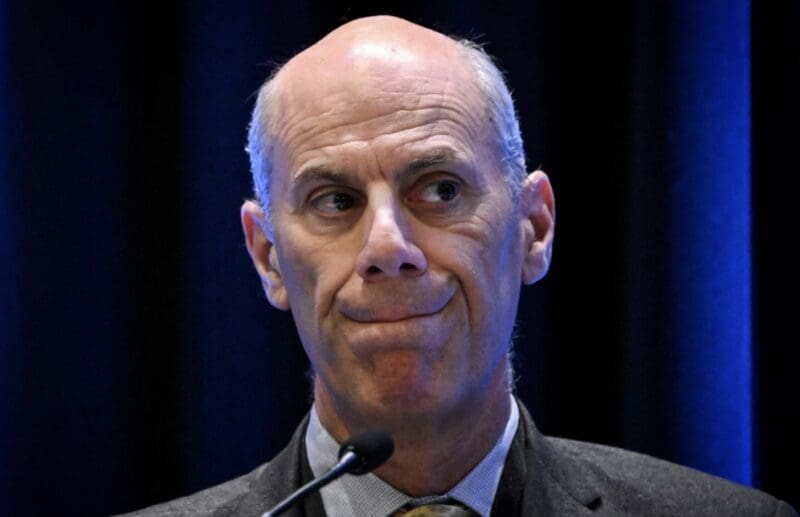
Judge Boasberg authorized secret spying on Congress and is now refusing to testify. The Senate is now holding hearings to discuss his possible impeachment. He thinks he IS the law.
After revelations that Judge James Boasberg approved clandestine subpoenas and nondisclosure orders targeting congressional Republicans, the Senate demanded his testimony. Boasberg refused, claiming he did not need to answer to the legislative branch he secretly spied on. Senators will now hold hearings on impeachment proceedings for Boasberg and possibly others involved in the unlawful surveillance of elected officials. Lawmakers say Boasberg’s arrogance and defiance show he believes he is beyond accountability, the hallmark of a rogue judge.
Judge James Boasberg Hit With Articles of Impeachment
LAWFARE: Judge Boasberg authorized secret spying on Congress and is now refusing to testify. The Senate is now holding hearings to discuss his possible impeachment. He thinks he IS the law.
After revelations that Judge James Boasberg approved clandestine subpoenas and… pic.twitter.com/VhE6Yx4XeN
— @amuse (@amuse) December 1, 2025
Judge James Boasberg serves as the Chief Judge of the U.S. District Court for the District of Columbia, a position he assumed in 2023 after being appointed to the bench by President Barack Obama in 2011. He has presided over several anti-Trump cases always ruling against him.
Critics, particularly from Republican circles, have accused him of judicial activism and bias against conservative figures and policies.The current uproar centers on his role in approving subpoenas and nondisclosure (gag) orders during the Biden administration’s “Operation Arctic Frost”—a now-defunct FBI investigation led by Special Counsel Jack Smith into alleged 2020 election irregularities, including the fake electors scheme. Revelations about this probe emerged in early October 2025, sparking bipartisan concern but intense Republican outrage.
The “Secret Spying” Allegations
In 2023, as part of Arctic Frost, Smith’s office sought and obtained court orders from Boasberg to seize cell phone records from at least eight Republican senators and nearly a dozen GOP lawmakers. These individuals were not accused of crimes but were targeted because they were probing 2020 election issues. Affected lawmakers included:Senator/Representative
Ted Cruz R-TX
Targeted for communications on election oversightLindsey Graham R-SC
Phone records seized without notificationJosh Hawley R-MO
Investigated for legislative inquiriesMarsha Blackburn R-TN
Part of broader GOP election probeRon Johnson R-WI
Oversight on 2020 irregularitiesMike Kelly R-PA
House member involved in hearingsOverall Republicans Targeted (Beyond Just Lawmakers)The probe’s scope was much wider, affecting hundreds of conservative figures and groups:
- Total Individuals and Entities: 430 Republican-affiliated people and organizations were named in 197 subpoenas for testimony, communications, and records.
- Politicians Specifically: Over 160 Republican politicians and Trump allies were investigated.
- Notable Non-Lawmaker Targets: Included former President Donald Trump (personal phone records seized), Rudy Giuliani, John Eastman, Turning Point USA, the Republican National Committee, and the America First Policy Institute.
Boasberg also authorized gag orders preventing phone carriers from notifying the lawmakers or the Senate about the data collection. This violated federal law (2 U.S.C. § 6628), which requires notification to Congress for subpoenas involving Senate data and allows lawmakers to move to quash them. Critics argue this shielded the probe from congressional oversight and infringed on the Speech or Debate Clause (Article I, Section 6 of the Constitution), which protects legislators from executive interference in their duties.The probe extended beyond Congress to conservative groups like Turning Point USA and the America First Policy Institute (the latter didn’t exist in 2020), as well as Trump allies such as Rudy Giuliani and John Eastman. Some FBI agents involved were later fired, but no charges resulted from the data seized.Refusal to Testify and Senate ResponseOn November 4, 2025, Rep. Brandon Gill (R-TX) introduced House Resolution 858, articles of impeachment against Boasberg, accusing him of “high crimes and misdemeanors” for:
- Deprivation of Rights Under Color of Law (18 U.S.C. § 242): Willfully denying senators’ rights to notification and intervention.
- Obstruction of Proceedings Before Congress (18 U.S.C. § 1505): Hindering Senate oversight via the gag orders.
- Conspiracy Against Rights (18 U.S.C. § 241): Alleged coordination with Smith’s office to evade accountability.
The resolution has 11 Republican co-sponsors, including Reps. Lauren Boebert (R-CO) and Andy Biggs (R-AZ). It claims Boasberg “weaponized” his authority for political gain, prioritizing anti-Trump efforts over impartiality.The Senate Judiciary Committee invited Boasberg (and U.S. District Judge Deborah Boardman, linked to similar issues) to testify at a December 2025 hearing titled “Impeachment: Holding Rogue Judges Accountable.” Boasberg declined, reportedly asserting judicial independence and that he need not answer to the legislative branch he allegedly undermined. This refusal has fueled accusations of arrogance, with lawmakers like Sen. Eric Schmitt (R-MO) calling for his immediate administrative suspension pending impeachment.Schmitt led a November 17, 2025, letter from six GOP senators to D.C. Circuit Chief Judge Sri Srinivasan, urging suspension under 28 U.S.C. § 352(b). Even some Democrats, like Sen. Chris Coons (D-DE), have expressed concern over the “significant invasion” of senators’ rights.Current Status and Broader Implications
- Impeachment Process: The House could vote on H.Res. 858 soon, requiring a simple majority to impeach. A Senate trial (needing two-thirds to convict and remove) is unlikely with the current 53-47 Republican majority, but Republicans view hearings as a platform to expose alleged abuses. Sen. Ron Johnson (R-WI) emphasized the goal is “exposing exactly what happened” rather than guaranteed removal.
- Calls for Action: Figures like Mike Benz (Foundation for Freedom Online) have demanded Boasberg’s arrest alongside Smith for the gag orders. House Speaker Mike Johnson has not yet prioritized the resolution, drawing criticism from conservatives.
- Defenses and Context: Boasberg and supporters argue the orders were standard under the Stored Communications Act, with judges exercising discretion on nondisclosure to protect investigations. No formal response from Boasberg has been public, but legal experts note such warrants aren’t automatic and require probable cause review—though details remain classified.
This saga highlights tensions over separation of powers, with Republicans framing it as “lawfare” against conservatives. Even outlets like The Hill have criticized Boasberg’s “selective outrage” on executive overreach, given his history in Trump-related cases. As of December 1, 2025, the Senate hearing is set to proceed without his testimony, potentially escalating the push for accountability.
Google Search
