
China-Japan Spat Looks To Be Boon For Russian Tourism & Industry
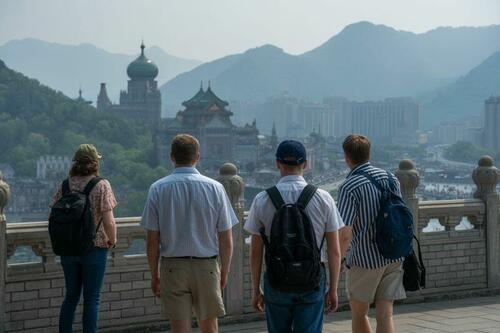
In yet another sign of deepening Russia-China ties on all levels, which has also included cooperation on the military front in the context of the Ukraine war, President Vladimir Putin signed an executive order on Monday temporarily lifting visa requirements for visitors from China.
Chinese travelers can now enter Russia without a visa for up to 30 days, either for tourism or short-term employment purposes. This move mirror’s the Chinese government’s earlier decision to grant visa-free entry to Russian citizens.
Both countries already had in place policies which allowed visa-free entry for group tours. The new rule will remain in place until September of 2026 and is being widely referred to as a pilot program.
President Putin had last week called the step “good and positive breakthrough in the development of our relations” during meetings in Moscow with Chinese Premier Li Qiang.
The timing is interesting as it comes amid an escalating diplomatic spat between Japan and China, which has resulted in Chinese government authorities publicly dissuading Chinese citizens from traveling to Japan.
Lately even concerts by Japanese artists which were set for places like Shanghai have been canceled, and the rift is beginning to be felt among the common populace. The prediction is that there could be a quick influx of Chinese tourists in Russia as a result:
According to market analysts who spoke with The Moscow Times, Putin’s announcement — combined with heightened diplomatic tensions between China and Japan — has led to a sharp increase in travel searches and bookings from China to Russia.
In a Monday statement Chinese foreign ministry spokesperson Lin Jian urged Japan to “learn the lessons of history, do soul searching, take seriously what it has heard from the Chinese side, simply retract the erroneous remarks as it should and take practical steps to honor its political commitments to China.”
Amid reports of curbs on seafood imports from Japan, the restaurant scene is also being impacted:
Diners once had to book weeks in advance to secure a table at Toya, a popular Japanese restaurant in Beijing.
But business has taken a sharp turn, with more than 60 reservations cancelled since mid-November, said owner Kazuyuki Tanioka, who has served omakase menus in the Chinese capital for over a decade.
Things are deteriorating fast on every level after Japan suggested it could defend Taiwan in the event of a Chinese invasion…
China just declared the San Francisco Peace Treaty “illegal and invalid.”
But here’s the catch: the moment China rejects SFPT, the entire post-WWII map of Asia breaks — and China is the first country to lose territory.Why?
Because SFPT isn’t just a US–Japan treaty.
It’s the… pic.twitter.com/B5Fq2L03m2— The Great Translation Movement 大翻译运动 (@TGTM_Official) December 2, 2025
And film releases are being postponed:
The spat has also led to the postponement of Japanese film releases in China, the abrupt cancellation of concerts by Japanese musicians and the suspension of official exchanges.
A frequent traveller to Japan, Yan Jun, faced a dilemma when China advised its citizens to avoid visiting Japan. Chinese airlines proceeded to cut hundreds of Japan-bound flights this month.
Again, if this China-Japan spat persists, it could present and immediate and even potential long-term boon for Russian tourism and industry.
Tyler Durden
Wed, 12/03/2025 – 04:15
Google Search
