
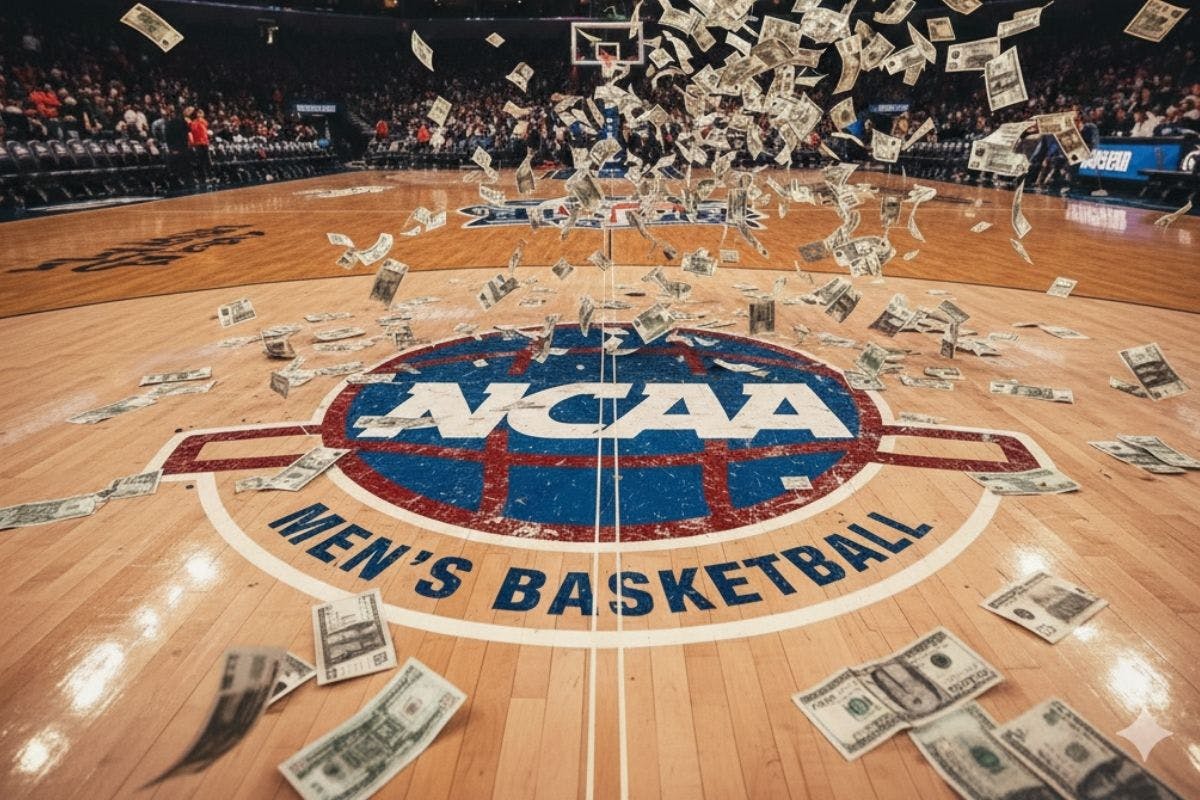
Is college basketball broken? The U.S. Attorney’s Office for the Eastern District of Pennsylvania announced on Thursday the indictment of 26 suspects, including 20 former NCAA college basketball players from 17 schools for allegedly attempting to fix games through performance manipulation during the 2023-24 and 2024-25 seasons.
Officials said the scheme started in September 2022 when defendants bribed players in the Chinese Basketball Association (CBA) to participate in “point-shaving” their games, before moving to NCAA basketball. Point-shaving occurs when the final score is manipulated to satisfy the point-spread of the game, not the win-or-lose outcome.
“Over the past two years, the FBI’s Philadelphia Field Office led an investigation into a point-shaving and sports-bribery conspiracy resulting in the indictments announced today,” said FBI Deputy Director Andrew Bailey.
United States Attorney David Metcalf called the gambling scheme “historic,” and said the point-shaving scheme involved more than 39 players who were part of more than 17 teams who attempted to fix at least 29 men’s college basketball games
“Certain players were targeted because they were missing out on NIL money,” Metcalf said, also adding: “This is the corruption of college sports.”
According to the indictment, the suspects in the case include the following former college basketball players: Alberto Laureano, Arlando Arnold, Simeon Cottle, Kevin Cross, Bradley Ezewiro, Shawn Fulcher, Carlos Hart, Markeese Hastings, Cedquavious Hunter, Oumar Koureissi, Da’Sean Nelson, Demond Robinson, Camian Shell, Dyquavion Short, Airion Simmons, and Jalen Terry.
“We allege an extensive international criminal conspiracy of NCAA players, alumni and professional bettors who fixed games across the country and poisoned the American spirit of competition for monetary gain,” Metcalf said.
Other names listed in the indictment include trainers Jalen Smith and Roderick Winkler, as well as “high-stakes sports gamblers” Marves Fairley and Shane Hennen.
Per the indictment, the defendants approached and communicated with NCAA basketball players, in person and through social media, text messages, and phone calls. The “fixers” offered the players bribe payments, usually ranging from $10,000 to $30,000 per game, to participate in the scheme.
The suspects face charges including sports bribery and conspiracy to commit wire fraud, among others.
The games that were allegedly fixed include matchups in China, as well as games involving the following schools: Nicholls State, Tulane, Northwestern State, Saint Louis, LaSalle, Fordham, Buffalo, DePaul, Robert Morris, Southern Miss, North Carolina A&T, Kennesaw State, Coppin State, New Orleans, Abilene Christian, Eastern Michigan, and Alabama State.
“When criminals rig the outcome of games for the purpose to lose, we all lose,” Metcalf said.
Antonio Blakeney, who is listed in the indictment as “charged elsewhere” from a previous sports gambling case, was one of the CBA’s top scorers and was allegedly recruited by Hennen and Fairley to join the point-shaving antics. According to the indictment, Blakeney received a $200,000 payment in Florida, which another defendant dropped into a storage unit. The former All-American from LSU went on to recruit college players to join the scheme.
There are four current players this season who are listed in the case: Kennesaw State’s Simeon Cottle, Eastern Michigan’s Carlos Hart, Delaware State’s Camian Shell, and Texas Southern’s Oumar Koureissi. All players have played within the last week.
Koureissi, at the time of the alleged crime, played for Nicholls State. The document states Koureissi was involved in fixing Nicholls State’s game against McNeese State in February of 2024. Koureissi allegedly fixed the game through point-shaving to ensure Nicholls State didn’t cover the spread against McNeese. Koureissi scored 0 points in that contest and won the fixers their bet.
This is just one of the countless examples of fraud in the indictment.
“There is integrity in sports,” Metcalf said. “You have the teammates of the players who were working their tail off.”
NCAA President Charlie Baker released this statement Thursday: “Protecting competition integrity is of the utmost importance for the NCAA. We are thankful for law enforcement agencies working to detect and combat integrity issues and match manipulation in college sports. … The Association has and will continue to aggressively pursue sports betting violations in college athletics using a layered integrity monitoring program that covers over 22,000 contests, but we still need the remaining states, regulators and gaming companies to eliminate threats to integrity – such as collegiate prop bets – to better protect athletes and leagues from integrity risks and predatory bettors. We also will continue to cooperate fully with law enforcement. We urge all student-athletes to make well-informed choices to avoid jeopardizing the game and their eligibility.”
This bombshell gambling case follows two others from last fall involving former NBA and MLB players. Sports gambling in some form is legal in 40 states.
“I will say that the evidence in this case shows that the monetization of college athletics and athletics generally … furthered the enterprise in this case,” Metcalf said.
The United States Attorney added that this case is extensive and the investigation is ongoing.
Google Search
