
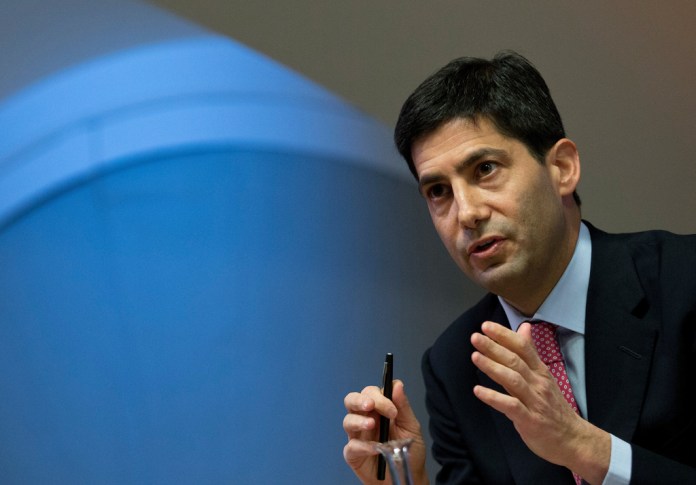
Kevin Warsh, President Donald Trump’s pick for chairman of the Federal Reserve, will face an onslaught of questions during his confirmation hearing on Tuesday. Here is what to expect.
Trump nominated Warsh, 56, earlier this year to replace outgoing Fed Chairman Jerome Powell, whose term is ending in mid-May. Powell is under investigation by the Justice Department, which has raised the stakes for Warsh’s confirmation hearing.
WARSHACH TEST: TRUMP’S FED CHAIRMAN PICK KEEPS MONETARY ANALYSTS GUESSING
Plus, since Warsh’s nomination was announced, the United States and Iran went to war, causing energy prices to spike and sending inflation spiking nearly a full percentage point higher. Warsh will be in a tricky position on Tuesday as he navigates questions about the Fed’s independence, monetary policy, and more.
“He’s in a tough situation to navigate,” Dennis Lockhart, former president of the Federal Reserve Bank of Atlanta who worked with Warsh for several years at the Fed, told the Washington Examiner.
Fed independence
At the top of the list of questions Warsh will face relates to the Fed’s status as an independent agency separate from the White House.
Trump has been pushing Powell to cut interest rates since he entered his second term, but Powell has resisted, emphasizing the independent nature of the central bank. And the investigation into the current Fed chairman has made the matter ever more prescient.
Earlier this year, in a video statement, Powell announced he was being investigated by the Justice Department for claims he made about the Fed headquarters renovation during congressional testimony. But he argued that the inquiry is an effort by Trump to influence interest rate policy.
Stephen Kates, a financial analyst at Bankrate, told the Washington Examiner that questions about the Fed’s independence will be heavily featured in the hearing.
“What role is Warsh going to play?” Kates asked. “Is he going to stand against that? How will he do that? How is he going to insulate the Federal Reserve from speculation that it’s not independent from actual coordination with the White House? … How would he approach that, that pressure, which is not going to abate?”
Warsh’s testimony was leaked on Monday prior to the hearing. In it, Warsh pledges to defend the central bank’s independence. Warsh will say that “monetary policy independence is essential,” according to the prepared testimony.
“In sum, I believe that monetary policy independence is earned—and better policy decisions crafted—by steering clear of distractions,” Warsh will say. “I am committed to ensuring that the conduct of monetary policy remains strictly independent. I am equally committed to working with the administration and Congress on non-monetary matters that are part of the Fed’s remit.”
It will also be worth watching retiring Sen. Thom Tillis (R-NC) and what he says during the hearing. That is because he is threatening to block Warsh until the legal probing into Powell has concluded.
Notably, Tim Scott (R-SC), chairman of the Banking committee, on Tuesday of last week said that he thinks the Justice Department will drop its investigation into Powell, which would allow Tillis to back off.
“The second step, later on, we’ll have a vote on Kevin Warsh,” Scott said. “I believe that the DOJ will finish and wrap this up in the next several weeks, and Thom Tillis will be a ‘yes’ on Kevin Warsh.”
Interest rates and inflation
Absent questions about Fed independence, although closely tied to the matter, Warsh will also likely face a torrent of questions about his monetary policy philosophy and what he thinks is the best course for interest rates.
Warsh has said interest rates should be lower: a key demand from Trump.
“I think it’s incredibly unlikely that Trump would have nominated without some sort of promise and pledge as to his fidelity to lowering rates in the short term,” Marc Short, chairman of Advancing American Freedom and former chief of staff to Vice President Mike Pence, told the Washington Examiner.
But economic conditions have changed dramatically since Warsh was nominated, especially because of the Iran war, in ways that would make it much more difficult for the central bank to pursue monetary easing.
Most significantly, inflation rose sharply in March, in large part due to higher oil prices.
Lockhart, the former Fed president, said he expects some lawmakers on the panel will try to see if Warsh gave the president any sort of promises about how he will pursue interest rate policy.
“Some in the Banking committee are going to want to probe what assurances he’s given the president in order to get this job,” Lockhart said. “Kevin’s a careful navigator, so I suspect he’ll be able to navigate that with some degree of ambiguity, frankly.”
Kates said that Warsh will likely be asked about his opinions on how the Fed has handled inflation in recent years and what he thinks should have been done with interest rate policy.
“Almost a past, present, future type of thing — because he’s made it plain that he thinks interest rates could and should be lower, and that AI and technology will be deflationary,” he said.
Financial disclosures
Democrats are also expected to grill Warsh about his finances.
Ahead of the meeting, the Fed nominee disclosed financial interests exceeding $100 million. He is married to Jane Lauder, who serves on the board of Estée Lauder Companies.
Citing confidentiality, he declined to reveal the underlying holdings of the biggest investments. The Office of Government Ethics said that Warsh would have to divest from several dozen holdings. Warsh has said he would divest if confirmed, but the Wall Street Journal reported that Democrats on the panel intend to question him on the contents of those investments.
“Without the ability to review Mr. Warsh’s holdings in public and in detail, it is impossible to determine whether Mr. Warsh is holding an interest in institutions he would be responsible for regulating as Fed Chair,” Democrats on the Banking committee said in a staff memo.
Background and philosophy
During his testimony, Warsh will talk a bit about his background and experience, and lawmakers on the committee might ask him questions related to his economic philosophy, which has evolved over time, and about his previous tenure at the Fed.
Former President George W. Bush nominated Warsh, a one-time Morgan Stanley banker, to the Fed board in 2006. Warsh held that role under both Bush and President Barack Obama. After leaving the central bank, Warsh worked as a distinguished visiting fellow at Stanford University’s Hoover Institution.
Warsh has faced some criticism for his handling of the 2008 financial crisis and its fallout. At that time, the Fed took extraordinary measures to intervene in the economy and prop up markets. Unemployment was spiraling, and then-Fed Chairman Ben Bernanke spearheaded looser money policies that Warsh at the time panned as being possibly inflationary.
TRUMP SETS STAGE FOR SHOWDOWN WITH POWELL OVER WHO RUNS THE FED IN MID-MAY
When he was back at the Fed earlier in his career, Warsh developed a reputation as an inflation hawk, meaning he was seen as more hesitant about looser money policies and more concerned with rising prices. But Warsh will face questions about how his thinking on troubles such as that has evolved.
“A lot that he said between 2006 and 2011 are now in transcripts of the meetings that are available to the public,” Lockhart said. “And there’s some contrast between a rather hawkish profile at that time and the somewhat more dovish profile that he has projected recently, particularly in the run up to his nomination.”
Google Search
