
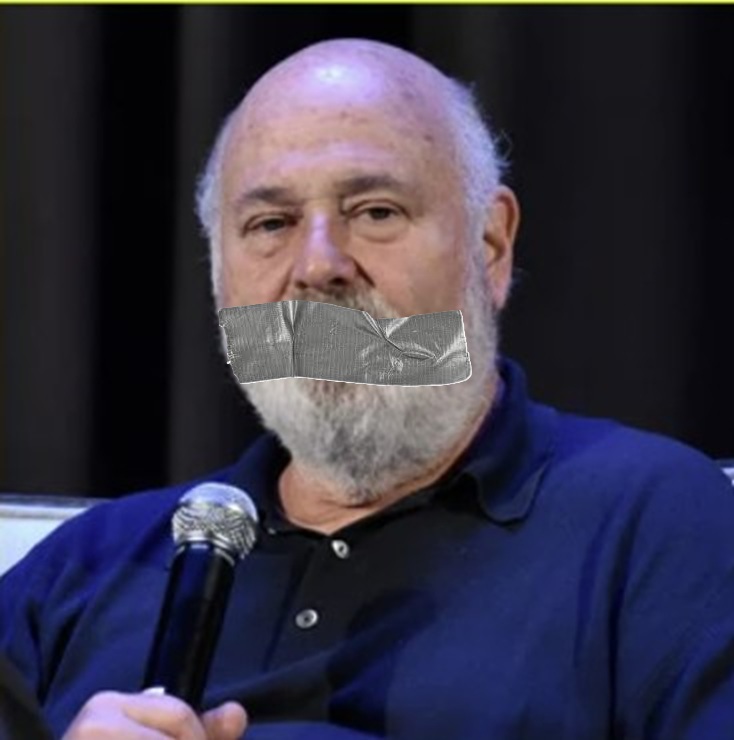
The following article, Rob Reiner’s Silence Spoke Loudly, was first published on The Black Sphere.
President Trump posted a message about Rob Reiner that hasn’t set well with the Left. As usual, Trump is right and the Left are wrong.
There are tragedies that end with funerals, and then there are tragedies that linger, interrogating the living long after the final prayer. When the loss involves a parent and a child, those questions refuse to be polite. They don’t ask for permission. They demand answers. And in the case of Rob Reiner, a man who spent years lecturing the bigger and better part of America on morality and responsibility, those questions are unavoidable.
The death of Reiner is tragic. The circumstances surrounding his family are heartbreaking. None of that is disputed. But tragedy does not confer immunity from scrutiny, particularly when the individual in question lived loudly, politically, and publicly.
Reiner didn’t simply hold opinions. He made them his identity.
He used his celebrity as a cudgel, swinging it relentlessly at Donald Trump, turning politics into a personal crusade that consumed his public life.
This raises a question that Reiner’s admirers desperately want to dismiss but cannot answer: if Rob Reiner cared as deeply about his son as he claimed to care about saving America from Trump, why didn’t he take up the causes that were destroying his own child?
America is filled with parents who lost children and refused to let that loss vanish into statistics. They built movements. They forced laws into existence. They created institutions so that other families might be spared the same pain. The Amber Alert system exists because a mother transformed unspeakable grief into relentless action. Mothers Against Drunk Driving exists because parents refused to accept that their children’s deaths were simply the cost of modern life. Addiction recovery centers, missing-children networks, and awareness campaigns exist because devastated parents turned sorrow into mission.
That is what grief looks like when it becomes purpose.
Rob Reiner had every advantage those parents lacked. He had wealth, influence, access, and a permanent seat in the media ecosystem. When he spoke, cameras rolled. When he posted, journalists amplified. When he demanded attention, Hollywood applauded. He could have chosen any cause. He chose Donald Trump.
Reiner’s fixation was not casual or fleeting. For years, he devoted his public voice to apocalyptic warnings about Trump, promoting the now-discredited narrative that Russia had hijacked American elections. He aligned himself with former Obama-era CIA and NSA officials, repeated claims later unraveled by investigations, and helped fuel a hysteria that collapsed under its own weight. When the narrative fell apart, when exaggerations and falsehoods were exposed, Reiner did not apologize. He did not recalibrate. He simply moved on to the next outrage, as if being wrong carried no obligation.
All the while, according to public reporting and widely known accounts, his son was battling drug abuse, addiction, relapses, homelessness, poverty, and instability. These were not abstract policy problems. They were the defining domestic crisis of our time, claiming hundreds of thousands of lives and hollowing out entire communities. Fentanyl alone has killed more Americans than decades of war. Families across the country have been shattered quietly, without celebrity advocates or Hollywood applause.
Yet Rob Reiner had virtually nothing to say about any of it.
He did not make drugs his cause. He did not champion addiction treatment reform. He did not speak publicly about homelessness beyond the generic platitudes favored by elite circles. He did not launch campaigns aimed at teen runaways or the systems that fail them. He did not build a legacy rooted in confronting the very demons that were consuming his own household.
Defenders will argue that family struggles are private, that grief manifests differently, that advocacy is not mandatory. That argument might carry weight if Reiner had lived a private life. He did not. He chose spectacle. He chose megaphones. He chose to lecture the nation endlessly about ethics, truth, and civic responsibility. He weaponized his platform for politics and cannot now pretend that silence on other matters was principled restraint.
Contrast reveals priority, and Reiner’s priorities were unmistakable.
He had time to chase Trump across cable news studios but none to confront addiction. He had energy to conspire politically with intelligence officials but none to fight drugs. He had passion for a hoax but indifference toward a crisis that mirrored his own family’s suffering.
Even when President Trump addressed the drug epidemic, imperfectly but seriously, confronting China over fentanyl precursors, pressuring Mexico, expanding law enforcement tools, and declaring addiction a national emergency, Reiner offered no support. He did not acknowledge progress. He did not set aside partisan hatred to endorse life-saving efforts. The objective was never solutions. The objective was always Trump.
And that is the indictment.
This is not an accusation that Rob Reiner failed as a father. That is unknowable and not the claim. The claim is simpler and far more damning: when given the choice between fighting a political enemy and fighting the real-world forces destroying families, Rob Reiner chose politics every time.
His fans cannot debunk that. They can rage, moralize, and wrap themselves in grief as armor. But they cannot produce evidence of sustained advocacy, meaningful campaigns, or a legacy aimed at stopping drugs, addiction, or homelessness. They cannot point to a single cause he embraced with the fervor he reserved for Trump.
Some parents turn tragedy into purpose. Some turn it into silence. Some turn it into distraction. Rob Reiner turned it into obsession.
And if you want to honor a child, you fight what killed them. You don’t ignore it while chasing political ghosts.
Continue reading Rob Reiner’s Silence Spoke Loudly …
Google Search
