
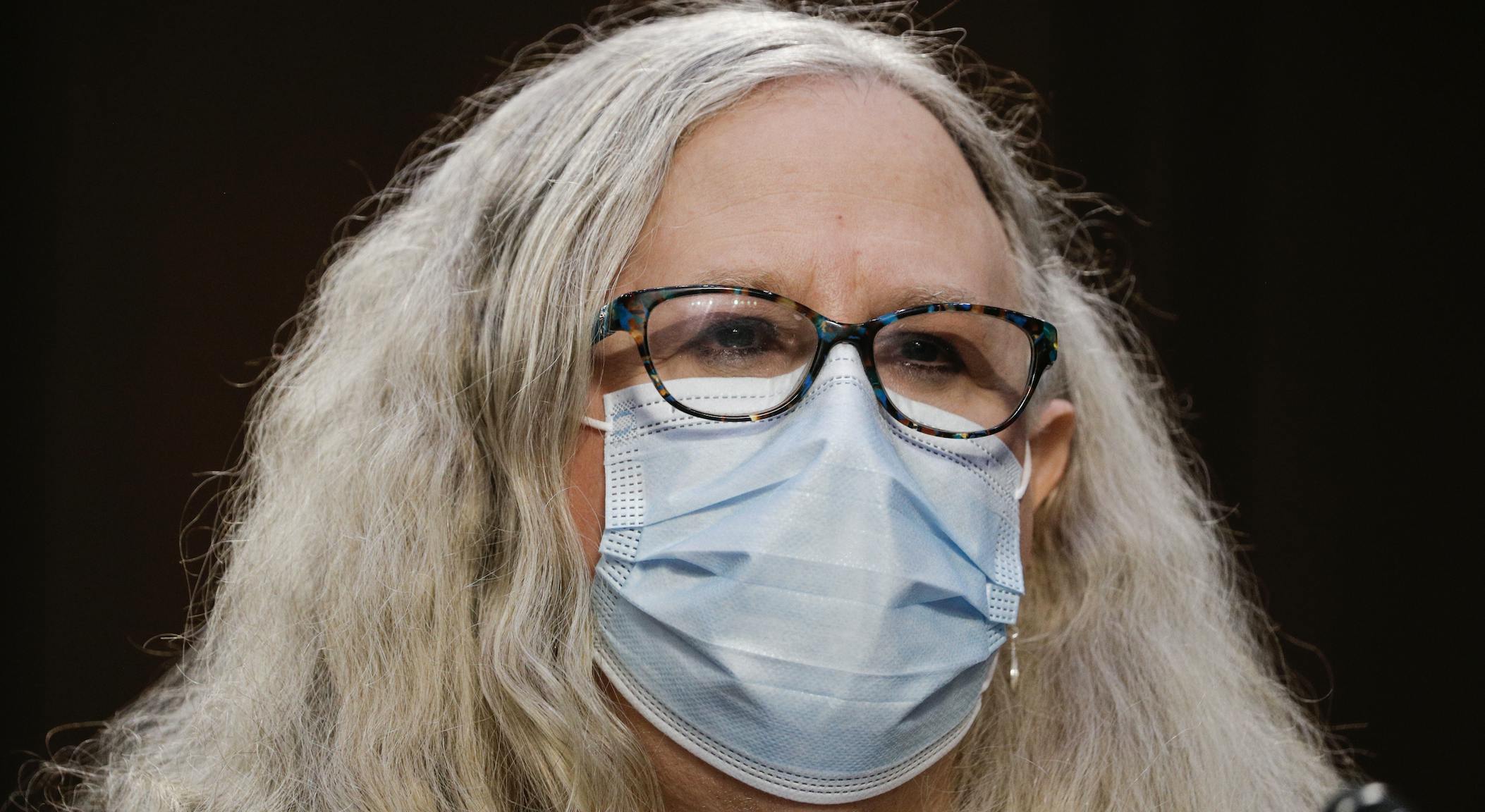
A Biden-era health official who identifies as transgender is outraged that the current Department of Health and Human Services has changed his nameplate to showcase his birth name, Richard Levine, instead of his trans-identifying name, Rachel Levine.
On Tuesday, HHS took to X to unapologetically confirm the change, which apparently took place during the Democrat-backed government shutdown.
The portrait plaque is displayed in the HHS offices.
Can confirm! https://t.co/PdErnBJVqh pic.twitter.com/yuZGMfK6xw
— HHS (@HHSGov) December 9, 2025
Levine was upset about the change, calling it “petty” and an act of “bigotry.”
“I’m not going to comment on this type of petty action,” Levine told NPR.
However, he did respond through a spokesperson. “During the federal shutdown, the current leadership of the Office of the Assistant Secretary for Health changed Admiral Levine’s photo to remove her current legal name and use a prior name,” Adrian Shanker said, calling the change “bigotry against her.”
The current HHS argued that the change better reflects their mission to express “gold standard science” at all times.
“Our priority is ensuring that the information presented internally and externally by HHS reflects gold standard science,” HHS spokesman Andrew Nixon said. “We remain committed to reversing harmful policies enacted by Levine and ensuring that biological reality guides our approach to public health.”
During his tenure, Levine claimed the title of the “first female four-star officer” in a video boasting about “diversity” at HHS. He was also widely criticized for his support of so-called transgender “care” for minors, which opponents highlight is often irreversible and damaging to children.
Additionally, Levine seemed to advocate for the censorship of opposing views on the issue.
“There is substantial misinformation about gender-affirming care for transgender and gender-diverse individuals,” Levine said back in May 2022 during a presentation before the Federation of State Medical Boards in New Orleans.
“We need to get our voices in the public eye, and we know how effective our medical community can be talking to communities, whether it’s at town halls, schools, conversations with others, and we need to use our clinicians’ voice to collectively advocate for our tech companies to create a healthier, cleaner information environment,” Levine added.
Google Search
